Woodlands.co.uk

Blog - aphids

A place to live - leaves.

A place to live – leaves.

by The blog at woodlands.co.uk, 24 September, 2026, 0 comments

Generally speaking, leaves are quite small, but collectively they present a massive surface area to the environment.  The total surface of leaves is significantly greater than the surface area of the Earth.  Leaves are the organs of photosynthesis, not only do they make the basic chemicals for the plant, but they replenish the oxygen in the atmosphere. Generally speaking, a leaf has two surfaces.  One surface (the adaxial) is presented to the sun, the other (the abaxial surface) is shielded from the light to some extent.  Both surfaces are covered with a waxy layer (the cuticle), which helps restrict water loss. The underside of the leaf has many tiny pores, the stomates, which can open and close to allow the exchange of gases and water vapour.  The lower surface may be covered in minute 'hairs'.  These create an unstirred layer, so that air next to leaf has a high water content and thus water loss through the stomates is reduced.  The veins of a leaf contain xylem tissue which delivers water and mineral salts, and phloem which transports sugars and other organic compounds from the leaf. [caption id="attachment_43706" align="alignleft" width="300"] adaxial surface[/caption] [caption id="attachment_43705" align="alignright" width="300"] abaxial surface[/caption]   The upper  surface and lower surface  of a foxglove leaf.  Whilst the veins can be seen on the top surface, they are ridged and covered in hairs on the lower surface. [caption id="attachment_13486" align="alignleft" width="240"] galls on sycamore[/caption]   Once a leaf has grown then its size, shape and the veins remain constant, but during the course of the year other things can and will change.  For example, in autumn the coloured pigments in the leaf break down and many compounds are transported out of the leaf as it undergoes senescence. The leaf may be subjected to attack, caterpillars and leaf miners may eat its tissues.  Certain wasps may lay eggs within the leaf so that a gall develops.  Greenfly use their piercing mouthparts to access sugars and other compounds from the phloem.  Bacteria may infect the leaf either through wounds inflicted on the leaf, or by penetrating the stomates. To some micro-organisms, a leaf is ‘home’; it is a habitat.  Rather like it is now common to talk about our gut microbiome or  the microbiome of the skin, so each leaf has a microbiome. Recently, microbiologists from China and Germany have studied the microbiome of oak leaves.  Specifically, they examined the microbiome of the leaves of the pedunculate oak.  They examined how the organisms present changed during the course of a growing season.  They found that the upper and lower sides of the leaves had different communities of micro-organisms.  Both surfaces  shared the same sorts of bacteria, but they varied in the amounts / proportions of the bacteria on the two surfaces.  Furthermore the differences between the upper and lower surfaces changed as the seasons changed.  The diversity of organisms on the lower surface of the leaf fell as the year progressed.  Some of the bacterial DNA on the lower surface was that of bacteria which could be found on / in aphids and whitefly.  Some of the bacteria found were associated with fermentation of sugars.   The study did not investigate fungal species on the leaves, but it does indicate that there are complex microbial communities present on leaves, and that the two surfaces offer different ‘opportunities’ for micro-organisms.  Similarly, it has been established that there is a root microbiome. The root microbiome is a complex community of bacteria, fungi, archaea, and viruses living in and around plant roots. This microbiome helps the plant take in nutrients, fight diseases, and cope with environmental stress. [caption id="attachment_43724" align="alignright" width="350"] Hornbeam - abaxial surface[/caption]   [caption id="attachment_43723" align="alignleft" width="350"] Hornbeam - adaxial surface[/caption]
The importance of hedgerows.

The importance of hedgerows.

by The blog at woodlands.co.uk, 17 April, 2026, 0 comments

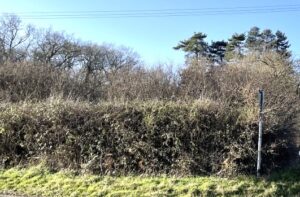
Woodlands and hedgerows are important features of our countryside.  Just as woodlands vary across the country, so do hedgerows.  A hedgerow usually includes a number of tree and shrub species, but may also include walls, banks, fencing and gates.  They may have been planted recently or may be ancient, dating back to the time of the enclosures. It has been estimated that there are over half a million kilometres of hedgerow across England, and the majority are actively managed.  In a managed hedgerow, the trees and shrubs have their form and shape altered.   The trees and shrubs that form the basics of a hedgerow include hawthorn, hazel, oak, holly, blackthorn, ash and yew. These may form the main body of the hedge but there are many other plants that contribute to its structure, such as bramble, honeysuckle and ivy, many wild flowers plus mosses, bryophytes, fungi and lichens.  [In urban settings, species like  privet, yew, box and holly may form the basis of the hedge / hedgerow.] [caption id="attachment_42838" align="aligncenter" width="675"] Beech hedge in garden[/caption] Consequently, hedges come in a variety of shapes and sizes and can include many different species. Rural hedges are often a mix of shrub and tree species, such as hawthorn, blackthorn, hazel, ash and oak. They were / are often planted to form boundaries around fields in managed agricultural landscapes.  Historically, many hedgerows were planted to keep livestock, such as sheep, cattle, pigs, chickens in specific areas. Other hedgerows were planted to define boundaries as in ‘who owned which bit of land’.  Hedgerows often surround fields.   The word ‘field’ comes from Old English ‘feld’, meaning 'an area of felled trees  or open country'.  Hedgerows are important as they offer habitats / niches for a variety of plants and animals. Not only do they provide ‘food and lodgings’ for many animals, they also act as biological corridors, supporting plant and animal connectivity across our landscape.  The flowers, fruits, berries and nuts are an important source of food for many invertebrates, birds and mammals. [caption id="attachment_24651" align="aligncenter" width="600"] Sloes on Blackthorn[/caption] Animals such the harvest mouse, the hedgehog and the vole may be found nesting in a hedgerow, and it offers food and / or homes for blue tits, and yellowhammers. They also support important insect pollinators, butterflies, hover flies, moths, bumblebees and bees. These insects may help with the pollination of crops in adjacent fields planted with oilseed rape, legumes or fruit trees. Other insects, such as ladybirds can help with crop yields by predating upon crop pests, such as green fly and blackfly (these aphids may spread viral diseases on crops such as sugar beet).  Sadly, hedgerows declined significantly in the last century, due mainly to intensification of agriculture. Fortunately, the destruction / loss has slowed since the 1990’s, though neglect and damage are significant threats even today.  Good management may involve planting of trees or shrubs to fill gaps, coppicing, laying a hedge or ‘considered’ cutting back.  However, there is no standardisation of the management of hedgerows and they can be harmed by excessive cutting back or flailing.   The effects of heavy pruning and cutting back during the nesting season can be disastrous. Whilst mechanical flailing of a hedgerow is fast and effective,  the regrowth is generally slower and its effects can be particularly bad for birds. [They may abandon their nests and / or  their eggs or chicks may be destroyed.] The pruning / flailing may also affect insect populations of the hedgerow (and / or other other food sources) on which the birds and other animals depend.  Another threat can be the use of agricultural chemicals [pesticides and herbicides] next to the hedgerow. [caption id="attachment_42843" align="aligncenter" width="675"] A managed hedge[/caption] For further and detailed information on hedgerows, visit : https://hedgelink.org.uk/guidance/importance-of-hedgerows/  
A surfeit of ladybirds

A surfeit of ladybirds

by The blog at woodlands.co.uk, 4 November, 2025, 2 comments

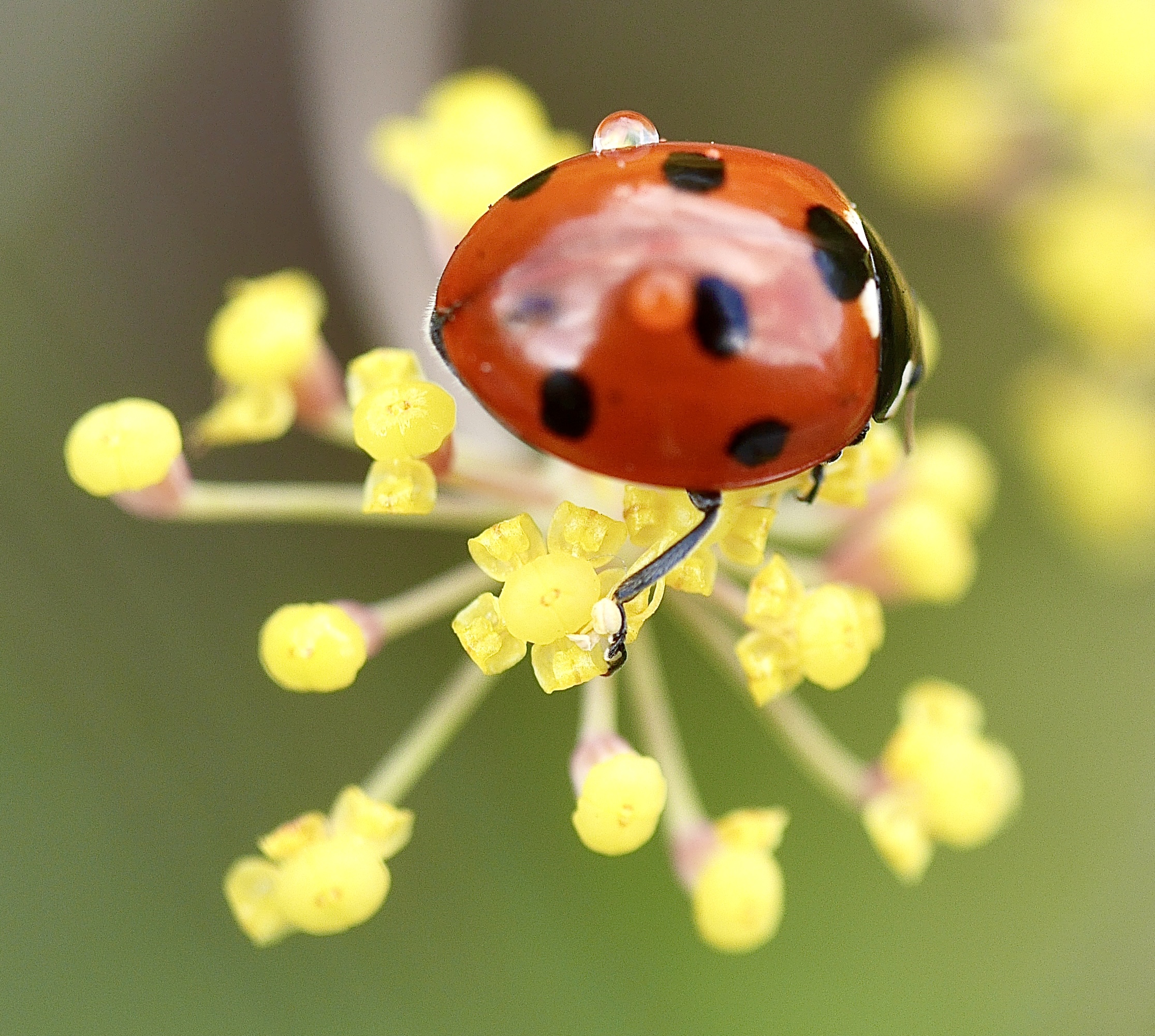
A surge in ladybird populations took place this summer. The seven spot ladybird is native to the UK.  "Millions" of the beetles invaded beaches and even cricket matches during the various heat waves.  At seaside venues, ladybirds massed on the beaches, landed on sunbathers, and covered cars.  The last time that we experienced a similar increase in ladybirds was during the hot (and dry) summer of 1976, though there have been sporadic ‘booms’ in the intervening years.   The surge in ladybird (particularly the seven spot ladybird) numbers can be attributed to :- The warm weather in early Spring and Summer An abundance of food in the form of greenfly and blackfly (aphids).  Their numbers also increased with the warm weather, as their life cycle moves at a faster rate.   Aphids enter into a cycle where female aphids can give birth to live young, without fertilisation.  A process known as parthenogenesis. Ladybirds in gardens help control aphids on roses and other plants by feeding on them.  They are very effective predators.  Predators have key role in keeping the balance of nature. As the temperature falls, ladybirds look for places to overwinter. Native ladybirds tend to hibernate under logs, rocks, and in tree litter.  The harlequin ladybird which is an invasive asian species, may enter our homes. AS harlequin ladybirds have been introduced from warmer regions, so they seek out the warmth that houses offer.  People have found them on windows, doors and walls.  It is advisable to close windows and doors to limit their entry.  In their home range, harlequin ladybirds probably hibernate in big clusters in caves, hollow trees and other sheltered places.  Here their search for warmth tends to occur at the start of October.  Harlequin ladybirds are mainly to be found in the South-East though they have been spreading northwards. They have been implicated in the decline of native species.  Interestingly, they harbour a sexually transmitted disease but not the sort that can affect us. It is a fungus [the Laboulbeniales fungus] that forms scales on the wing cases (elytra), which cover and protect their wings, or it appears as a yellow, finger-like outgrowths of the body. The fungus feeds off vital internal fluids. It is passed on through contact during mating or when the harlequin ladybirds huddle together whilst hibernating. [caption id="attachment_42748" align="aligncenter" width="675"] Larva of ladybird[/caption]  
The stinging nettle, a woodland and urban plant.

The stinging nettle, a woodland and urban plant.

by The blog at woodlands.co.uk, 15 July, 2024, 1 comments

Stinging nettles grow in a wide range of natural habitats, river banks, swamps, meadows, wastelands, floodplains, disturbed areas and gardens. They are are particularly effective colonisers of disturbed, bare or ‘waste’ ground. They flourish in nitrogen-rich soils.  Their seeds can lie dormant in the soil for some five years (and can even survive soaking in salty water), plus they spread using their underground rhizomes. Nettles may not be the most friendly plants to us, as their leaves and stems are ‘armed’ with special ‘hairs’. The hair-like structures are termed trichomes and each trichome has a hollow tube-like structure. At the bottom of the tube is a swollen base, which is filled with a number of chemicals, (including histamine, serotonin, formic acid and acetylcholine). The tip of the tube is easily broken, leaving a sharp point that can penetrate the skin and deliver the ‘biochemical cocktail’. [caption id="attachment_7154" align="aligncenter" width="600"] Trichomes - loaded with their chemical 'cocktail'[/caption] [NB: there is a video on YouTube that shows this mechanism here.] This collection of chemicals gives the characteristic rash/inflammation of a nettle sting.  Nettles may be found near to dock leaves which, if crushed and rubbed where you have been stung by the nettle, may take away some of the pain. More detailed information on the chemistry of the 'chemicals' in the nettles can be found here.  The hairs / trichomes probably evolved as a defence mechanism to limit grazing by sheep, deer or rabbits. Despite their ‘weaponised hairs’, nettles are in fact very good for wildlife, particularly in urban / sub-urban areas.   This is also true in areas under intensive farming practices.  The spread of farming, urban sprawl, habitat fragmentation and pollution have all contributed to the loss of natural habitats (for plants and animals), and that’s without mentioning climate change. Stinging nettles are the food plant for the caterpillars of comma, painted lady, peacock, red admiral and small tortoiseshell butterflies. The presence of nettles in our gardens and urban areas has allowed these butterflies in. And it’s not just butterflies that rely on nettles. For example,  ladybirds often lay eggs on nettle leaves. This insect might be termed a “gardener’s friend” as it has a voracious appetite for aphids - greenflies and blackflies that suck the sap from plants, ravage the vegetables in our gardens / allotments, Some aphids spread plant viruses, for example, virus yellows on sugar beet. Having nettles in our gardens and near farms give ladybirds and other insects somewhere to shelter, ready to feast when the aphid population rises. Aphid populations can rise very quickly as females give birth to live young, without fertilisation. Nettles can be used to make tea, soup, flavour beer, wrap cheese (Cornish yarg) or make cloth.  Using nettle fibres to make fabric / clothing is a very old practice, dating back to the Bronze Age.  Nettles can also be used to dye fabric [caption id="attachment_34107" align="aligncenter" width="650"] stinging nettle[/caption]
Supporting ladybirds.

Supporting ladybirds.

by The blog at woodlands.co.uk, 16 November, 2022, 0 comments

Ladybirds are to be encouraged (with the exception of the harlequin ladybird) as they help control pests such as aphids (greenfly and blackfly). Aphids ‘drain’ nutrient rich sap from host plants and also spread viruses with their piercing mouthparts. Some ladybirds add to their diet with nectar and as they sip nectar from flowers, they may also carry pollen from one flower to another.  Like many other insects, species of native british ladybirds have declined in recent years, many outcompeted by the harlequin ladybird (which is an introduced species from Asia.  Harlequins also harbour a fungus which can infect native ladybirds). [caption id="attachment_39002" align="aligncenter" width="675"] a ladybird 'stalking' aphids[/caption] Ladybirds are coccinellid beetles.  They belong to the order – Coleoptera – and are characterised by having forewings modified to form hard wing covers (ELYTRA) and they have biting mouthparts (as compared to butterflies and moths, which have a proboscis*).  Their wing covers are brightly coloured, and they serve as a warning to predators of their bitter taste. Ladybrds can also exude a pungent fluid to ward off ants, birds and people. Recent work at Cornell University (and the Lost Ladybug Project) has suggested ways in which ladybirds might be encouraged in the garden.   Strategies that might encourage ladybirds include : Growing plants that have hairs on their surfaces that offer some protection from predators,  Plants that 'offer' food such as nectar , or prey (aphids).  For example, aphids are often to be found on roses which frequently are home to aphids. Plants that give visual (or chemical) cues. More ladybirds were observed on the plants from the Umbellifer,  Daisy and Rose families  They seem to be drawn particularly to yellow flowers. [caption id="attachment_30742" align="aligncenter" width="600"] Aphids on yellow - beware![/caption]   * though some species such as the Humming-bird Hawk-moth have a 'tongue' which it uses to sip nectar
The sycamore : Acer pseudoplatanus.

The sycamore : Acer pseudoplatanus.

by The blog at woodlands.co.uk, 30 December, 2021, 0 comments

Acer pseudoplatanus is known as the sycamore in the U.K, or the sycamore maple in the United States. It was first described in botanical terms by the Swedish naturalist Carl von Linné in 1753.  It is thought that the sycamore is an introduced species, as its native range is central Europe and Western Asia.  It probably arrived in this country in the Tudor period (circa 1500 CE).  That it has no old native names is perhaps indicative of its absence before Tudor times, (Some say it has been here longer and have suggested that it persisted in Scotland).  It was recorded in the wild in Kent in 1632.  The sycamore is probably best regarded as a neophyte.  A neophyte is a plant that is not native to a particular area / region and has been introduced in recent history. Whatever its background, the sycamore is now to be found spread across the country. Its spread is due in no small part to the capacity of a single tree to produce many hundreds, indeed thousands of seeds.  The seeds are ‘winged’.  The wing of each seed develops from an extension of the ovary wall.  Two seeds are joined together to form a structure termed a double samara - a 'helicopter-like' device.  The wings catch the wind and the fruit rotates as it falls from the tree. This slows the descent and enables seed dispersal over a greater distance.  The sycamore has been deliberately introduced in a number of countries as it is tolerant of air pollution, salt spray and wind and it readily invades disturbed ground (abandoned farmland, brownfield sites, roadsides etc).  It is now regarded as an invasive species in, for example, New Zealand.  The leaves of the sycamore are simple but large. Each leaf has five distinct lobes and five veins radiate from the base of the leaf into the lobes. The edge of the leaf is somewhat ‘ragged’ with rounded 'teeth'. The lower surface may bear some hairs. The leaves are arranged in opposite pairs around the twigs / stem. In Autumn,  heavy leaf fall can mean that the ground under a sycamore tree can be smothered with a significant layer of the leaves, consequently the diversity of the ground flora underneath the tree may suffer. In spring and summer, the leaves can support large populations of aphids. Evidence of aphids on the leaves may be seen in the form of honeydew; this is the sugary waste of their feeding.   It may fall onto lower leaves (and cars); it provides food for flies and other insects.  The aphids themselves are a food source for ladybirds.  Sometimes the leaves are covered with small, red 'blobs' / projections - these are galls caused by a mite (a small spider-like creature).  The female mite lays eggs in these structures. Sycamores can be coppiced, that is, cut down to a stump which will rapidly produce new growth - for poles etc.  The timber of the sycamore is close grained, white to cream in colour that turns ‘golden’ with age.  It can be used in making musical instruments (violins), furniture, wood flooring There are many other species in the genus Acer, for example, Acer platanoides - the Norway Maple, Acer campestre - the Field Maple, Acer palmatum - Japanese Maple, and Acer saccharum - the Sugar Maple.  All of these have a (diploid) chromosome number of 26. Interestingly, the sycamore has a chromosome number of 52 - the number of chromosomes per cell has doubled.  The sycamore is a polyploid. A couple of interesting historical points about sycamore ;  The Tolpuddle Martyrs' Tree is a very old sycamore. The tree was used as a meeting point (in 1833) for six local agricultural labourers to discuss low wages and their poor living / working conditions.  They are associated with the birth of the trade unionist movement.  The 'Tolpuddle Martyrs' (as they came to be known) were sentenced to seven years of penal labour in Australia and were transported to Botany Bay. Dule trees were used as gallows for public hangings and also used as gibbets for the display of the corpse after such hangings.  One such dule tree lies within the grounds of Leith Hall, near Huntly, Aberdeenshire. This tree is a sycamore. The strong timber of sycamore made it a favoured tree for this purpose. [caption id="attachment_36329" align="aligncenter" width="645"] emerging leaves[/caption]  

Next Page »