Woodlands.co.uk

Blog - biological corridors

The importance of hedgerows.

The importance of hedgerows.

by The blog at woodlands.co.uk, 17 April, 2026, 0 comments

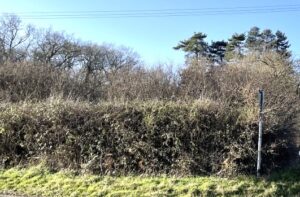
Woodlands and hedgerows are important features of our countryside.  Just as woodlands vary across the country, so do hedgerows.  A hedgerow usually includes a number of tree and shrub species, but may also include walls, banks, fencing and gates.  They may have been planted recently or may be ancient, dating back to the time of the enclosures. It has been estimated that there are over half a million kilometres of hedgerow across England, and the majority are actively managed.  In a managed hedgerow, the trees and shrubs have their form and shape altered.   The trees and shrubs that form the basics of a hedgerow include hawthorn, hazel, oak, holly, blackthorn, ash and yew. These may form the main body of the hedge but there are many other plants that contribute to its structure, such as bramble, honeysuckle and ivy, many wild flowers plus mosses, bryophytes, fungi and lichens.  [In urban settings, species like  privet, yew, box and holly may form the basis of the hedge / hedgerow.] [caption id="attachment_42838" align="aligncenter" width="675"] Beech hedge in garden[/caption] Consequently, hedges come in a variety of shapes and sizes and can include many different species. Rural hedges are often a mix of shrub and tree species, such as hawthorn, blackthorn, hazel, ash and oak. They were / are often planted to form boundaries around fields in managed agricultural landscapes.  Historically, many hedgerows were planted to keep livestock, such as sheep, cattle, pigs, chickens in specific areas. Other hedgerows were planted to define boundaries as in ‘who owned which bit of land’.  Hedgerows often surround fields.   The word ‘field’ comes from Old English ‘feld’, meaning 'an area of felled trees  or open country'.  Hedgerows are important as they offer habitats / niches for a variety of plants and animals. Not only do they provide ‘food and lodgings’ for many animals, they also act as biological corridors, supporting plant and animal connectivity across our landscape.  The flowers, fruits, berries and nuts are an important source of food for many invertebrates, birds and mammals. [caption id="attachment_24651" align="aligncenter" width="600"] Sloes on Blackthorn[/caption] Animals such the harvest mouse, the hedgehog and the vole may be found nesting in a hedgerow, and it offers food and / or homes for blue tits, and yellowhammers. They also support important insect pollinators, butterflies, hover flies, moths, bumblebees and bees. These insects may help with the pollination of crops in adjacent fields planted with oilseed rape, legumes or fruit trees. Other insects, such as ladybirds can help with crop yields by predating upon crop pests, such as green fly and blackfly (these aphids may spread viral diseases on crops such as sugar beet).  Sadly, hedgerows declined significantly in the last century, due mainly to intensification of agriculture. Fortunately, the destruction / loss has slowed since the 1990’s, though neglect and damage are significant threats even today.  Good management may involve planting of trees or shrubs to fill gaps, coppicing, laying a hedge or ‘considered’ cutting back.  However, there is no standardisation of the management of hedgerows and they can be harmed by excessive cutting back or flailing.   The effects of heavy pruning and cutting back during the nesting season can be disastrous. Whilst mechanical flailing of a hedgerow is fast and effective,  the regrowth is generally slower and its effects can be particularly bad for birds. [They may abandon their nests and / or  their eggs or chicks may be destroyed.] The pruning / flailing may also affect insect populations of the hedgerow (and / or other other food sources) on which the birds and other animals depend.  Another threat can be the use of agricultural chemicals [pesticides and herbicides] next to the hedgerow. [caption id="attachment_42843" align="aligncenter" width="675"] A managed hedge[/caption] For further and detailed information on hedgerows, visit : https://hedgelink.org.uk/guidance/importance-of-hedgerows/  
Woodland banks

Woodland banks

by The blog at woodlands.co.uk, 15 August, 2025, 0 comments

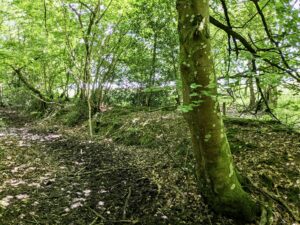
A woodland bank can refer to various structures but usually it refers to a raised earth structure found in a woodland or on the edge of a woodland.  Such banks are usually man-made, though banks can be natural formations. Sometimes, besides the bank there is a ditch, formed where the soil for the bank was excavated.  Banks may date back hundreds of years, possibly even to mediaeval times.  They are found in the U.K and Europe.   Such banks were created to Contain deer or livestock or Mark the boundary of an area of land Woodland banks may support ancient woodland species, such as dog’s mercury, bluebells and wood anemone.  Indeed, they can be biodiversity hotspots, or corridors that help the spread of species.  In some parts of the country, there are ‘hedgebanks’,  these are raised banks which support trees and shrubs on their top surfaces.  Over the years, these may have become field boundaries. Some of the UK’s best known woodlands contain banks, for example, Epping Forest, where the banks delineate old coppicing and former deer / livestock enclosures.  The area was managed by the Royal Foresters.  Wytham Wood is probably the most intensively studied wood in the country as it is owned by the university of Oxford and used for long term ecological research.  It has several wood banks (that support indicator species) with ditches that date back to mediaeval times.  Banks and ditches are also found in Sherwood Forest, which were used to ‘control’ deer in the royal hunting ground. [caption id="attachment_42471" align="aligncenter" width="675"] Woodland ban with mature trees.[/caption] If you wish to investigate woodland banks further, there some digital resources that might be useful - for example The Magic map at DEFRA.   This can many different different features of the landscape e.g. historic boundaries, designated ancient woodland, land use etc. You zoom into your area of interest, and then make use of different layers superimposed on the detailed map of the U.K.  https://magic.defra.gov.uk/home.htm The Ancient Tree Inventory, organised by the woodland trust.  Again, this is an interactive map of ancient and veteran trees.  Woodland banks and ancient trees often ‘coincide’ as trees often marked boundaries / divisions.    https://ati.woodlandtrust.org.uk Thanks to Stuart for images. Stuart is woodlands.co.uk manager for Devon. He holds a degree in Environmental Protection and is passionate about woodlands. He enjoys the hands-on approach that working with Woodlands.co.uk affords him, clearing tracks, putting up gates and fences and getting people started with their woodland. Stuart teaches conservation to NVQ level and is very involved in practical conservation work, carrying out bat surveys, dormouse surveys and building artificial badger sets.  
The short lives of many urban trees

The short lives of many urban trees

by The blog at woodlands.co.uk, 3 November, 2023, 0 comments

The woodlands blog has reported on urban forests, the trees in our cities, lining our roads and in our gardens.  This green infra-structure in our towns and cities provides a range of economic, environmental, and social benefits. The importance of green, leafy spaces was emphasised during the early days of the Covid pandemic, helping with mental and physical wellbeing of many people. Urban trees offer  Valuable habitats for wildlife and can provide biological corridors / stepping stones that enable birds and other animals to move through the urban environment. Shade and cooling in streets and parks. They can help reduce the risk of flooding, allowing more water to enter the soil rather than running off hard surfaces of tarmac and concrete.   The capture of pollutants, improving local air quality by capturing fine particles from the air (mainly through deposition on leaf surfaces).  Trees and shrubs seem particularly effective in removing ozone.  Through their photosynthetic capacity, trees can take up carbon dioxide into organic form - carbon sequestration. The amount of carbon taken up by London’s urban forest each year has been estimated at 77,200 tonnes.  However, recent studies suggest that many urban trees are under threat : Trees are subject to heat stress as many cities experience the heat island effect, the ambient urban temperature is significantly above the surrounding countryside. Many struggle to get sufficient water as they are planted in small square of soil and surrounded by tarmac, concrete or paving stones. Soil compaction is often an issue, affecting water permeability. They may experience an ‘excess of nutrients’ - due to dog’s urine, this is a source of urea and other nitrogen compounds. Once planted, young trees may not receive after-care / management.  This point is significant.  Many trees die within the first few years of planting. In Boston (USA), some 40% of trees are dead within seven years of planting.  Similar figures are true for New York. Both rural and urban trees suffer significant mortality when young but whereas the death rate of rural trees tend to decrease after a few years - urban trees are more likely to die as they age.   [caption id="attachment_40541" align="alignleft" width="300"] Young urban tree[/caption] There is a struggle to reach maturity.  Most trees need two or three decades to offset the carbon emissions associated with their planting / maintenance etc, and they then sequester carbon at a significant rate.  Work at Boston University (in Professor Lucy Hutyra’s lab) and Harvard has focused on the problems that urban trees are facing, and another issue (apart from those mentioned above) has been identified - the microbiome of the root [that is the variety of micro-organisms that surround / inhabit the root tissues]. Urban trees seem to have fewer symbiotic fungi in their root systems when compared to rural trees.  Roots often develop mycorrhizal associations with fungi.  Such systems allow the roots to access more water / minerals and in return the tree ‘offers’ the fungal network a supply of carbohydrates.  Jenny Bhatnagar (Harvard) has investigated the soil microbiome in eight different plots, some urban and some rural in Massachusetts.  Interestingly, the investigation found that whilst there were more fungi in urban plots, they ‘seemed more reluctant’ to establish symbiotic associations with the roots of the trees.  This failure could be due to the excess nitrogen / nitrates in the soil (from animal urine / faeces?).  When there is an excess of nitrogen available, trees tend to dispense with their fungal partners. The hotter temperature of urban soils might 'favour' a bacterial population (some bacteria ‘fix’ nitrogen). [caption id="attachment_40526" align="alignright" width="300"] Once, there was a cherry tree ...[/caption] It is not clear as yet why so many urban trees fail.  It could be that the loss of the symbiotic fungi renders the trees more susceptible to certain disease-causing microbes.  The hotter and drier soils at the edges of fragmented forests have more pathogens and not so many symbiotic fungi. A number of simple aftercare / management measures would help young trees to establish : Watering the trees in their early years Preventing soil compaction to allow water to percolate, and oxygen to diffuse to the roots. Mulching around the tree base (helps water availability and slows nutrient input from urine etc.) An interesting article on mycorrhizae and urban trees may be found here. [caption id="attachment_40537" align="alignleft" width="220"] Olive[/caption]   The importance of soil micro-organisms is also indicated by research in Australia, where  shrublands / woodlands have been invaded by African olive trees.  The olives have disrupted the partnerships between the Acacia trees (hickory wattle) and symbiotic soil bacteria (Rhizobia ssp).  This is another symbiotic association, where the partners exchange materials for mutual benefit,  Where the Olives have grown, the Acacia have problems establishing root nodules with the bacteria.  To restore these scrublands, a full understanding of the soil / root microbiome will be important. Full details of this work can be found here.  Postscript : In today’s Guardian (03/11/2023), Helena Horton’s article “Ministers should target tree survival ‘rather than planting’” reinforces the points made in the blog about the early mortality of young trees - urban or rural.  Increasing woodland cover will only occur if young saplings survive.  
Revisiting hedgerows.

Revisiting hedgerows.

by The blog at woodlands.co.uk, 12 April, 2023, 0 comments

Some years back, the Woodlands blog posted various articles about hedgerows,  noting the loss of many - due to the increased mechanisation of farming in the mid C20th.  Now, there is greater recognition of the importance of hedgerows, and there are initiatives to promote the maintenance and expansion of hedgerows. But what is a hedgerow? Natural England offers a definition as follows : A hedgerow is defined as any boundary line of trees or shrubs over 20m long and less than 5m wide, and where any gaps between the trees or shrub species are less that 20m wide (Bickmore, 2002). Any bank, wall, ditch or tree within 2m of the centre of the hedgerow is considered to be part of the hedgerow habitat, as is the herbaceous vegetation within 2m of the centre of the hedgerow.  This differs from the definition in the  Biodiversity Action Plan, which included references to ancient hedges / species-rich hedges.  The definition now includes all hedgerows consisting of at least one native woody species of tree or shrub (mainly), but it does exclude bramble and honeysuckle as ‘woody species’.  According to one source, there are some 550,000km of hedgerow in England, with over 400,000 km being actively managed.  Hedgerows are an important semi-natural habitat in what is otherwise a managed agricultural landscape. They are found across the country but there are more in lowland regions. Hedgerows in the south east are associated with large fields and fewer trees, the proportion of trees in hedgerows increases as one goes north and west.   The nature of hedgerows varies across the country but all are important as : They provide a habitat, shelter (micro-climate provision) and resources for many different species (from plants to insects, birds and mammals). Hedgerows are particularly important as nesting sites for birds. They support animals that have key roles within the broader ecosystem, for example pollinators and predators of pests. They offer an important source of nectar that helps support wild bees - adjacent farmland can be a poor source of nectar Hedgerows are known to support threatened (red listed) species Hedgerows capture and store carbon (above and below ground) Hedgerows offer ecosystem services eg. mitigation of water flux and availability, landscape connectivity, soil conservation / stabilisation. A number of studies indicate that increasing the number of hedgerows would help with landscape connectivity (for example, for hedgehogs) and that planting of blackthorn and hawthorn in association with later flowering species would help support a number of wild bee species.  Expanding the number of hedgerows could have some negative effects as they might offer a home to invasive species and / or pathogens; but one study has indicated that ash trees in hedgerows suffer less impact from ash dieback than trees in forests.  To date there does not appear to be any detailed research on whether increasing hedgerow coverage would have any impact on tree disease / pathogen spread. Hedgerows, like woodlands themselves, face a number of challenges due to climate change.  Warmer winters may mean that the ‘winter chill’ requirements of some shrubs / trees will not be met; this may mean flowers and fruits fail to form properly which in turn means less food for birds, small mammals etc.  Drier summers may stress some species, trees like Beech are susceptible to drought.  Extreme weather events (like Storm Arwen) can inflict damage on hedgerow trees.  If a hedgerow is next to farmland, then it may experience drift from pesticide and / or herbicide spraying  nutrient enrichment (eutrophication) due to the use of fertilisers. Hedgerows with a diverse structure, with plants, shrubs and trees of varying ages and heights provide the widest range of niches / microhabitats for wildlife.  The inclusion of dead / decaying wood offers opportunities for various fungi, saproxylic beetles, woodlice etc.  Some hedgerows are managed / reduced with a mechanical flail (see above !!!). If this is done annually, it can result in a loss of biodiversity. Trimming should be done on a 2 or 3 year cycle; and some sections of the hedge might be left for longer " see (https://www.hedgelink.org.uk/cms/cms_content/files/76_ne_hedgecutting.pdf).  Thousands of tree and hedgerow plants are being planted to create a flood defence project at Castlehill, East Hull.   The plan is to create some seven hectares of woodland and over five kilometres of new hedgerow, as part of a flood defence project (to store floodwater east of the city).  Trees such as field maple, downy birch, English oak, and black alder are being planted along with species of willow, dog rose, guelder rose and blackthorn and hawthorn to create hedgerows and scrubland.  Other species will be allowed to naturally develop in the area and the habitat is expected to reach ‘maturity in some fifteen to twenty years. There is a citizen science project that involves surveying hedgerows.  It is organised by the People’s Trust for Endangered Species [PTES].  The Great British Hedgerow Survey guidelines can be found here : https://hedgerowsurvey.ptes.org/survey-guidelines Some times hedges offer a home to other things         

Next Page »