Woodlands.co.uk

Blog - crithidia bombi.

Woodlands web notes : 31

Woodlands web notes : 31

by The blog at woodlands.co.uk, 27 October, 2024, 0 comments

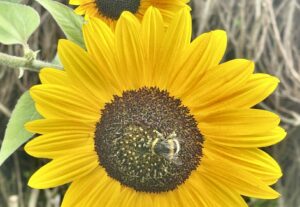
Gardens help out The blog has reported on several occasions on the problems bees, bumblebees and other insect pollinators face.  Now research by the Univeristy of Bristol has demonstrated the importance of gardens and urban areas to many farmland pollinators.  At certain times of years, such as early Spring and late Summer,, rural pollinators experience limited supply of nectar.   Somewhat surprisingly, a large percentage of UK farmland is within a mile of a garden, and at times of scarcity gardens can make good the lack of nectar [and pollen].  Indeed, the Bristol research (by Dr T Timberlake and colleagues) indicates that gardens can provide between 50 and 95% of the nectar during these 'lean times'.  Whilst gardens provide a relatively small amount of nectar in rural areas, nevertheless the continuity of the supply makes its contribution  particularly valuable. Full details of this investigation are reported here : https://royalsocietypublishing.org/doi/10.1098/rspb.2024.1523 Sunflowers to help bumblebees ? One of the issues that bumblebees face is infection by the parasite Crithidia bombi.  It lives in the gut of the bee. The parasite passes from host to host as cysts in faeces.  The parasites develop in the digestive tract, interacting with the intestinal lining using a flagellum.  Infection with this parasite seems to affect the bee's ability to learn and they struggle to recognise nectar-rich flowers, and consequently are at risk of starvation. Recent research has shown that if bumblebees are offered sunflower pollen to feed upon, then the Crithidia infection is significantly reduced. As bumblebees are often used in commercial glassshouses, it could be that if sunflower pollen was offered within this 'closed' environment then the incidence of Crithidia infection could be controlled.  The sunflower pollen does not have to be 'fresh', indeed stored, frozen pollen is effective.  A 1:1 mixture of sunflower and wildflower pollen also gives the desired 'medicinal effect', and ensures the bees are receiving enough protein and sodium from this supplement. Full details of this investigation are reported here : https://academic.oup.com/jee/article/116/5/1939/7234927        
Woodlands web updates 21

Woodlands web updates 21

by The blog at woodlands.co.uk, 19 January, 2023, 0 comments

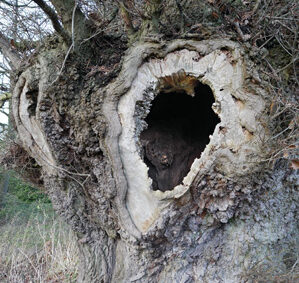
Ancient Trees A recent report has emphasised the importance of protecting and preserving ancient trees.  Ancient (veteran) oaks can live in excess of a thousand years, as can Yews.  The Bristlecones of California and Nevada may live for some five thousand years ! Such trees represent a massive carbon store; the carbon dioxide from the atmosphere being locked away for a millennium or five!  Not only are such trees a significant carbon store but they also offer a home or food for many other species - fungi, epiphytes such lichens & mosses, plus larval and adult stages of insects, birds and mammals.  As such they localised centres of diversity that contribute to ecosystem stability.  Not only are these trees ‘hotspots’ for species diversity but they are also centres of mycorrhizal activity and connectivity.  Mycorrhizae represent the symbiosis between fungi and plant. Plants ‘register’ wounding. When we are hurt, our nerves register the pain through the movement of sodium and potassium ions along the nerves.  When a plant is wounded, calcium ions are known to move in response, travelling from cell to cell, and leaf to leaf.  However, it is now known (through research at the John Innes Centre in Norwich) that this is not the first response of the plant to physical injury.  When cells are wounded they release glutamate, a form of glutamic acid.  This travels along the cell was and activates channels in the cell membranes that allow the movement of the calcium ions.   A bumblebee pathogen. One of parasites of bumblebees is Crithidia bombi.  It is a protozoan (single celled animal) that reproduces in the gut of the bumble bee. When infected with this parasite the foraging behaviour of the bee is impaired, as is its ability to learn.   A colony will suffer from increased worker mortality.  Now research has shown that floral structure may influence the transmission of this parasite from bee to bee.  The length and shape of the petals seems to be a critical factor.  If the bees ‘crawls’ in a ‘tube’ of petals, then it may leave behind some faeces.  If the bee is infected with the parasite, then it will be present in the faeces.  If the flower is then listed by another bee then it runs the risk of coming in contact with and being infected with the parasite.  Plants that have flowers with shorter petals / corollas are less likely to have faeces deposited within them, and therefore less likely to pass on the parasite to the visiting bumblebees.
woodland web updates - 21

woodland web updates – 21

by The blog at woodlands.co.uk, 5 December, 2022, 0 comments

Ancient Trees A recent report has emphasised the importance of protecting and preserving ancient trees.  Ancient (or veteran) oaks can live in excess of a thousand years, as can Yews.  The Bristlecones of California and Nevada may live for some five thousand years ! Such trees represent a massive carbon store.  The carbon dioxide from the atmosphere being locked away for a millennium or five!  Not only are such trees a significant carbon store but they also offer a home or food for many other species - fungi, epiphytes such lichens & mosses, plus larval and adult stages of insects, and a variety of birds and mammals.  As such the are localised centres of diversity that contribute to ecosystem stability.  Not only are these trees ‘hotspots’ for species diversity but they are also centres of mycorrhizal activity and connectivity.  Mycorrhizae represent a symbiosis between fungi and plant. Plants ‘register’ wounding. When we are hurt, our nerves register the pain through the movement of sodium and potassium ions along the nerves.  When a plant is wounded, calcium ions are known to move in response, travelling from cell to cell, and leaf to leaf.  However, it is now known (through research at the John Innes Centre in Norwich) that this is not the first response of the plant to physical injury.  When cells are wounded they release glutamate, a form of glutamic acid (an amino acid).  This travels along the cell wall and activates channels in the cell membranes that then allow the movement of the calcium ions. A bumblebee pathogen. One of parasites of bumblebees is Crithidia bombi.  It is a protozoan (single celled animal) that reproduces in the gut of the bumble bee. When infected with this parasite the foraging behaviour of the bee is impaired, as is its ability to learn.   A colony may also suffer from increased worker mortality.  Now research has shown that floral structure may influence the transmission of this parasite from bee to bee.  The length and shape of the petals seems to be a critical factor.  If the bees ‘crawls’ in a ‘tube’ of petals, then it may leave behind some faeces.  If the bee is infected with the parasite, then it will be present in the faeces.  If the flower is then visited by another bee then it runs the risk of coming in contact with the faeces and being infected with the parasite.  Plants that have flowers with shorter petals / corollas are less likely to have faeces deposited within them, and therefore less likely to pass on the parasite to the visiting bumblebees.