Changes in climate, phenology and food availability.
by The blog at woodlands.co.uk, 28 August, 2024, 0 comments
Since its formation, the earth has undergone change. Life forms have come and gone. There have been five major extinctions, the last being at the end of the Cretaceous Period; it killed off the dinosaurs and many other species. This particular extinction event is thought to have been particularly rapid, due to an asteroid impact. It caused a series of cataclysmic events and a rapid cooling of the Earth’s climate. Other changes, such as intense volcanic activity and tectonic uplift, may have pre-dated the asteroid impact but the event saw the elimination of many, many life forms.
We are witnessing significant global change, that is also rapid in geological terms. Changes in the Earth’s climate and species composition usually take place over millennia, indeed over millions of years. However, recent years have been very warm. Global temperatures have changed noticeably. The warming that has been recorded “is exceptional relative to any period since before the last ice age, about 125,000 years ago”. This warming has resulted in extreme and severe weather events in this country and across the world. This year a record breaking January temperature of 19.9oC was recorded at Achfary, with storms Henk, Isha, and Jocelyn in the same month. The Earth’s warmest year on record (between 1850 to 2023) was 2023. In early September 2023, the UK experienced a significant heatwave when daily maximum temperatures exceeded 30°C [somewhere in the UK] for seven consecutive days.
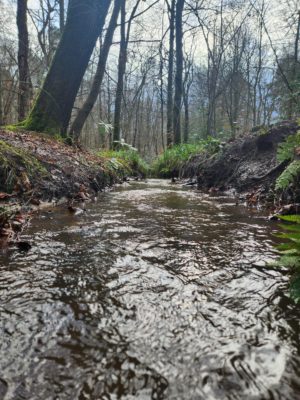
[caption id="attachment_35526" align="aligncenter" width="675"] Drought![/caption]
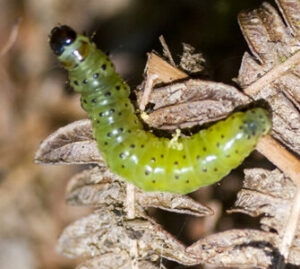
Such changes are not without effect. Phenology observations indicate that trees are producing their leaves earlier, woodland plants are coming into flower earlier. See the woodlands blog “Spring is on the move”. A concern with these changing phenologies is that ‘mismatches’ can occur. When trees come into leaf determines when caterpillars can feed and that, in turn, affects when birds can feed on the caterpillars and raise their young. If these events do not occur in synchrony then the ‘functioning of the ecosystem’ is disturbed.
[caption id="attachment_25123" align="alignleft" width="300"] Leaf 'unfolding'[/caption]
The agricultural and horticultural ecosystems that we have created are also affected by climate change. This year, heavy rainfall has meant that farmers in many parts of the UK have been unable to plant certain crops [such as potatoes, wheat and vegetables] during the key spring months. Some crops have rotted in the soil. In April, there was 111.4mm of rain, [the average for April is 71.9mm]; the sixth wettest April of the last 189 years. Persistent wet weather also affects lambing, and can mean it is not possible to turn dairy cattle out onto grass / pasture, which in turn affects milk production.
Monthly temperatures are more likely to be above average than below as climate change take effect. This was true for the first three months of the year. Warmer air holds more moisture and it can evaporate more water from the seas / oceans. A one degree (Celsius) rise in temperature adds 7% more moisture in the air. Woodlands are affected by heavy rain as soil becomes waterlogged, which affects woodland flowers, and wet winters do no favours for animals that hibernate.
The UK is not the only place to be affected by extremes of weather, be it rainfall and flooding, or high temperatures and drought. India has recently experienced a period of extreme temperature, with temperatures approaching 50oC. Such temperatures push human physiology to its limits. Just as extreme rain is a problem for farmers, so is extreme heat and / or drought. Brazil has been the main exporter of oranges for producing orange juice, but its recent crop has been substantially reduced as a result of flooding and drought; resulting in the worst harvest in decades. Spanish orange production has also been reduced due to drought.
Like California, large parts of Florida ‘the Sunshine State’’ has seen its once-famous citrus industry reduced over the past two decades. Two diseases, greening and citrus canker have taken their toll, and then Hurricane Ian in September 2023, hit the citrus industry at the beginning of its growing season. Large parts of the one famous citrus industry (oranges and grapefruit) have been lost and farmers are turning to the PONGAMIA tree to repurpose fallow land.
[caption id="attachment_41381" align="alignleft" width="650"] Pongamia : image thanks to Sarangib on Pixabay[/caption]
This is a climate-resilient tree from India. They do not need fertiliser or pesticides. It has been grown as a shade tree. As a member of the Fabaceae, it produces small, brown beans. These are so bitter than not even wild hogs will eat them. However, the beans are easily harvested by a machine that shakes the tree. A San Francisco based company has found a way to remove the bitter tasting chemicals and use the beans in food production, as they yield a high quality protein and also an oil. The bean (a legume) has been used to make a table oil, protein bars and a biofuel.
Orange juice production is not the only drink to be affected by changing climate. Drought affects coffee plants and damages the quality of the soil, and excessive rainfall ‘favours’ fungal disease [e.g.coffee leaf rust and cherry rot], all of which will impact the yield and quality of the beans harvested. Similarly, chocolate production is threatened. Cacao trees are impacted by global warming, they can only grow and thrive within 10 degrees of the Equator, needing stable temperatures, high humidity, and ample rain. However, temperatures are rising while rainfall has decreased. These changes lower the humidity. The trees are also under attack by a virus - cacao swollen shoot virus disease (CSSVD).
Changing temperatures and rainfall patterns will influence what crops can be grown and where, it will also influence their cultivation and the working patterns associated with those crops. Climate change is thus a factor contributing to food inflation and insecurity across the world.