Woodlands.co.uk

Blog - epiphytes

Heat waves and urban heat islands

Heat waves and urban heat islands

by The blog at woodlands.co.uk, 21 June, 2026, 0 comments

Mosses and lichens are often overlooked as part of the woodland flora.  The same is true in towns and cities.  They can be found on the trunks of trees, on walls and rooftops.  They are epiphytes, that is,  plants which grow on the surface of another plant. They derive moisture and nutrients from the air, rain, and debris that is deposited on and around them. They cling to these surfaces, come rain or shine.  Climate change and pollution affects these small, often unnoticed plants in both woodland and urban settings.    As global temperatures continue to rise, many places face extremes of temperature.   Heat waves are becoming more common, as we have recently experienced.  Some 1500+ heat-associated deaths were recorded in England during the heat waves of  last summer [2025].    The highest rates were among elderly individuals [aged 85+] with the impacts felt particularly in care homes and hospitals.   London and the East of England recorded the highest number of heat-associated fatalities. Cities and urban environments often face the brunt of these climate extremes.  The concrete, brick and tarmac of cities absorb and hold onto the sun’s energy creating ‘urban heat islands’. Urban temperatures are often several degrees higher than surrounding rural areas. Urban temperatures have soared in recent times, for example in New Delhi, a record high of 126.1oF (52.3oC) was recorded. Such temperatures claim lives. This year parts of Europe have recorded temperatures of 40oC. Urban trees suffer in this heat as do their epiphytic flora.  The mosses and lichens in our cities fall into this category.  Researchers at Leiden University have investigated the effect of changing temperatures on the mosses and lichens growing on Lime (Linden) trees in Dutch cities (Amsterdam, Leiden, and Rotterdam).  They sampled numerous sites, measuring the microclimate for each tree and recording the species present.  They found, perhaps unsurprisingly, that urban heat islands were reshaping the moss and lichen communities.  Species that were adapted to drier, brighter and nitrogen-rich environments were favoured; for example, a type of wreath lichen [Phaeophyscia orbicularis]. When wetted this turns from a grey / brown colour to green, and its symbiotic green algae can begin to photosynthesise producing sugars. Those species that were associated with moister and shady conditions were found to be ‘losing out’.  They noted that the larger lime trees supported more diverse epiphyte communities; this might be associated with the older bark offering more micro-habitats for the mosses and lichens to ‘gain a foothold’.   [caption id="attachment_41261" align="aligncenter" width="675"] Lichens on an old stone wall.[/caption] The changing climate and urban heat islands are altering the species that can survive in our towns and cities, on trees and artificial surfaces.
Temperate rainforest or ‘Atlantic woodlands’, a WoodlandsTV film

Temperate rainforest or ‘Atlantic woodlands’, a WoodlandsTV film

by Angus, 8 November, 2024, 0 comments

Around the western coast of Britain, there are some rare and beautiful woodlands sometimes referred to as "temperate rainforest” or “Atlantic woodlands’.  There are such woodlands in North Wales, rich in ancient oaks and birch. They are ancient woodlands.  Such woodlands have little value in terms of timber but contribute massively to biological diversity - the trees are covered with different moss, liverwort and lichen species, underneath there is a ‘carpet’ of bilberries and varied ferns.  These woods have developed as a result of the influence of the  Gulf Stream.    This keeps the area warm but also wet,  the incoming air is also ‘clean’, creating woodlands unlike others in Britain.  Such woods have a damp and humid feel  and this dampness encourages mosses, liverworts, lichens and fungi. They are to be found on the rough bark of oak, the smooth bark of hazel, and covering rocks.  When one plant grows on another, it is termed an epiphyte. The tree canopy helps to ‘lock in’ the moisture. These epiphytes are discussed in some detail by April Windle of the British Lichen Society in a recent WoodlandsTV film on Temperate Woodlands, which can be viewed below. [embed]https://youtu.be/lO1H_iFFZJY?si=k0-UPv0DIsMJpwRs[/embed] The damp and humid conditions are also helped by the streams and waterfalls in these woods, plus the abundance of the epiphytes ensures that there is constant evaporation. The difficult access and rugged terrain of some of these woodlands may have helped them remain unchanged for centuries, probably dating back to the last ice age. Temperate rainforest must once have covered the Atlantic fringe of Western Europe, ranging from North West Scotland all the way down to the Iberian Peninsula.  Temperate rainforest is biodiverse, home to species not found anywhere else in the world.  Bats find a home here, such as the greater and lesser horseshoe bats, where they feed upon the rich source of invertebrates that thrive in these woodlands. The challenge for an owner of such a woodland is how to protect and manage it. It is not just a case of leaving them alone.  Winter grazing controls the bramble and holly, this helps protect the mosses and lichens, ensuring natural regeneration can occur.  If bramble and other botanical thugs gain an upper hand, then the mosses etc will be shaded out.  Tree seedlings would also struggle to establish themselves.  The intensity / frequency of grazing is critical, Natural Resources Wales (NRW) suggests one sheep per hectare for the winter months.  Ponies can be used for such grazing but they need more management than sheep.  The range of Woodlands TV films can be seen on the Woodlands TV channel on You Tube : https://www.youtube.com/@WOODLANDSTV  
Hedgerows revisited

Hedgerows revisited

by The blog at woodlands.co.uk, 1 October, 2023, 0 comments

Many hedgerows were planted originally to keep livestock, such as sheep, cattle, pigs, chickens in specific areas. Some hedgerows were planted to define boundaries – ‘who owned which bit of land’.  Hedgerows often surround fields.   The word ‘field’ comes from Old English ‘feld’, meaning 'an area of felled trees / open country'.   The establishment of many hedgerows was associated with the process of enclosure; a change in land use from arable to pasture (for sheep). Open fields and common land were enclosed by hedgerows, over many years the landscape of England changed. The C20th witnessed the opposite process, the removal of hedgerows for the creation of larger fields to accommodate larger machinery.  In the decades following the end of the second Word War, it has been estimated that a quarter of a million miles of hedgerow have been ripped out / lost.  Fortunately, there are now policies in place to halt or even reverse the loss of hedgerow.  Hedgerows are recognised as an integral part of our landscape and play an important role in the maintenance of biodiversity.  They provide habitats for a variety of animals and plants. Many species of birds nest in hedgerows, such as song thrush, yellowhammer and tree sparrow. Different species favour different heights within the hedgerow. Some species nest near the ground such as wrens and dunnocks, whereas others nest higher up (eg. Bullfinches).   The greater the variety of plant species in a hedgerow, the better the supply of pollen, nectar, fruits and seeds.  Ivy for example will produce flowers late in the year and offers a source of nectar and pollen.  Hawthorn, blackthorn and holly offer fruits in the winter months for birds and small mammals. Hedgerows and hedges have to be be maintained.  Such management may involve planting of trees or shrubs to fill gaps, coppicing, laying or cutting back. [youtube=http://uk.youtube.com/watch?v=Andv7a0NPEc 425 350] However, the effects of pruning and cutting back during the bird-nesting season can be disastrous. Mechanical flailing of a hedgerow is fast, effective and the regrowth is generally slower, but its effects can be particularly bad on birds. They may abandon their nests and / or  their eggs or chicks may be destroyed. The pruning / flailing may also reduce the insect populations of the hedgerow (or other other food sources) on which the birds depend.  Hedge pruning maintenance is :- ideally undertaken outside of the nesting season. and  only done every second or third year. [caption id="attachment_25527" align="aligncenter" width="600"] A flailed hedge[/caption] Hedgerows also support vital insect pollinators : butterflies, hover flies, moths and bees. These insects help with the pollination of crops such as oilseed rape, legumes and fruit trees. Other insects can help with crop yields by predating upon crop pests, such as green fly and blackfly (these may spread viral diseases on crops such as sugar beet).  Insects may overwinter in the hedgerow and move into the fields come the Spring, as the aphids start to increase in number.  If trees are left in situ, they may achieve veteran status.  Then their rough bark, cracks, holes and dead wood will support a diverse range of species. Owls, kestrels and bats may come to nest. There are also niches that offer opportunities for epiphytes, mosses and lichens.     The dead wood may be home for saproxylic beetles.   Hedgerows also act as corridors linking to other hedgerows, woodlands etc along which animals can pass (for example, hedgehogs and other small mammals). Hedgerows provide important wildlife corridors across agricultural landscapes. They provide food for insects, small mammals and birds (due to the range of plants and their different flowering and fruiting times). They provide nesting and roosting sites for birds and bats, and ‘homes’ for a variety of small mammals.  Many insect species over winter in hedgerows. The trees and woody shrubs help with carbon sequestration. Hedgerows offer a windbreak, reducing wind speed and hence lowering soil erosion, they may also offer shelter to animal stock.  The roots also help stabilise the soil. [caption id="attachment_40483" align="aligncenter" width="675"] Hedge with beech, nettle, dog rose, brambles, hazel and ash - amongst others[/caption]  
Parts of a tree (1): The Bark.

Parts of a tree (1): The Bark.

by The blog at woodlands.co.uk, 25 May, 2023, 0 comments

Bark exists to protect a tree from ‘attack’ by the elements, pests, ‘predators’ (animals who would eat it) and disease causing organisms.  There is no easy definition of what constitutes bark,   a slightly technical definition might be ‘the tissues that lie outside the vascular cambium'.  The vascular cambium is a layer of dividing cells that gives rise to xylem tissue and phloem tissue.  The cells nearer the centre form the xylem, those towards the outside form the phloem.    The inner part of the bark contains various types of living cells, for example, glands that produce latex (as in natural rubber), oils and resins.  Moving outwards, there lies the rhytidome or outer bark, an amalgam of living and dead material - notably cork cells.  The cork cells fill with a waxy material - Suberin. Eventually, these cells die and form much of the bulk of the bark.  The nature of bark is immensely variable. Wind, fire and frost can seriously damage or kill trees but bark helps  to protect them.   Trees are eminently combustible as is evidenced by the recent forest fires in Australia and California. However, some trees have a very thick bark that can protect them against fire.  The cork oak has a bark that can be up to 30 cm thick, it is so thick that it can be harvested periodically without killing the trees.  Cork oak is grown extensively in the mediterranean region. Giant Redwoods too are noted for having an extremely thick bark. Their bark is very fibrous and can be up to three feet thick, it offers protection against fire (and rock fall which is also a hazard in their home habitat). In contrast to cork oak and redwoods, some trees like the eucalypts have a bark that is rich in oils and very flammable.  The bark also ‘peels’, strips are shed onto the forest floor. There are many species of Eucalyptus and several different types of bark are recognised.  [caption id="attachment_35352" align="alignleft" width="300"] Woodland recovering from a fire[/caption] If and when this oil rich bark builds up on the forest floor, it will contribute significantly to the intensity and ferocity of any fire. Indeed, it has been likened to adding petrol to a fire ’3 centimetres of leaf litter can cause a conflagration equivalent to one fuelled by a centimetre of refined gasoline’.  The leaves are also rich in oil so the crowns of the trees can also contribute to / exacerbate any fire.  The peeling or exfoliation of bark is not restricted to Eucalypts, it can be seen in trees much closer to home - such as the birch.  Its bark can be removed in long strips and has been used in covering a canoe or roofing material. Whilst bark can protect against fire, it can also deter animals - large or small from inflicting damage.  For example, there is an African species of Acacia known as knobthorn that has a bark covered with thorn-like structures.  These 'thorns' deter elephants from eating the bark.  Elephants can consume a lot of vegetation in a day and tree bark is much favoured.  A variety of animals may feed on bark material, for example deer, squirrels, and beavers, but the list could also include orang-utans, rhinos, bush babies and porcupines. North American porcupines use their large front teeth to eat bark and stems. Bushbabies generally feed on insects during the wet seasons, but during drought / dry periods - they feed on the resins / gum that flows from the trees in their woodlands. In the UK, a lot of bark damage is done by deer, especially during the winter months when other food sources are limited.  In the summer months, male deer rub their heads / antlers against the trunks of trees - inflicting damage.  Such activity can prevent regeneration in natural woodlands.  Tree guards may be needed to allow young trees to establish themselves (or fencing to create a ‘deer free’ zone).  Guards also protect against rabbit damage.  Grey squirrels can also cause damage to trees as they gnaw stems to reach the ‘sweet’, sap-filled tissues just below the bark, this activity is usually seen in late Spring and early Summer. [caption id="attachment_5312" align="alignleft" width="300"] xylem vessels[/caption] Whilst bark is broadly protective, it can also offer a home to certain pests.  Bark beetles lay their eggs below the bark so that when the larvae hatch, they can feed on the nutrient rich tissue of the cambium and phloem.  Bark beetles have been responsible for the loss of millions of trees in the United States and Canada.  The scale of the loss is much greater than in the past, when cycles of beetle infestation and fire created a mosaic across the countryside of young and old trees.  Ageing stands of trees coupled with warmer winters (which have helped the overwintering stage of the insect)  have contributed to the spread of bark beetles.  The beetles breed and feed beneath the bark, damaging the phloem and cambium tissue.  Consequently, the tree's transport systems begin to fail and the beetles may also introduce disease-causing fungi and bacteria. To a certain extent, trees are able to repair damage to their bark but the response is varied according to the nature of the damage and the tree involved. Some trees can produce ‘callus tissue’ that heals over the ‘wound’, leaving a scar. Some trees, such as the pines, produce resins and antimicrobial compounds in response to injury.  This sticky resin may trap insect invaders as is witnessed by those trapped in time capsules of amber.   Apart from bark beetles, other animals and plants live in or on bark in a variety of associations, some parasitic as is the case with fungi (like the polypores), whilst lichens and mosses are epiphytes.  They use the bark as a substrate on which to live, grabbing nutrients and water from rainwater as it trickles down.   The many uses of bark tissue can be left for another woodlands post. [caption id="attachment_39940" align="aligncenter" width="620"] Section through bark[/caption]
Wild life and deadwood.

Wild life and deadwood.

by The blog at woodlands.co.uk, 28 April, 2023, 0 comments

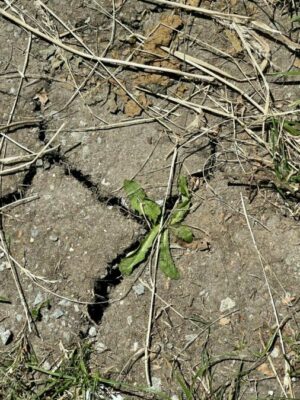
For biodiversity to flourish, a wide variety of microhabitats is needed.  With many micro-habitats, more species are able to thrive. It may seem counter-intuitive but deadwood offers opportunities for a diverse range of species. Within a woodland, there are various types of deadwood, providing shelter and food for many organisms.  Perhaps one of the most obvious examples of deadwood is standing but dead trees.  If the dead tree was a veteran, then it will provide a variety of micro-habitats.  Holes and crevices may be used by bats and birds, the decaying wood will be colonised by bacteria and fungi, bracket fungi may erupt - whilst the bark will continue to offer a substrate for mosses and lichens.  As the wood decays, the material becomes a home for saproxylic beetles. Stag beetle larvae feed on decaying wood underground,  whilst the adults rely on fat reserves built up during their larval stage. Adults can ‘drink' oozing sap  and the juice of soft, rotting fruit. In the UK, some 650 beetle species are associated with deadwood [visit Dr Ross Piper’s website for full details of these insects].  As with many insects, many saproxylic beetles are threatened with extinction - due to the decline in the number of veteran / ancient trees.  Saproxylic beetles, apart from being important in the recycling of materials, are also food for birds and mammals. A previous blog has extolled the virtue of dead hedges.  Dead hedges are simply piles of branches and twigs arranged to create a barrier / hedge. They represent  a way of disposing of material that arises from thinning or clearing operations in woodlands. This ‘waste material’ of saplings and side branches are sometimes referred to as “arisings" by tree surgeons, or "lop and top” by foresters. Using this material in this way is good for wildlife, particularly for small mammals and birds - as it gives them somewhere to shelter from the wind and rain, and protection from predators. It's also good for insects.  As the material rots and decomposes, it adds humus / nutrients to the underlying soil. Larger pieces of wood from the felling of trees can be arranged to form a stack or pile, by simply laying branches and logs on top of one another  Such a stack wil rot and decay over time, but will provide a home to a variety of wildlife. So, deadwood in its various forms, is an important part of woodland ecosystems. It has a role in delivering biodiversity, but it also provides ‘ecosystem services’, such as soil formation and nutrient cycling. Deadwood contributes to the detrital food chain, which is driven by fungi, bacteria and detritivores.   Below : All that remains of a historic tree - the Wilberforce Oak. It was here at Holwood House (Keston , near Hayes, Bromley) in 1788 that William Wilberforce resolved to address the task of abolishing the slave trade. It took some twenty years for his vision to be realised. [Thanks to Ruth for images of the Wilberforce Oak] https://en.wikipedia.org/wiki/Holwood_House