Woodlands web updates 32
by The blog at woodlands.co.uk, 20 January, 2025, 0 comments
Loss of nitrogen fixing species.
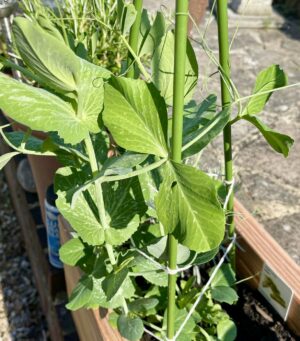
Some plants can ‘fix’ atmospheric nitrogen. That is they can take nitrogen from the air and use it to make complex nitrogen-containing organic compounds (such as amino acids / proteins). This fixation of nitrogen is due to the presence of symbiotic bacteria in root nodules. Gardeners often make use of ‘nitrogen fixers’, such clover, peas and beans to augment soil fertility.
A recent study has investigated the changes in the makeup of the flora in European forests (over several decades) from 1940 to 2019. What they found was that the proportion of nitrogen fixing plants has declined. The changes did not seem correspond to any changes in temperature or aridity / rainfall during the time period, but to nitrogen accumulation in the environment. When nitrogen levels are low, nitrogen fixing plants have an advantage, but when nitrogen levels increase their advantage over other plants is lost.
Nitrogen compounds in the soil can result from the intensive use of fertilisers on nearby agricultural land or atmospheric deposition of various pollutants. Nitrogen levels have increased tenfold since the start date of the surveys. This loss of nitrogen fixing plants might, in the long term, result in a loss of ecosystem resilience.
For further info - visit https://www.science.org/doi/full/10.1126/sciadv.adp7953
The great green wall project.
There are a number of large scale tree planting projects, many associated with offsetting global warming. The great green wall aims to grow a belt of trees some 8000 km in length, and 15 km wide in the Sahara. The planned route supported trees in the past. The aim is to ‘stabilise’ the desert, limiting further expansion into the Sahel, as the tree roots help to stabilise the soil, limiting erosion. Desertification is associated with drought and overgrazing.
The idea of such a barrier was taken up and approved by countries south of the Sahara in 2002, during a special summit. The trees selected are drought resistant species, that also serve to fertilise the soil and contribute fruits, fodder and fuel wood for local communities. Though millions of trees have been planted, the project needs more funding if it is to succeed. Further details about the great green wall can be found here and here.
Dealing with drought ?
[caption id="attachment_35526" align="alignleft" width="300"] drought[/caption]
Drought is a problem not only for woodlands but also for crops, resulting in substantial food loss across the globe. The damage to crops is likely to increase as fresh water availability declines. During drought, the availability of water in the topsoil decreases, leaving water only accessible in the deeper subsoil. Plants seek water through their roots and whilst roots generally grow downwards, they also tend to spread outwards to form a network. So, if the roots are mainly located in the upper layer of the soil, they may not be able to absorb water as the soil dries.
Now, research at the University of Nottingham has found that the plant growth regulator abscisic acid plays a critical role in a plant’s response to drought. The abscisic acid promotes the production of another growth regulator - auxin. The two enhance the plant’s geotropic response* - so that the roots permeate deeper into the soil in search of water.
Full details in the research paper here :
https://www.sciencedirect.com/science/article/abs/pii/S0960982224016439?dgcid=coauthor
* Geotropism is a plant’s response to gravity.