Woodlands.co.uk

Blog - ghost ponds

Ghosts and zombies.

Ghosts and zombies.

by The blog at woodlands.co.uk, 14 April, 2025, 1 comments

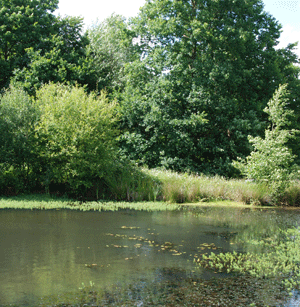
The terms ghosts and zombies often feature in films or TV programmes, but across the country the terms can also be applied to many hundreds, possibly thousands of lost and abandoned ponds.  Ponds have featured in the landscape for centuries or millennia.  Pingos -  formed in the depressions left after the last ice age. The middle of the C20th saw not only the destruction of many hedgerows, but the removal of many ponds.  This was particularly true in farming areas like East Anglia.  The strategy was to increase field size and allow access of complex machinery that was becoming available at that time; for example large combine harvesters.  Whilst the loss of the hedgerows and associated wildlife is well documented, the loss of ponds has not attracted so much attention.  Many hundred of ponds were filled in (often using the debris and material from the destruction of the hedgerows), to give a few more metres of arable land, and with machinery replacing horses the need for ‘watering holes’ diminished.  The infilled ponds are sometimes referred to as ghost ponds.  The location of these 'ponds' can sometimes be found  By studying old ordnance survey (or tithe) maps or  They may be visible using aerial photography / drones and picking up a different colour or shade of the crop growing in a field Noticing the accumulation of water after heavy rain in a slight depression, or a mist hovering over a particular part of a field A zombie pond is somewhat different.  It is a pond or very wet, marsh area which is shadowed by a tree canopy.  The pond has filled over many, many years with dead leaves, so that it has a deep layer of decomposing organic material.  The pond margins is generally overgrown, with willow and other vegetation where have begun to ‘invade’.  The pond is half dead / half alive, hence the term 'zombie'.  The area / water becomes anaerobic / anoxic, as the dead leaves rot and use up oxygen. Few life forms call it home - perhaps midge larvae or the occasional beetle. Indeed, such ponds may release not only carbon dioxide but also methane; the latter is a particularly potent greenhouse gas.  Zombie ponds may be found in woodlands, particularly where active management has fallen by the wayside. However, not all is lost, both ghost and zombie ponds can be resurrected.  In the case of ghost ponds, the infilling material / soil is dug out until the original base layer is reached.   This may be recognised by the dark, fine silt layer / sediment, which may contain the remnants of water snail shells.  Ideally, the excavation should mirror the original outline of the pond.  This may be determined in part by digging two trenches at right angles to each other. Details of the restoration procedure may be found here.   Freshly excavated ghost ponds should be left to fill with rainwater through the winter months, and left for plants and animal to colonise naturally.  Amazingly, several pond restoration projects have demonstrated that the original silt layer of the pond is a valuable seedbed of many aquatic and emergent plant species, even though the seeds may have lain there dormant for decades , possibly centuries.  The refreshed pond should also have a surrounding margin of land to separate it from any adjacent farmland activities - to prevent nutrient run off / pesticide application etc.  Further details of the restoration of lost ponds can be found at:- https://norfolkponds.org/ https://www.ucl.ac.uk/geography/news/2023/nov/bringing-ghost-ponds-back-life https://www.essexwt.org.uk/recovering-lost-ponds In the case of zombie ponds, there is a similar approach to restoration but it begins with the cutting back and / or removal of trees from around the pond to let light in.  Then the layers of rotting leaves / organic materials are scooped out, so that the original sediments of the pond are exposed.  The depth of the decomposing material may be quite significant.  However, with light pouring in and the rotting material removing the pond can soon develop a diverse community of plants (from the seedbed and pond 'visitors' e.g water-crowfoot, stoneworts, and animals).  The restoration / renewal of ponds in fields, meadows or woodlands makes a significant contribution to the biodiversity of an area. There is an excellent video about the restoration of ghost and zombie ponds on YouTube, featuring Professor Carl Sayer (UCL). Professor Sayer grew up in Norfolk, where many of these ‘hidden’ / lost ponds are to be found.  Visit the Razor Science Show “Bringing 'ghost' and 'zombie' ponds back from the dead”. [https://youtu.be/SYkbDdaUMBY?si=gd2jbfxk4iXLSFL5]  
How "sticky-up things" act as refuges to protect diversity against intensive farming

How “sticky-up things” act as refuges to protect diversity against intensive farming

by Angus, 22 November, 2022, 1 comments

When you look across cultivated fields you are usually surveying an unrelenting monoculture  -of earth or wheat or grass. Lots of pesticides and fertilizers are used and there are regular assaults by bladed machines.  It's bleak for wildlife, whether plants or animals.  But nature is resourceful and clings on where it can.  And within intensive agricultural areas there is a pattern to the small oases of diversity. There is more diversity where an obstacle stops the machines in their track  Sometimes that's a linear feature like a river or a hedge or maybe just a fence, but often it's just a sticky-up object. A tree, a pylon, a pole, or even a wind-turbine.   At the base of objects sticking up in fields you often find a clump of plants, sometimes flowers, and shelter for small mammals and birds.  Taking the train through northern France recently, I realised how extremely industrialised their countryside has become and it's the same in most of Lincolnshire.  Hedges have been removed, single trees are rare and every effort is directed to increasing wheat / crop production.  Diversity is not just discouraged but it is seen as the enemy - a small copse or hedge can harbour swarms of crop-eaters so these have usually been grubbed out (as have many ponds (see the woodlands blog on ghost ponds in Norfolk).  Whatever the spin and rhetoric, the large scale farmer is at odds with biodiversity. The soil is a highly lucrative resource where farmers want to maximise their returns.  Increasingly, they use modern technology with tractors guided by SatNav, planting twice a year, with harvesting dictated by accurate weather forecasts and sophisticated seedlings being protected and fed by brutally efficient pesticides and fertilisers.  Lip service is often paid to the farmers' role in looking after the countryside but in reality most of them are businessmen and businesswoman wanting to optimise returns.  Farming businesses' borrowings and financial objectives don't allow them to spend too long worrying about biodiversity or the "hundred harvests" concern - that, when treated badly, the soil will be mostly gone (e.g fenland blows) or made unusable within 50 or 100 years. Refuge is an important concept in ecology: the idea that an organism gets protection from predation by hiding in inaccessible areas. Coral reefs are an example of habitats where animals can take refuge, and rainforests contain numerous physical refuges. [The concept of refuges or refugia has developed in recent years].   In the case of the arable fields of Britain,  it seems as if it is mainly the "sticky-up things" and linear features  (hedgerows etc.) which provide refuge, but not just from animal predation but from humans and their machinery.  Nature is reacting to humans as if they are the predators. There are thousands of objects in the countryside which act as refuges - it's a benign and unintended consequence of landscape clutter.  For example signposts, pillar boxes, mobile phone masts, abandoned fence posts, and even discarded farm equipment.  These objects can also offer a structure for plants to climb up in their quest for sunlight and they can provide shelter from wind, but mostly they offer protection against the farmer and the machines.  Unfortunately, the natural human instinct is usually to tidy up everything in sight, which often works to the detriment of biodiversity.  It would be better to protect vegetation and stop mammals from being mashed up by mowers / machinery, and it is often the residual sticky-up features that protect these small refuges.  Perhaps we need less rural de-cluttering of the British landscape, and more ‘mini refuges’.  
Woodlands web updates 7

Woodlands web updates 7

by The blog at woodlands.co.uk, 2 October, 2021, 0 comments

The British Dragonfly Society has produced a report “State of Dragonflies, 2021”.  Dragonflies display the usual characteristics of insects, three pairs of jointed legs, three clear divisions to the body, compound eyes and a pair of antennae.  They also have two  pairs of (transparent) wings.  The hindwings are broader than the forewings so they belong to the group - Anisoptera (from the greek unequal wings).  They can fly fast and manoeuvre well.  Their ancestors were some of the first winged insects to evolve. The report notes that Many species have increased their distribution (since 1970), for example, the emperor dragonfly,  the ruddy darter. Though some like the black darter seem to be in decline; this may be associated with a lack of heathland management and the drying of blanket bog areas. Several species have arrived in Britain from Southern Europe for the first time, with others returning after long absences.  The vagrant emperor is a long distance migrant from Africa and the Middle East. It is thought that it might now be breeding more regularly in Southern Europe so that some now migrate northwards more often. Dragonflies are moving northwards across Britain and Ireland (associated with warming temperatures and climate change) Whilst the distribution of species has increased, the actual numbers of different species is not known so it is not possible to say if dragonfly numbers have increased overall. However, compared to many reports on the collapse of insect numbers, it would seem that that many dragonfly species are responding to climate warming and an increase in the number of ponds (for example, see the woodlands blog of the restoration of ghost ponds in Norfolk), lakes, gravel pits in recent years. The larval stages of dragonflies (nymphs) are spent in water. Apart from changing the distribution of various animals (and plants), climate change can have other effects.  Some homeotherms ‘warm blooded’ animals (birds and mammals) are undergoing changes in their body form or ‘shape shifting’.  Sara Ryder et al of Deakin University, Australia has studied several species of Australian parrot and has found that their beak size has increased since the nineteenth century:  this increase in beak size is thought to be associated with better heat exchange.  Other research has reported on changes to tail length in wood mice, also tail and leg size in masked shrews.  The changes are generally less than 10% but they do seem to be responses to changing climatic conditions. Pampas grass (Cortaderia selloana) is a tall, clump forming grass with attractive plumes that can find a home at the coast, in town or in your garden.  It was originally a species native to South America. However, it now has a much wider distribution, mainly due to its use as an ornamental plant though it was also used in South Africa to control erosion on dumps around mines. Each plume can produce tens of thousands of seeds.  Consequently, it is now regarded as an invasive species in many countries. It has expanded across industrial and urban areas, squeezing out native species in coastal regions of France, Spain and Portugal, Now the IUCN (International Union for the Conservation of Nature) has introduced a system to recognise the threats posed by harmful species (such as Pampas Grass)  - The Environmental Impacts Classification of Alien Taxa.
