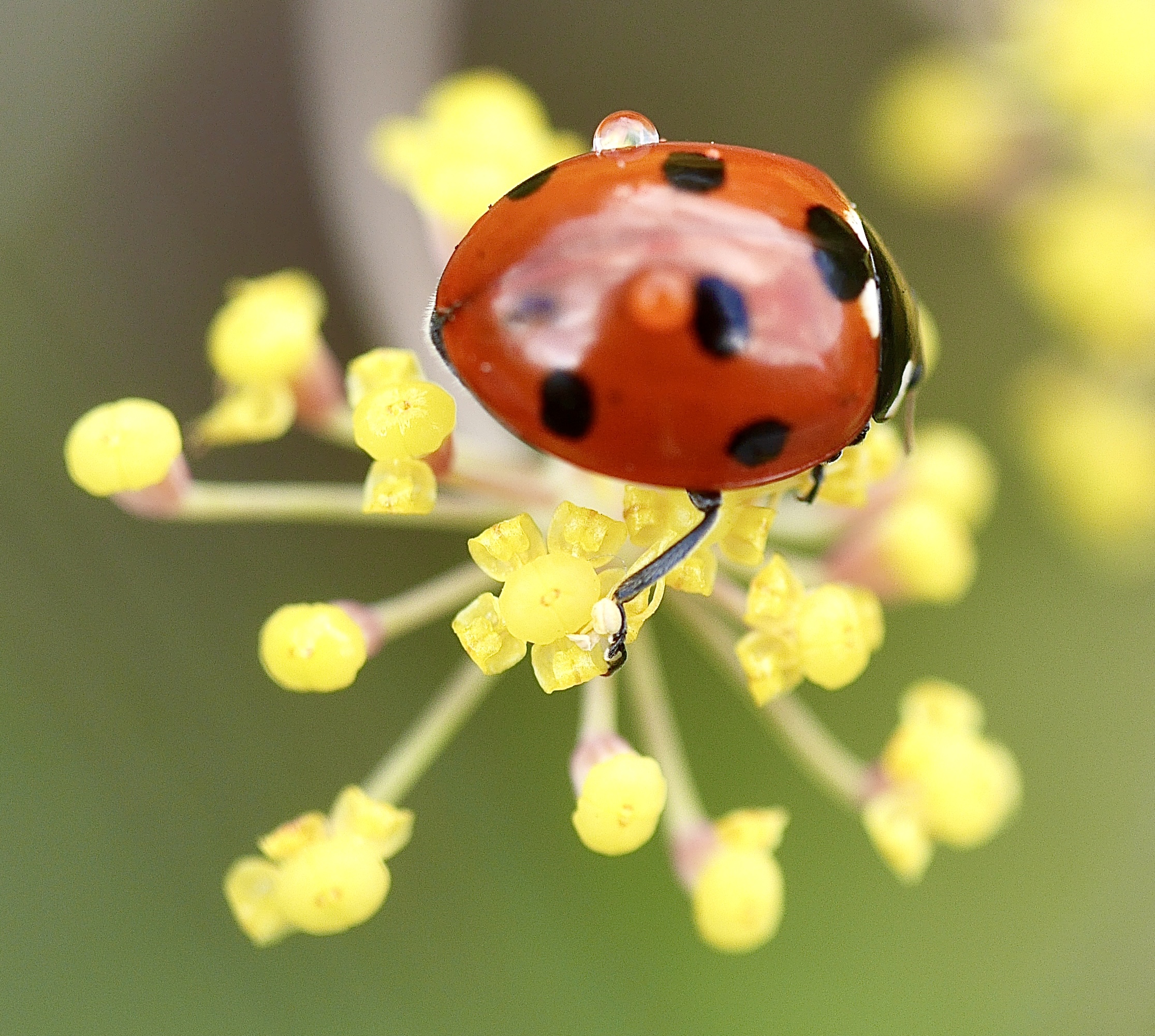
A surfeit of ladybirds
by The blog at woodlands.co.uk, 4 November, 2025, 2 comments
A surge in ladybird populations took place this summer. The seven spot ladybird is native to the UK. "Millions" of the beetles invaded beaches and even cricket matches during the various heat waves. At seaside venues, ladybirds massed on the beaches, landed on sunbathers, and covered cars. The last time that we experienced a similar increase in ladybirds was during the hot (and dry) summer of 1976, though there have been sporadic ‘booms’ in the intervening years.
The surge in ladybird (particularly the seven spot ladybird) numbers can be attributed to :-
The warm weather in early Spring and Summer
An abundance of food in the form of greenfly and blackfly (aphids). Their numbers also increased with the warm weather, as their life cycle moves at a faster rate. Aphids enter into a cycle where female aphids can give birth to live young, without fertilisation. A process known as parthenogenesis.
Ladybirds in gardens help control aphids on roses and other plants by feeding on them. They are very effective predators. Predators have key role in keeping the balance of nature.
As the temperature falls, ladybirds look for places to overwinter. Native ladybirds tend to hibernate under logs, rocks, and in tree litter. The harlequin ladybird which is an invasive asian species, may enter our homes. AS harlequin ladybirds have been introduced from warmer regions, so they seek out the warmth that houses offer. People have found them on windows, doors and walls. It is advisable to close windows and doors to limit their entry. In their home range, harlequin ladybirds probably hibernate in big clusters in caves, hollow trees and other sheltered places. Here their search for warmth tends to occur at the start of October. Harlequin ladybirds are mainly to be found in the South-East though they have been spreading northwards. They have been implicated in the decline of native species.
Interestingly, they harbour a sexually transmitted disease but not the sort that can affect us. It is a fungus [the Laboulbeniales fungus] that forms scales on the wing cases (elytra), which cover and protect their wings, or it appears as a yellow, finger-like outgrowths of the body. The fungus feeds off vital internal fluids. It is passed on through contact during mating or when the harlequin ladybirds huddle together whilst hibernating.
[caption id="attachment_42748" align="aligncenter" width="675"] Larva of ladybird[/caption]