Woodlands.co.uk

Blog - gulf stream

Temperate rainforest or ‘Atlantic woodlands’, a WoodlandsTV film

Temperate rainforest or ‘Atlantic woodlands’, a WoodlandsTV film

by Angus, 8 November, 2024, 0 comments

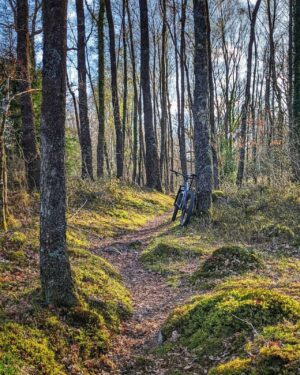
Around the western coast of Britain, there are some rare and beautiful woodlands sometimes referred to as "temperate rainforest” or “Atlantic woodlands’.  There are such woodlands in North Wales, rich in ancient oaks and birch. They are ancient woodlands.  Such woodlands have little value in terms of timber but contribute massively to biological diversity - the trees are covered with different moss, liverwort and lichen species, underneath there is a ‘carpet’ of bilberries and varied ferns.  These woods have developed as a result of the influence of the  Gulf Stream.    This keeps the area warm but also wet,  the incoming air is also ‘clean’, creating woodlands unlike others in Britain.  Such woods have a damp and humid feel  and this dampness encourages mosses, liverworts, lichens and fungi. They are to be found on the rough bark of oak, the smooth bark of hazel, and covering rocks.  When one plant grows on another, it is termed an epiphyte. The tree canopy helps to ‘lock in’ the moisture. These epiphytes are discussed in some detail by April Windle of the British Lichen Society in a recent WoodlandsTV film on Temperate Woodlands, which can be viewed below. [embed]https://youtu.be/lO1H_iFFZJY?si=k0-UPv0DIsMJpwRs[/embed] The damp and humid conditions are also helped by the streams and waterfalls in these woods, plus the abundance of the epiphytes ensures that there is constant evaporation. The difficult access and rugged terrain of some of these woodlands may have helped them remain unchanged for centuries, probably dating back to the last ice age. Temperate rainforest must once have covered the Atlantic fringe of Western Europe, ranging from North West Scotland all the way down to the Iberian Peninsula.  Temperate rainforest is biodiverse, home to species not found anywhere else in the world.  Bats find a home here, such as the greater and lesser horseshoe bats, where they feed upon the rich source of invertebrates that thrive in these woodlands. The challenge for an owner of such a woodland is how to protect and manage it. It is not just a case of leaving them alone.  Winter grazing controls the bramble and holly, this helps protect the mosses and lichens, ensuring natural regeneration can occur.  If bramble and other botanical thugs gain an upper hand, then the mosses etc will be shaded out.  Tree seedlings would also struggle to establish themselves.  The intensity / frequency of grazing is critical, Natural Resources Wales (NRW) suggests one sheep per hectare for the winter months.  Ponies can be used for such grazing but they need more management than sheep.  The range of Woodlands TV films can be seen on the Woodlands TV channel on You Tube : https://www.youtube.com/@WOODLANDSTV  
Atlantic Oak Woodlands - our "temperate rainforest"

Atlantic Oak Woodlands – our “temperate rainforest”

by Angus, 11 April, 2014, 5 comments

There are some rare but beautiful woodlands around the coast of Britain nick-named the "temperate rainforest".  Yesterday, I visited one of these woodlands in North Wales and was mesmerised by it - ancient oaks and birch which had little timber value but immense ecological value - trees covered in different mosses, a carpet of soft and varied bilberries and ferns.  The wood had a damp and humid feel that encouraged liverworts, lichen and fungus and there was no obvious trace of human intervention - it felt just right for dinosaurs! Apparently these woods have evolved as a result of the Gulf Stream that keeps the area warm but also wet: this creates woodlands quite unlike any others in Britain.  From the top of this woodland you can see the sea.  Temperate rainforest woods like this must once have covered the Atlantic fringe of Western Europe from North West Scotland all the way round to the South of Portugal - they are rich in biodiversity and some species here are not found anywhere else in the world.  Bats love these woods, especially the greater and lesser horseshoe bats which enjoy the rich food source of invertebrates that thrive here. So the challenge for the owner is how to protect and manage these rare woodlands but it's not just a case of leaving them alone.  In the case of this particular woodland the plan is to graze it in the winter to protect the mosses, bryophytes and lichens and to ensure that natural regeneration takes place.  If the woodland isn't grazed the bramble and holly will create impenetrable conditions which will shade out the bryophytes and lichens as well as discourage birch and oak seedlings from emerging.  Even so, the intensity of grazing is important and Natural Resources Wales (NRW) suggests one sheep per hectare for the winter months.  Alternatively ponies can be used for such grazing but they need more management and attention than sheep. The damp and humid conditions are helped by the streams and waterfalls of these woods and the abundance of small plants means that there is constant evaporation.  In fact it is probably the difficult access and rugged terrain which has preserved these woodlands for so long - historically they were not suitable for agriculture or industrial forestry and so never got converted from their ancient state which goes back to the last ice age.  The sessile oaks are very important for wildlife but not very productive of good timber so they have often been left to grow quite mature.  Similarly the Birch trees have relatively low timber value which has been their salvation.   [caption id="attachment_20968" align="aligncenter" width="600"] Asymmetric distribution of moss on birch[/caption]
