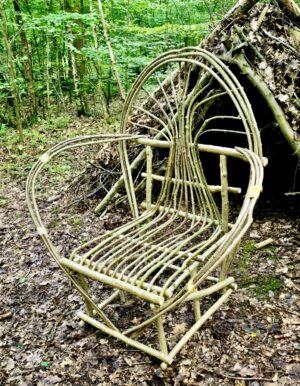
Creating a ‘Bender Chair’
by Angus, 7 June, 2024, 1 comments
Lisa Bradford and her husband Paul run Willow Bushcraft a non-for-profit enterprise. They borrow a woodland in Kent owned by Woodlands.co.uk, and here Lisa writes about making a “Bender Chair”.
Crafting a Masterpiece:
This is how two students built a unique “Bender Chair” from hazel wood. Creativity and craftsmanship came together in an extraordinary project undertaken by two dedicated students from a local school. These two students find it difficult in a mainstream school setting so attend a unit attached to the school. Over the course of a term, the two students transformed raw hazel rods into a stunning bender chair, showcasing both their hard work and newfound woodworking skills.
The Inspiration for this journey began with a simple yet ambitious idea: to create a piece of furniture using traditional woodworking techniques. Inspired by Ben Law’s Woodland Craft book the natural beauty and flexibility of hazel wood, the students decided to build a bender chair. This type of chair, known for its distinctive curved lines and rustic charm, became the perfect canvas for their creative efforts.
The process involved coppicing hazel rods which had to be gathered from the woods. Both students learned the ancient technique of coppicing, a sustainable method of harvesting wood that encourages new growth. They explored March Wood, in Kent, to select and cut the perfect hazel rods, each one carefully chosen for its flexibility and strength.Next they assembled the chair by spending a couple of hours every week to their project, working with patience and precision. They crafted the frame first, measuring and cutting the hazel to size and ensuring the frame was sturdy and well-balanced.
Week by week, the chair started to take shape. With their hazel rods in hand, the chair-makers began the meticulous process of shaping the chair. This involved bending the freshly cut rods into the desired forms for the seat, back, and armrests and tacking them into place.
After weeks of diligent work, the students finally completed their bender chair. The result was nothing short of remarkable. The chair, with its gracefully curved lines and natural finish, was a testament to their hard work and creativity. But the project provided the students with more than just a beautiful piece of furniture: it was a learning experience that taught them valuable skills in woodworking. More importantly, it gave them a profound sense of achievement and pride. They had started with a vision and, through perseverance and teamwork, brought that vision to life.
Looking back on their journey, the students expressed immense satisfaction. They had not only learned about woodworking but also about the importance of patience, attention to detail, and sustainable practices. Their success with the bender chair has inspired them to take on more projects, and they hope to continue exploring the world of traditional craftsmanship.
Forest Schools such as Willow Bushcraft are brilliant for hard-to-reach students who struggle in traditional classroom settings, and participating in forest school offers a transformative experience. Immersed in the natural environment, these students engage in hands-on, practical projects that ignite their curiosity and foster a sense of achievement. The forest school setting allows them to learn through doing, tapping into their innate creativity and problem-solving skills. This alternative educational approach not only enhances their self-esteem and confidence but also helps them develop essential life skills such as teamwork, perseverance, and adaptability. The “bender chair” demonstrates how outdoor learning can inspire a love for learning in even the most disengaged students.