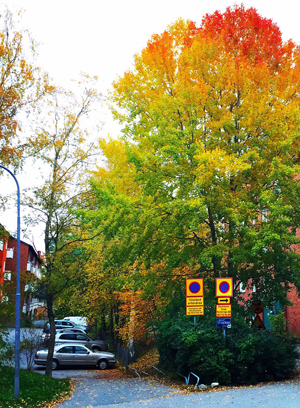
Trees in towns and cities.
by The blog at woodlands.co.uk, 27 February, 2023, 0 comments
The blog tends to write about trees in the context of woodlands and forests, but the trees to be found in hedgerows, parks, streets and gardens are important in many ways. London is sometimes referred to as an urban forest, as it has some eight million trees within its boundaries. Though their individual contributions of any given tree may be small, collectively the trees help with :
Carbon storage
Carbon sequestration
Air pollution removal
Removal of pollutants (e.g nitrogen and sulphur oxides)
Capture / removal of particulates
Reducing runoff, helping with flood mitigation
Noise réduction
temperature regulation.
The role of trees in temperature regulation has received some attention recently. With climate change, many parts of the world have experienced periods of extreme hot weather / heatwaves. Whilst it is true that extreme cold weather is associated with more deaths than hot, heat waves and the associated deaths are a significant problem. Heatwaves, such as that experienced in 2015, have been associated with cardiorespiratory problems and premature deaths.
Cities, in particular, record higher temperatures than the surrounding countryside or the suburbs. the so-called urban heat island effect. The lack of vegetation, the use of air conditioning systems, coupled with the dark asphalt of roads means that heat is retained / trapped; giving rise to the urban heat island effect. On a summer’s day, some city centres may be some 10oC hotter than the surrounding countryside. Europe saw its hottest summer last year, and its second warmest year. Cities in southern and eastern Europe were particularly affected by recent heat waves. They tended to have significant urban heat island effects and low tree coverage. In contrast, 27% of Gothenburg is covered by trees.
Studies / modelling by the Barcelona Institute for Global Health have indicated that increasing tree cover to 30% of the urban space could decrease the deaths associated with heatwaves / extremes of hot weather (perhaps by a third). A number of cities, like Barcelona and Seattle have committed to increasing tree cover. Indeed, Barcelona’s Trees for Life Master Plan is making progress towards its goal of covering 30% of the city with trees, Barcelona is also encouraging green roofs.
Studies have also shown that ‘green spaces’ can have other benefits from reducing cardiovascular disease, poor mental health, and helping to improve cognitive functioning of children and the elderly.