Woodlands.co.uk

Blog - hibernation

Surviving winter

Surviving winter

by The blog at woodlands.co.uk, 30 December, 2025, 0 comments

In many ways, both plants and animals slow down in winter.  Many trees drop their leaves throughout Autumn,  diverting any useful materials to storage in the roots or stem.  Herbaceous plants may wither and die, passing the coldest months as seeds, whilst others overwinter as bulbs, corms or rhizomes. Simliar strategies are seen animals.  Some species enter in to a state of torpor, for example some butterfly adults.  Whilst insects, interrupt their life cycle spending the winter in an immature or arrested state of development [or diapause], such as an egg or pupa.  Others animals pass the cold, winter months in a state of brumation.  This is seen mainly in amphibians and reptiles; it is not dissimilar to hibernation, which is seen in some species of mammals.  During brumation, the heart and respiratory rate fall, and the animal becomes relatively inactive and ‘hidden away’.  However they are still relatively aware of their surroundings and environment and periodically wake up to drink or eat, or indeed bask in the sun if there is a warm interlude. Hibernation on the other hand is seen in some bats, rodents and bears.  Hibernation is not as simple as the animal ‘going to sleep’, it involves profound changes in their physiology.  A number of hormones are involved, for example melatonin, insulin and thyroxin - their combined effect is to lower the metabolic rate.  One animal that goes into hibernation is the hazel dormouse.  [caption id="attachment_37873" align="aligncenter" width="640"] A Hazel Dormouse that has made a nest in a bird box[/caption] It forms a ‘nest’, made out of leaves, bits of bramble etc or it may find a hidden, sheltered place in the roots of trees.  Whilst hibernating they are at risk of predation by foxes, wild boars, owls and domestic cats, if the nest is discovered. If a dormouse has not accumulated enough fat reserves then it will simply run out of energy during the cold weather. It has been estimated that a dormouse loses about 0.5% of its body weight every day during hibernation. They enter into full hibernation when the weather is particularly  harsh.  The recent milder winters have ‘done them no favours’.   Come the Spring, they awaken and forage for food in trees and hazel thickets, feeding on flowers, fruits (e.g. blackberries), insects (aphids, caterpillars) and mature nuts. Their diet changes with the seasons, they are successional feeders. Their habitat of deciduous woodland and hedgerows must offer a variety of woody shrub and tree species to ensure a constant supply of food. Honeysuckle, oak, bramble and hazel are important sources of food to them.  Recent DNA analysis of their droppings identified some 40 species of plants and four species of insect (Lepidoptera and Diptera). Woodlands TV has produced a film about the hazel dormouse - which can be viewed below. [embed]https://youtu.be/COUh5ZluEew?si=xliXKZ7jmj_bhwEJ[/embed] This film was made in collaboration with the People’s Trust for Endangered Species (PTES). More information on the PTES’ monitoring and conservation of hazel dormice can be accessed by clicking here, Note that a licence is required for handling these special animals, details in this link :- https://www.gov.uk/government/publications/hazel-dormice-survey-or-research-licence-level-1. WoodlandsTV 86.6k subscribers Conservation and Monitoring of Hazel Dormice (part 1) Interesting fact : Though Ireland has no native dormouse, the hazel dormouse was found in County Kildare in 2010.
A surfeit of ladybirds

A surfeit of ladybirds

by The blog at woodlands.co.uk, 4 November, 2025, 2 comments

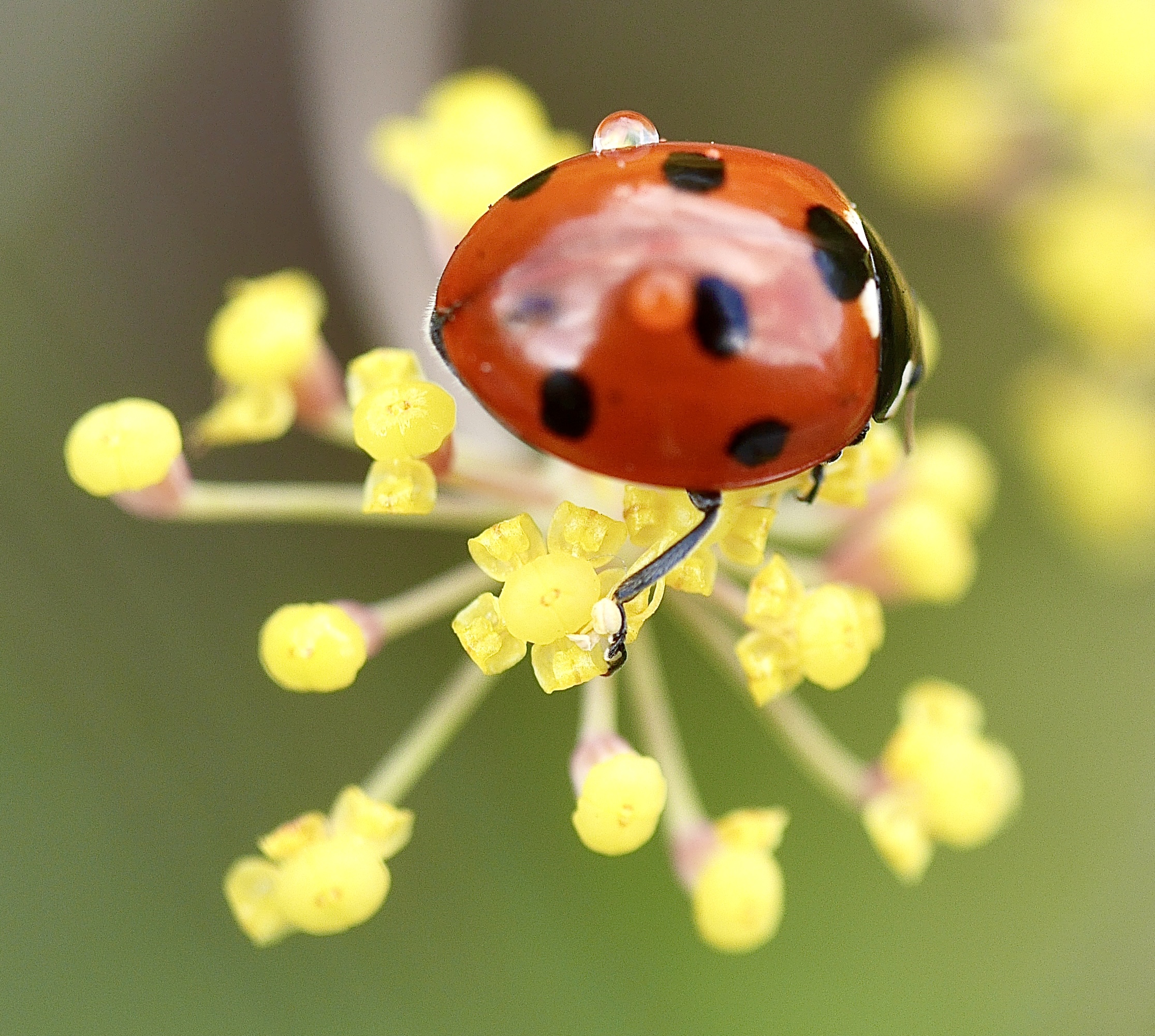
A surge in ladybird populations took place this summer. The seven spot ladybird is native to the UK.  "Millions" of the beetles invaded beaches and even cricket matches during the various heat waves.  At seaside venues, ladybirds massed on the beaches, landed on sunbathers, and covered cars.  The last time that we experienced a similar increase in ladybirds was during the hot (and dry) summer of 1976, though there have been sporadic ‘booms’ in the intervening years.   The surge in ladybird (particularly the seven spot ladybird) numbers can be attributed to :- The warm weather in early Spring and Summer An abundance of food in the form of greenfly and blackfly (aphids).  Their numbers also increased with the warm weather, as their life cycle moves at a faster rate.   Aphids enter into a cycle where female aphids can give birth to live young, without fertilisation.  A process known as parthenogenesis. Ladybirds in gardens help control aphids on roses and other plants by feeding on them.  They are very effective predators.  Predators have key role in keeping the balance of nature. As the temperature falls, ladybirds look for places to overwinter. Native ladybirds tend to hibernate under logs, rocks, and in tree litter.  The harlequin ladybird which is an invasive asian species, may enter our homes. AS harlequin ladybirds have been introduced from warmer regions, so they seek out the warmth that houses offer.  People have found them on windows, doors and walls.  It is advisable to close windows and doors to limit their entry.  In their home range, harlequin ladybirds probably hibernate in big clusters in caves, hollow trees and other sheltered places.  Here their search for warmth tends to occur at the start of October.  Harlequin ladybirds are mainly to be found in the South-East though they have been spreading northwards. They have been implicated in the decline of native species.  Interestingly, they harbour a sexually transmitted disease but not the sort that can affect us. It is a fungus [the Laboulbeniales fungus] that forms scales on the wing cases (elytra), which cover and protect their wings, or it appears as a yellow, finger-like outgrowths of the body. The fungus feeds off vital internal fluids. It is passed on through contact during mating or when the harlequin ladybirds huddle together whilst hibernating. [caption id="attachment_42748" align="aligncenter" width="675"] Larva of ladybird[/caption]  
Dormice Surprise – Nests Everywhere, Yet Numbers Unknown

Dormice Surprise – Nests Everywhere, Yet Numbers Unknown

by Angus, 23 March, 2025, 0 comments

While protecting dormouse habitats has become one of the big themes of British woodland conservation, it’s remarkable how little is actually known about these elusive creatures. At a recent dormouse education day led by Tom Fairfield, thirty enthusiastic conservationists fired off a barrage of questions—some of which even he struggled to answer. Why do we care about them? How many are there? Is their population stable or declining? However, “Dormouse Tom” was able to answer many other important questions about the hazel dormouse (Muscardinus avellanarius). For instance, they are widespread across southern and south-western England and in Wales (distribution map). He showed us dozens of photos of dormouse nests and demonstrated that hazel dormice aren’t restricted to hazel woodlands—they’ve been found in conifer plantations, and occasionally even on stony beaches. Tom believes the habitat protections put in place for the HS2 high-speed rail line don’t go far enough. The ecologists at Balfour Beatty only surveyed hazel woodlands along the planned route, ignoring other potential dormouse habitats. He’s learned a great deal about dormouse habits through two key methods: installing nest boxes and examining teeth marks left on discarded hazelnuts. If our roles were reversed, perhaps dormice would measure the human population by building us cosy hotels and searching for discarded apple cores. In late March and early April, dormice begin to emerge from hibernation, but they are nocturnal and difficult to spot—one of the ways they avoid predation. Tom acknowledges that some dormice are likely to be harmed during forestry operations, but there are steps foresters and builders can take to minimise the impact. His approach starts with surveys—though thorough ones can be costly. These, however, make it easier to implement core elements of a dormouse mitigation plan: avoiding key habitats, establishing buffer zones to protect woodland edges, and creating no-go areas during the breeding season (April to October). A forester from Natural Resources Wales attending the course pointed out a serious tension: if summer months are off-limits for forestry, operations must be pushed into winter, when wetter conditions and heavy machinery risk causing ruts and soil compaction. In parts of south-east England, the tiny hazel dormice are facing competition from the much larger edible dormouse (Glis glis), also known as the European fat dormouse. Introduced by the Romans and raised for food, these creatures were fattened in ceramic pots called gliraria and are still eaten today in countries like Slovenia and Croatia. Dormouse habitat protection seems set to remain a key part of British woodland conservation—partly because dormice are considered a “flagship species”: a charismatic and recognisable animal that represents deciduous woodland and helps rally public support for wider conservation efforts. Note there is a woodlands TV film about the hazel dormouse: [embed]https://youtu.be/COUh5ZluEew?si=1upUveV1FLoQRXV6[/embed]
The Hazel Dormouse : a woodlands TV film (Conservation and Monitoring of Hazel Dormice).

The Hazel Dormouse : a woodlands TV film (Conservation and Monitoring of Hazel Dormice).

by The blog at woodlands.co.uk, 3 October, 2024, 0 comments

The hazel dormouse is an arboreal species, that is to say, it spends a large part of the year up in the trees.  It is also largely nocturnal in habit. Its favourite foods are hazelnuts, berries and insects.  Their active period is between Spring and Autumn, and during this time they build a ‘nest’.  These nests tends to made from ‘local materials’ usually found within a few metres of the nest.  Bracken, hazel, beech leaves and grasses are frequently used, though honeysuckle and other species may be incorporated.  The nests are found in trees in deciduous woodlands, thick scrub, and hedgerows, feeding on local available materials depending on the time of year.  They tend not to move great distances, generally having a range of up to a hectare. With the approach of colder weather and limited food supplies, the dormouse tends to move down to the ground and build another nest ready for hibernation.  The winter nest is similar to that built in the canopy with an outer layer of leaves and core of some ‘woven’ material.  Hibernation is a dangerous time for a dormouse.  If the dormouse has not accumulated enough fat reserves then it will simply run out of energy during the cold weather.  It has been estimated that a dormouse loses about 0.5% of its body weight every day during hibernation.  Whilst ‘asleep’, the dormouse is easy prey for a predator and could also die as a result of trampling by a large animal [the nests are inconspicuous], or indeed woodland management activities. [caption id="attachment_41621" align="aligncenter" width="650"] Dormouse in a state of torpor.[/caption] Interestingly, during the dormouse’s active period of Spring and Summer, the dormouse can enter into a state of torpor when food is scarce.   This allows them to save energy through dropping body temperature and heart rate.  So hazel dormice can spend a lot of the year ‘asleep’ in one form or another. Woodlands TV has just produced their first film about the hazel dormouse - which can be viewed below. This film was made in collaboration with the People’s Trust for Endangered Species (PTES). More information on the PTES’ monitoring and conservation of hazel dormice can be accessed by clicking here, Note that a licence is required for handling these special animals, details in this link :- https://www.gov.uk/government/publications/hazel-dormice-survey-or-research-licence-level-1. [embed]https://youtu.be/COUh5ZluEew?si=f697mPkVLoI8dceU[/embed] Interesting fact : Though Ireland has no native dormouse, the hazel dormouse was found in County Kildare in 2010. Further films by Woodland TV can be found here : -https://www.youtube.com/@WOODLANDSTV    
Hedgehog decline

Hedgehog decline

by The blog at woodlands.co.uk, 3 March, 2023, 0 comments

The (European) hedgehog population is in decline.  In Britain, the population has roughly halved in recent times and is considered to be vulnerable to extinction.  The Danish Hedgehog project, a citizen science project, headed up by Dr Sophie Lund Rasmussen* (also known as ‘Dr Hedgehog’ : link to YouTube videos) has been investigating the life span of hedgehogs.    This has been done by analysing the jaw bones of dead hedgehogs collected by volunteers all over Denmark.   The jawbone shows a line of reduced growth when the animal goes into hibernation, the number of lines equates to the age of the animal in years.  The oldest hedgehog found to date was 16 years old.  Sadly this hedgehog died after being attacked by a dog, which is not an uncommon cause of death for hedgehogs.   The study has revealed the average life span of a hedgehog to be roughly two years only, with males faring slightly better than females.  The study also found that the most common cause of ‘hedgehog death’ was crossing a road. Another finding was that the hedgehog population is quite inbred.  This may be due to the reduced population size and the difficulty hedgehogs face in finding a mate due to habitat fragmentation (garden fences, roads, railway lines which divide up the environment).  Inbreeding leads to loss of genetic diversity, which in turn reduces the overall fitness of the individual and the population. Hedgehog populations can be helped by Creating hedgehog friendly gardens by removing barriers to movement between gardens. Ensuring there is plenty of greenery /  plant life in the garden so there are earthworms, insects, snails etc. for hedgehogs to feed on. Avoiding the use of pesticides and slug pellets in the garden.  Also be careful with the use of netting, keep it above ground level.  Providing a shallow dish of fresh water and food (such as meaty cat or dog food), particularly during long dry spells. NB : ponds with steep sides can be a problem for a hedgehog if it falls in.  More information on hedgehogs can be found here : https://www.britishhedgehogs.org.uk/ Thanks to Nigel Palmer for his excellent hedgehog pictures, visit his hedgehog post here * https://www.biology.ox.ac.uk/people/dr-sophie-lund-rasmussen#tab-3324091
