Woodlands.co.uk

Blog - hoverflies

Fertilisers and pollinators

Fertilisers and pollinators

by The blog at woodlands.co.uk, 2 March, 2025, 0 comments

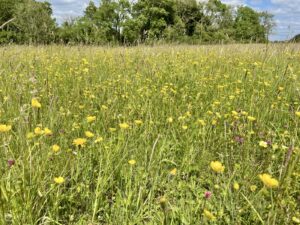
Back in the Nineteenth Century, John Bennet Lawes, a Victorian entrepreneur founded a research station at Rothamsted Manor.  It was to investigate the impact of organic and inorganic fertilisers on crop yield.  Lawes had a factory making some of the first artificial fertilisers.  The manor was to become the Rothamsted Experimental Station, now known as Rothamsted Research.  It has two of the longest running experiments - the Broad balk experiment and the Park Grass experiment - started in 1856. The Park Grass area was started by Lawes and Gilbert.  Its original purpose was to investigate ways of improving the yield of hay through the use of inorganic fertilisers or organic manures. Different strips of land received varying amounts of fertiliser to none.  It soon became clear that the different treatments had a dramatic effect on the species composition of what had been a uniform sward.  There are 35-45 plant species on the unfertilised plots but only 2 or 3 species on some of the fertilised plots. Fertilisers create conditions that allow fast growing grasses to dominate the vegetation.  More recently the plots have received attention (by Dr Balfour et al, Sussex University) for the number of pollinators that they support.  It was found that High levels of common fertilisers on grassland halves the pollinator numbers. Increasing the amount / availability of NPK (nitrogen phosphorus and potassium) on grassland reduces flower numbers five fold. Bee number were most affected.  There were 9 times more bees in untreated plants compared to plots with the most fertiliser input.   The number of bees, hoverflies, butterflies, wasps and flies on each experiment strip was counted. Whilst all pollinator types were present on untreated plots or with low fertiliser levels, only flies and beetles were present on high fertiliser plots. Interestingly, plots with lime added which changed the soil pH had more pollinators (50%) and flower species than those not treated with lime. as fertiliser use increases so there is a decrease in pollinator numbers.   Though these observations are for a specific area of managed grassland, they can be considered in a broader context.  Many grasslands and meadows, which offered homes to pollinators, have been lost in recent times,.  Over a similar period of time, farmlands across the country have extended (eg. hedgerow removal, ploughing meadows) and have been making significant use of fertiliser to improve crop yield, but the wider effects of these changes on insect populations and biodiversity in general has not received enough attention. The ‘excessive’ use of fertilisers can lead to soil eutrophication, air pollution, freshwater eutrophication and a loss of biodiversity.  It can favour botanical thugs )like nettles and invasive species.  We do know that there have been dramatic falls in insect numbers in recent years in what has been termed the ‘insect armageddon or the ‘insect apocalypse’.  Whilst there are many factors at play affecting insect numbers (such as the intensive use of pesticides), the maintenance or the reintroduction of natural areas [with low nutrient soil and native wild flowers] within farmland would at least offer sanctuary to many insects / pollinators that are vital for our crops.  Any reduction in the use of fertilisers would help reduce the CO2 emissions resulting from the Haber–Bosch process, used to produce ammonia and ammonium nitrate. Interesting fact : the institute employed Ronald Fisher in the 1920s to analyse data collected from many experiments.  His work and that of other statisticians means that many consider Rothamsted the birthplace of modern statistical theory (e.g. analysis of variance) and practice.  
In praise of insects.

In praise of insects.

by The blog at woodlands.co.uk, 19 May, 2024, 0 comments

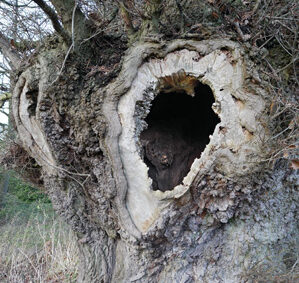
Last week's woodlands’ blog talked about the fall in insect numbers across the UK.  This is not just a UK problem, it is far more widespread.  Insects,  bees and bumblebees as pollinators aside,  are important in ecosystems;  there are armies of other insects that are providing ‘services’ for us. When a tree dies in a woodland, bacteria and fungi are important agents in the decay of the tree and the recycling of elements, but they are assisted by beetles. If the dead tree was a veteran, during its lifetime it will have provided  a variety of micro-habitats.  Holes and crevices would have been used by bats,  birds,  insects etc.  Now, the the decaying wood will be support different organisms, from microbes to larger fungi, such as bracket fungi that can erupt from surface of the dead tree.   As the wood decays,  the material may become a ‘home’ for saproxylic beetles. For example, Stag beetle larvae feed on decaying wood (building up fat reserves, which the adults later rely on. it adds humus and fertility to the soil as its nutrients are released. Though bees and bumblebees (members of the order Hymenoptera) are important as pollinators (of many fruit and crop plants, so are the hoverflies key to  the pollination of many wild flowers.  Hoverflies belong to a different group of insects - the Diptera. There are several thousand hoverfly species spread across the world. They are found on every continent with the exception of Antarctica.  Work by Dr. Wotton and his team at Exeter University suggests they are situations where hoverflies may be more effective pollinators than bees and bumblebees, and the role of hoverflies in crop pollination may have been under-estimated.  Hoverflies can carry pollen over considerable distances, and may  visit isolated plants.  The common drone fly (Eristalis tenax) has been known to travel some 100km and carry the pollen of eight plant species.  Hoverflies (or Syrphidae) are also known to migrate over considerable distances.  The female marmalade hoverfly can migrate from Scandinavia to Spain and North Africa, migrating in the autumn to lay their eggs.  In the following Spring, succeeding generations migrate north again.  Some American hoverflies are known to migrate from Canada to the southern states. Insects are not just important in terms of facilitating decay or aiding pollination, some are involved in seed dispersal.  Scientists at Kobe University studied the dispersal of seeds from the fruit of the silver dragon plant.  Using  time lapse photography techniques, they watched to see which animals feed on the plant’s fruit at night. Whilst crickets (order : Orthoptera) ate much of the fruit, earwigs (order : Dermaptera) and woodlice (not insects, but terrestrial crustaceans) also consumed significant amounts of the tiny seeds of the fruit.  Further work demonstrated that many of the seeds survived the passage through the gut of these animals.  So apart from being seed predators, small invertebrates may also help their dispersal, depositing them away from the parent plant. Woodlice are interesting land based crustaceans that generally feed on dead and decaying plant material, helping in the recycling of nutrients. Further examples of the importance of insects in nature can be seen in fig production.  The fig wasp 'gives its life' in the process of pollinating the fig, in return the fig provides a safe ‘nursery’ for the young on the wasp, seed the woodland blog on the fig.  There are many types of fig and each has its own wasp, to ensure successful pollination.  Full details of the life cycle of fig wasps can be followed here.  The association between the wasps and figs is an example of mutualism. This co-dependence probably had its origin some seventy million years ago, and the wasps and figs have co-evolved since then. .
Promoting wildlife in gardens

Promoting wildlife in gardens

by The blog at woodlands.co.uk, 7 January, 2022, 0 comments

Reports in the papers and electronic media have made us aware that many forms of wildlife are under threat.  This threat is wide ranging - from the destruction of tropical rain forests, coral reefs, the loss of species-rich meadows, the insect apocalypse - indeed where does this loss of plant and animal species end? One small positive observation amidst the doom and gloom is the findings of The Biodiversity in Urban Gardens project [BUGS] at the University of Sheffield.  The original study focused solely on Sheffield and finished in 2002, but  it was then extended to five cities across the U.K.    Professor K Gaston who led the study is now working at the University of Exeter.  The original study was important in that it revealed within Sheffield city, there was 33 km2 of wildlife habit was available within the city 360000 trees in the city limits 45000 nest boxes 25000 ponds and  50000 compost heaps Furthermore, there were in excess of a thousand plant species (flowering plants, ferns and conifers) and a diverse collection of invertebrates (bumblebees, hoverflies, beetles and spiders).  Whilst the diversity was in no way comparable to that of an ancient woodland (with veteran oak trees etc) or indeed of wetlands, it is significantly better than that found on farmland - particularly in those areas where the farming is intensive and characterised by monocultures (e.g. oil seed rape extending to the horizon).  Farmland now occupies some 70% of the landscape. Gardens, parks and urban areas are therefore an important resource for wildlife.  It is important as house building proceeds, on both brown and green field sites, that the associated gardens continue to provide ‘sanctuaries’ for wildlife, for example, by avoiding large areas of hard standing for cars (which also encourage  rain / water run off - which can overwhelm the drainage systems).  Professor Gaston has emphasised the importance of ‘dimensional complexity’ in gardens; that is a variety of trees, shrubs and plants of different shapes and sizes.  This provides a range of different niches / habitats for wildlife.  Of course,  in gardening to promote wildlife, there are the additional benefits (for householders) of physical and mental well-being.   Remember later this month, there is the Big Garden Birdwatch, organised by the RSPB. For further information, click on the image below:- [caption id="attachment_36525" align="aligncenter" width="670"] Ladybird 'stalking' aphids[/caption]
Drought and pollinators

Drought and pollinators

by The blog at woodlands.co.uk, 30 November, 2021, 0 comments

Climate change is affecting all parts of the world, from the melting of the ice caps in Antarctica, to droughts in Australia and California.  On a more local level, we may see changes in our rainfall pattern.  Certainly for many parts of the UK, it has been a very dry start to the Spring, coupled with some very cold nights. Cold and dry weather affects plant growth in significant ways.  Warmth is needed for a plant’s enzymes (catalysts) to work, speeding up reactions and allowing growth.  Similarly, if water is in short supply, growth is stunted; plants do not realise their full ‘potential’. They are smaller overall as is the number and size of flowers that they produce.  Flowers attract visitors by colour, size and scent; or combinations thereof.   Smaller and fewer flowers, in turn, have ‘knock-on effects’ for their pollinators - bees, bumble bees, hoverflies etc. The effects of drought on pollination has been recently investigated by researchers at Ulm University in Germany.  They studied the effect of drought on field mustard (aka Charlock) : Sinapsis arvensis.  This is an annual plant that is to be found in fields, waysides and field margins across Europe.  It has bright yellow flowers, with four petals.  It is visited by many different pollinators (it cannot self-pollinate).   The researchers compared the number of visits by bumblebees (Bombus terrestris) to drought-stressed plants to well-watered ones.  The data showed that as the number and size of the flowers decreased so did the number of pollinator visits.  [caption id="attachment_21589" align="aligncenter" width="600"] Bumblebees also favour the teasels[/caption] The ‘attractiveness’ of the plants / flowers to pollinators was reduced, and it is possible that the smaller flowers were more difficult for relatively large pollinators (like the bumblebees) to ‘deal with’.  If pollen movement is reduced, then fewer fruits / seeds will be set and (insect pollinated) plant populations could decline.  The effects of reduced rainfall and water stress need to be considered alongside the declining number of pollinators.  The reduction in pollen movement has lead some to speculate that it might lead to a selective pressure for self-pollination / self-fertilisation, with plants dispensing with the need for visiting insects.  Other Woodlands blogs have reported on the falling numbers of insects / pollinators. Featured image : garlic mustard.

Next Page »