Woodlands.co.uk

Blog - Kew

The air that we breathe.

The air that we breathe.

by The blog at woodlands.co.uk, 24 April, 2026, 0 comments

When you step into your garden during the Spring or Summer months, you might be aware of the scent of honeysuckle, lavender or indeed an old fashioned rose.  Similarly, in a woodland the scent of pine or other conifers may permeate the air.  These various scents often involve a group of compounds known as the terpenes.  The resin that exudes from pine bark is rich in terpenes. Terpenes are used in the building of many complex organic molecules and contribute to the make-up of volatile, organic compounds [VOCs] - produced by many plants.  The scents released from nectaries or other parts of flowering plants are often associated with attracting pollinating insects, but they can serve other functions.  For example, some VOCs released by a plant may warn surrounding plants of attack by insects. However, as you walk down the street, the air is rarely filled with these pleasant, natural scents. Instead the fumes of traffic, factories and industry assail us.  They are the exhaust emissions from cars, lorries, buses etc, plus the various bits and pieces [particulates] that are released from the ‘rubber’ of car tyres, brake pads etc.  The damaging effects of particulates are now well documented.  The effects include lung disease such as chronic obstructive pulmonary disease (COPD) and reduced lung function.   Particulates help create the concoction of substances that we inhale; sadly our air is often polluted with many different compounds. Scientists from Oxford University and Kew recently investigated air quality in different locations around Oxford.  The locations varied from the centre of the town, where the Botanic Garden is found, out to the University’s Wytham Woods.  Wytham is one of the most intensively studied woodland areas in the world.  The wood ‘holds’ 500 plus plant species and 800 or more butterfly and moth species. Records of bird populations go back some sixty or more years (largely due to the work of David Lack and others).   The air samples that the scientists collected were subjected to detailed chemical analysis using the technique of gas chromatography-mass spectrometry. Some 245 different compounds were identified in the various air samples, with each of the six different sites haveing their own signature collection of chemicals.  Sites near to busy roads contained high levels of benzene and toluene, which are traffic-related chemicals.  The tree rich areas naturally showed a greater presence of plant chemicals (VOCs).  Unsurprisingly, when they sampled the air in the Botanic Garden (over the course of a year), they found the highest levels of these plant compounds.  Warmer weather increased the levels of these VOCs / plant derived chemicals, which have been associated with improved mood and stress reduction. Full details of the Oxford study here : https://nph.onlinelibrary.wiley.com/doi/10.1002/ppp3.70191
Time to restore ....

Time to restore ….

by The blog at woodlands.co.uk, 10 April, 2026, 0 comments

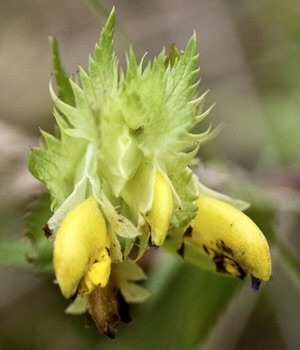
Woodlands.co.uk has said on many occasions that our country has been ‘denuded’ of its natural vegetation.  Woodlands, meadows, grasslands, and wetlands have been lost,  and the range of many species has been reduced. Efforts are being made to restore some of these ecosystems.  However, it is not an easy or simple process.  Throwing some seeds on degraded ecosystems / soils simply will not work.  Seeds have requirements if they are to germinate.  For example, some seeds to experience a period of cold before they will germinate, others need exposure to light of a particular wavelength (to activate the phytochrome system). Such needs must be set against a changing climate where warmer winters and drier summers (like last year) are expected to become more common.  Seeds collected from one area of the country may have adapted to specific local conditions, so if sown 500 miles away - they may not fare so well. To test whether some of our native species could cope with ‘new’ places and changing temperatures, researchers from the Royal Botanic Gardens (Kew and Wakehurst) made use of the seed collection at the Millennium Seed Bank.  The seed collection at Wakehurst is diverse, with many samples of various species collected from different places at different times. Different samples would be expected to have slightly different genetic backgrounds. The researchers selected six species from the Millennium collections: Yarrow Common knapweed Wild carrot Ox-eye daisy Yellow rattle Autumn hawkbit [Seeds of these species are often included in commercially available wildflower seed mixtures used to create wild flower areas in gardens etc. Some of these mixtures may include seeds imported from Europe or elsewhere.]  To test the temperature tolerance of the various seeds samples and whether the different genetic backgrounds affected their germination, the seed samples were exposed to temperatures ranging from 0oC to 40oC.   The researchers then recorded the minimum, optimum and maximum temperatures for seed germination of each species.  These figures were then compared with historical records of climate, and temperature projections in our changing world.  The results indicate that  various species would be able to germinate in a warming climate.   Of the six species, four were able to germinate across a range of temperatures, namely yarrow, knapweed, ox-eye daisy and autumn hawkbit. This suggests that they would cope with a warming climate (and would be suitable species for use in restoration projects). Yarrow and ox eye daisy showed good germination at varying temperatures independent on their local provenance, and are therefore good candidates when sowing in restoration areas. However, wild carrot and yellow rattle were not as ‘straight forward’.  Carrot seeds need to experience a cold period before they will germinate, so milder winters might be a problem.  Yellow rattle only germinated within a small range of low temperatures (like those of late winter).  Whilst this means, a young plant can have an early start and an advantage over its competitors, it suggests that if winters become too mild then its germination and life cycle will be affected. This ‘sensitivity’ was true across the different samples of yellow rattle used in this trial. Interestingly, yellow rattle is an obligate hemiparasitic annual.  It is of particular interest for restoration projects as it helps in the establishment of species-rich meadows. For further details of this study, go to https://onlinelibrary.wiley.com/doi/10.1111/rec.70239
Ash is fighting back

Ash is fighting back

by The blog at woodlands.co.uk, 21 July, 2025, 0 comments

Ash dieback began to spread in Europe in the 1990’s, reaching England in 2012.  It is a fungal disease that slowly but surely interrupts a tree’s ability to transport water.   The fungus responsible is Hymenoscyphus fraxineus, which is native to Asia.  The death / loss of mature trees not only reduces carbon dioxide uptake but also represents the loss of habitats for many species of insects and other animals.  The dead trees are also a hazard to people and property. Though many ash trees have now died after infection with this fungus, there is a small glimmer of hope on the horizon.  Some British ash trees are evolving a degree of resistance to the fungus.  Scientists from Kew and Queen Mary University of London have studied the genetic makeup of many mature european ash trees, and also hundreds of young saplings (at Marden Park in Surrey).   This revealed that resistance was more commonly found in young trees - a shift in the genetics of the trees within a generation.   The resistance to the fungus is NOT complete, but if these young trees make it to reproductive maturity then there will another chance for natural selection to ‘refine ‘ the process, through their offspring. However, it may be that a careful breeding program will be needed to establish true resistance / immunity. Interestingly, ash dieback has not reached America but the emerald ash borer has.  This insect is spreading and killing trees.  It is another example of the effects of the globalisation of world trade. Insects and other animals from across the world are being ‘mixed up’, moved from their native regions to new areas where they spread and cause damage as their predators and / or parasites have not travelled with them.   Trees and shrubs are now facing challenges and threats at an unprecedented rate. see also :  https://www.qmul.ac.uk/media/news/2025/science-and-engineering/se/british-ash-woodland-is-evolving-resistance-to-ash-dieback-.html