Woodlands.co.uk

Blog - livestock

Pond life

Pond life

by The blog at woodlands.co.uk, 14 March, 2025, 0 comments

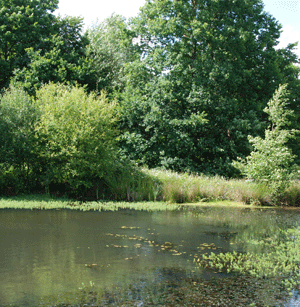
The last century saw the destruction of many hedgerows, particularly in farming areas like East Anglia.  The logic behind this was : to increase field size and  allow ease of access of machinery, like combine harvesters that were coming available at that time.   Whilst the loss of the hedgerows and the associated wildlife is well documented, the loss of ponds during this time has not attracted the same level of attention.  Many hundreds of ponds were filled in, to give a few more metres of arable land.  The whereabouts of some of these ponds can sometimes be found on old ordnance survey maps.  Many were located on farmland and their origins may extend back centuries to when they were created as marl or clay pits, sometimes for the watering of livestock.  Some were formed in depressions (pingos) left after the last ice age. There are still  thousands of ponds across the UK but many are polluted to a greater or lesser extent, or drained.  The pollution may be associated with the the surrounding land use or agricultural runoff. Runoff may take the form of nitrates / phosphates from the use of fertilisers.  In freshwater systems, these nutrients can cause eutrophication. Other agricultural chemicals may enter ponds and water courses - insecticides, fungicides, herbicides etc. Consequently, out of the thousands of ponds, only a very small number provide a suitable habitat for pond organisms such as the medicinal leech.  Leeches are rarely found for the reasons cited above but also because, as agriculture became more mechanised and less reliant on ‘animal power’ [horses, oxen], the ponds  (or wetlands) are no longer visited by these animals, which leeches would have fed on.  Leeches used to be abundant, but their number declined when their use in blood letting was largely abandoned, and their natural habitats were drained or damaged.  The medicinal leech is one of the largest leeches found in the UK, it can grow to a length of ten centimetres, and may have stripes / patterns on its body.  Some of the ponds that are home to medicinal leeches have been designated  Sites of Special Scientific Interest.  Since historic times, the extraction of blood by leeches was deemed to be a ‘healing process’ for patients. This practice of hirundotherapy / bloodletting spread widely and the collection of leeches resulted in the over-exploitation of many populations.  The leeches were used widely in the treatment of many conditions and  diseases such as cholera, regardless of whether or not they were effective.  At one stage, leeches were in such demand that there were ‘leech farms’, and  people could earn a living as leech collectors.  Indeed, so commonplace was leech collection that Wordsworth wrote about it in his poem Resolution and Independence : “He told, that to these waters he had come To gather leeches, being old and poor: Employment hazardous and wearisome! And he had many hardships to endure: From pond to pond he roamed, from moor to moor; Housing, with God’s good help, by choice or chance; And in this way he gained an honest maintenance.” Although the use of medicinal leeches was discredited and virtually abandoned for many decades, they are medically effective in certain circumstances.  The leeches produce a saliva which  contains a number of different proteins. These help the leech to feed by keeping the blood from clotting, and actually increasing blood flow to the leech at the point of attachment.  Some of these proteins act as anticoagulants (notably hirudin),   It is also possible that the saliva contains an 'anaesthetic / antiseptic' as leech bites are generally not painful. These leeches have now found a use in microsurgery.  They are used to stimulate the circulation in tissues which experience post-operative congestion.  They are helpful in finger reattachment and reconstructive surgery of the ear, nose, lip, and eyelid. The creation of a network of new or restored freshwater ponds across the landscape will be needed if natural populations of the leech are to expand. 
Rethinking the British countryside - more trees, fewer sheep?

Rethinking the British countryside – more trees, fewer sheep?

by Angus, 25 July, 2022, 0 comments

Perhaps it all started with a "No-shave November" (or "Movember") when men realised that they could go for a month without shaving and no one would mind.  It may also have been good for them as they thought more about men's health and they let nature take its course.  A few years later people started wondering about other habitual cutting, such as mowing their lawns religiously.  "No Mow May" was invented in 2019 by Plantlife with the idea that less cutting of grass would allow wildflowers to flourish.  The official reason for this concession to conservation was to allow the wild flowers and pollinators to thrive, but it may also have become popular because it allows maintenance teams to work a bit less hard during May.  In any event it's now so popular that about 36% of lawn owners now join in every year.  But it's spilled over well beyond just the month of May - many owners of lawns have questioned whether they really want so much short grass when alternatives are more interesting - and better for wildlife.  Even at the 2022 Chelsea Flower show there were several gardens demonstrating rewilding. So rethinking the scorched earth policy has now spread from men's chins to gardens and parks - but will it spread further?  What about our hillsides? For eighty years we have been intensively grazing these with sheep and cattle as if our lives depended on it - which maybe they did in 1942, when war-time convoys of food from the US were being torpedoed.  Even after grazing ceased to be a necessity sheep continued to dominate our hillsides with grants to sheep farmers making it profitable to use their four-legged lawnmowers at scale.  Farmers even grubbed out hedges in the 1970s, described by Oliver Rackham as the locust years, which made the countryside look even neater and tidier.  According to DEFRA there are currently about 32 million sheep in the UK, a third of them in Wales.  Land used for rough grazing and grassland makes up about 50% of the UK's total land area.  So for several generations now the UK has used half of its land to raise animals for eating, but times are changing rapidly.  Whereas those with meat-free diets used to be a tiny minority their numbers are growing rapidly - already at least 14% of the population is meat-free and for those of university age (18-23) the number is up to 25%, and rising. The combination of reduced demand for meat and increasing awareness that we can happily stop cutting the grass is prompting a rethink of how we use the British countryside.  Much of the grazing land is not suitable for growing agricultural crops so that leaves owners wondering what to do with their land.  Some are choosing rewilding in various ways but usually with far fewer grazing animals, longer grass and more wildflowers. [caption id="attachment_38426" align="aligncenter" width="600"] 'rewilding' of roadsides and verges[/caption] Others are planting trees and creating new woodlands.  Where the land is sold it's often to people who want to plant trees or simply to fence out sheep and allow "natural regeneration" allowing trees to self-select and grow on their own.  It's an appealing project for many families to take on 5 acres of grazing land, plant trees and convert it into a wood of their own. This re-evaluation of how grazing land is used is happening right across the world as plant based diets become more popular and there is potential to re-establish wilder habitats.  It's good for carbon emissions - not only because woodland fixes carbon but also because rewilding cuts the number of grazing animals releasing methane: belching by sheep and cattle creates a third of the total emissions of UK agriculture. Despite this, there may be resistance from the powerful National Union of Farmers which mostly represents bigger farmers and which promotes farming as an industry.  Farmers already complain about reductions in headcounts of livestock - since the peak in 1992, sheep headcount is down by about a third.  But it's also about the way the grant system is structured - millions of sheep only exist because of the farm payments, financed by taxpayers, and the condition of receiving these annual grants is that "unwanted" vegetation and wild plants have to be removed.  So even if the sheep don't chomp up biodiversity the farmers have to do it to get their grants. [caption id="attachment_21282" align="aligncenter" width="600"] Sheep grazing around solar array[/caption] Even beyond this suppression of diversity, sheep and cattle are damaging in many other ways such as compacting the soil which contributes to flooding and droughts. Meanwhile the number of men keeping their beards after no-shave November has increased and there are more gardens and parks with wild meadows so maybe the much bigger revolution in rural land use might follow. Governments have had it within their power for decades to reform the grant system but real change may be driven by people's behaviour - eating less meat and planting up their own woodlands.
