Woodlands.co.uk

Blog - loss of biodiversity

Unwelcome 'guests'.

Unwelcome ‘guests’.

by The blog at woodlands.co.uk, 3 April, 2025, 0 comments

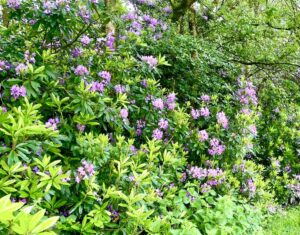
A plant growing in the wrong place is sometimes described as a weed, but it can be more than just an inconvenience.  Plants in the wrong place can have a devastating effect on ecosystems, dramatically reducing biodiversity.  The same is true for certain animals - those that have 'traveled' from their natural habitats to 'foreign areas’ where they have no natural predators to keep their numbers in check.  Foreign or alien species are sometimes introduced to an area in the belief that they will solve local problems with pests or over-population of a native species.   A classic example of this is the cane toad.  Native to  parts of central and South America, the cane toad is preyed upon by a variety of animals such as caimans, snakes, eels and some fish species.  It was introduced into sugar plantations in various parts of the world to control beetles that were damaging sugar cane crops. Since this was a successful strategy in Puerto Rico, the toad was introduced elsewhere, notably Australia.  Just over a hundred toads were released in Queensland in 1935, with more released in 1937.  Unfortunately the toad did not effectively control the grey-backed cane beetles (the intended target), and they found other things to eat.  Their numbers grew exponentially and they spread into other areas, such as the Northern Territory and New South Wales.  These poisonous toads have significantly reduced biodiversity particularly affecting native amphibians and reptiles. Sometimes foreign species are introduced as ornamental plants or 'exotics'. During the Victorian period many plant species were brought to the UK for country estates.  Rhododendrons that were collected across Asia and the Himalayas became popular in parks and gardens.  However, Rhododendron ponticum, a species native to the southwestern Iberian Peninsula (parts of Portugal and Spain) and the southern Black Sea Basin (parts of Bulgaria & Turkey)  has been less well received.   It was introduced in the eighteenth century by Conrad Loddiges.  Loddiges grew seed and sold on young plants as an ornamental flowering shrubs for gardens, parks and estates. On country estates and heathland areas, it was planted as cover for game birds as its dense growth offered shelter and protection. It has since spread aggressively and is now considered to be an invasive species. An invasive species is a non-native species that spreads and damages its new environment. R. ponticum poses a threat to key woodland ecosystems, such as Atlantic Oak Woodland.  When this shrub ‘invades’, it comes to dominate the area.  It creates deep shade so the woodland floor becomes a dark and ‘barren’ place. Many ground flora species are lost so that only shade tolerant mosses and liverworts remain.  These plants form a ‘dense mat’ of vegetation that is a barrier to seed germination.  Additionally, there is evidence that as R. ponticum grows, it produces chemicals which inhibit the growth of other species.  This phenomenon is known as allelopathy.  Even when the Rhododendron is removed, it is difficult to reestablish the original flora.  Clearing an area of this plant is difficult and expensive. One effective method involves drilling the stems and injecting herbicide directly into the plant, a targeted approach that uses a lot less herbicide than spraying.  Mabberley’s Plant-book notes that the cost of eradicating the plant from Snowdonia was £30M and that was in 1988. Another Victorian introduction was the grey squirrel. Native to North America, grey squirrels were first released in the UK in the latter part of the 19th century.   One person associated with their spread was the 11th Duke of Bedford  (Herbrand Russell).   He was involved in various animal conservation projects, but he released and 'gifted' many grey squirrels from the estate at Woburn.  The populations of grey squirrels in Regent's Park, London are thought to have come from there. Humans may still be helping the spread of the grey squirrel, albeit unintentionally.  One squirrel was captured on the Isle of Skye (in 2010), it had traveled from Glasgow, as revealed by its genetic profile.  It had probably made the journey as stowaway under a car bonnet. It is important that we are aware of how 'easy' it is for these animals to travel with us.  Their introduction has been disastrous for the native red squirrel populations, due to competition and the spread of the squirrel pox virus.  It is vital that grey squirrels do not colonise areas where the red squirrel still survives. . More recent introductions have arrived due to increased global trade.  Parasites and pests can ‘hitch a ride’ with people, materials or goods as they move across the world.   Climate change is also altering the range and distribution of many plant and animal species.  There is an alert for the Asian or Yellow Legged hornet (Vespa velutina nigrithorax), an invasive, non-native species from Asia.  This hornet preys upon honeybees and other beneficial insects such as hover flies and bumblebees. It hovers outside bee hives, waiting to catch and then kill returning honeybees. The effect on bee colonies can be devastating. The Asian Hornet arrived in France in 2004 (through an import of Chinese pottery) and has spread rapidly. Now it is found in Italy, Spain, Portugal, Switzerland, Belgium and Germany.  Preventing its establishment in the UK is critical.  Any sighting needs to be reported, this can be done through the Asian Hornet Watch. This link downloads a PDF, which gives more information about the Asian Hornet, and contains images comparing the  appearance of the asian hornet, the european hornet, the wasp and honey bee. Other invasive species that are a cause for concern include : Himalayan Balsam Harlequin ladybirds, Signal Crayfish, Eight-toothed bark beetle Citrus long horned beetle Giant Hogweed Thanks to Anton for images.
Revisiting hedgerows.

Revisiting hedgerows.

by The blog at woodlands.co.uk, 12 April, 2023, 0 comments

Some years back, the Woodlands blog posted various articles about hedgerows,  noting the loss of many - due to the increased mechanisation of farming in the mid C20th.  Now, there is greater recognition of the importance of hedgerows, and there are initiatives to promote the maintenance and expansion of hedgerows. But what is a hedgerow? Natural England offers a definition as follows : A hedgerow is defined as any boundary line of trees or shrubs over 20m long and less than 5m wide, and where any gaps between the trees or shrub species are less that 20m wide (Bickmore, 2002). Any bank, wall, ditch or tree within 2m of the centre of the hedgerow is considered to be part of the hedgerow habitat, as is the herbaceous vegetation within 2m of the centre of the hedgerow.  This differs from the definition in the  Biodiversity Action Plan, which included references to ancient hedges / species-rich hedges.  The definition now includes all hedgerows consisting of at least one native woody species of tree or shrub (mainly), but it does exclude bramble and honeysuckle as ‘woody species’.  According to one source, there are some 550,000km of hedgerow in England, with over 400,000 km being actively managed.  Hedgerows are an important semi-natural habitat in what is otherwise a managed agricultural landscape. They are found across the country but there are more in lowland regions. Hedgerows in the south east are associated with large fields and fewer trees, the proportion of trees in hedgerows increases as one goes north and west.   The nature of hedgerows varies across the country but all are important as : They provide a habitat, shelter (micro-climate provision) and resources for many different species (from plants to insects, birds and mammals). Hedgerows are particularly important as nesting sites for birds. They support animals that have key roles within the broader ecosystem, for example pollinators and predators of pests. They offer an important source of nectar that helps support wild bees - adjacent farmland can be a poor source of nectar Hedgerows are known to support threatened (red listed) species Hedgerows capture and store carbon (above and below ground) Hedgerows offer ecosystem services eg. mitigation of water flux and availability, landscape connectivity, soil conservation / stabilisation. A number of studies indicate that increasing the number of hedgerows would help with landscape connectivity (for example, for hedgehogs) and that planting of blackthorn and hawthorn in association with later flowering species would help support a number of wild bee species.  Expanding the number of hedgerows could have some negative effects as they might offer a home to invasive species and / or pathogens; but one study has indicated that ash trees in hedgerows suffer less impact from ash dieback than trees in forests.  To date there does not appear to be any detailed research on whether increasing hedgerow coverage would have any impact on tree disease / pathogen spread. Hedgerows, like woodlands themselves, face a number of challenges due to climate change.  Warmer winters may mean that the ‘winter chill’ requirements of some shrubs / trees will not be met; this may mean flowers and fruits fail to form properly which in turn means less food for birds, small mammals etc.  Drier summers may stress some species, trees like Beech are susceptible to drought.  Extreme weather events (like Storm Arwen) can inflict damage on hedgerow trees.  If a hedgerow is next to farmland, then it may experience drift from pesticide and / or herbicide spraying  nutrient enrichment (eutrophication) due to the use of fertilisers. Hedgerows with a diverse structure, with plants, shrubs and trees of varying ages and heights provide the widest range of niches / microhabitats for wildlife.  The inclusion of dead / decaying wood offers opportunities for various fungi, saproxylic beetles, woodlice etc.  Some hedgerows are managed / reduced with a mechanical flail (see above !!!). If this is done annually, it can result in a loss of biodiversity. Trimming should be done on a 2 or 3 year cycle; and some sections of the hedge might be left for longer " see (https://www.hedgelink.org.uk/cms/cms_content/files/76_ne_hedgecutting.pdf).  Thousands of tree and hedgerow plants are being planted to create a flood defence project at Castlehill, East Hull.   The plan is to create some seven hectares of woodland and over five kilometres of new hedgerow, as part of a flood defence project (to store floodwater east of the city).  Trees such as field maple, downy birch, English oak, and black alder are being planted along with species of willow, dog rose, guelder rose and blackthorn and hawthorn to create hedgerows and scrubland.  Other species will be allowed to naturally develop in the area and the habitat is expected to reach ‘maturity in some fifteen to twenty years. There is a citizen science project that involves surveying hedgerows.  It is organised by the People’s Trust for Endangered Species [PTES].  The Great British Hedgerow Survey guidelines can be found here : https://hedgerowsurvey.ptes.org/survey-guidelines Some times hedges offer a home to other things         
Deer Management (Deer Control) in Woodlands

Deer Management (Deer Control) in Woodlands

by Jason, 18 July, 2008, 9 comments

Man has created the necessity for deer management by eradicating the natural predators of deer - the wolf, bear and lynx.  Escapees from deer parks introduced several non-indigenous varieties into the wild.  During the two World Wars, when manpower was limited, deer parks were left in disrepair and escapee deer spread.  With the formation of the Forestry Commission, land owners were encouraged to plant trees.  The aim was to create a national reserve of timber against future conflicts, but also created an ideal habitat for deer.  Improvement in farming practices provided more food. Deer Damage Deer are responsible for forestry and crop damage and, as they increase in number and range, more damage is now seen in gardens in urban areas. The damage they do to trees and plants are as follows: Fraying is damage done by territorial behaviour when deer rub and trash antlers on trees and shrubs. Browsing this is caused by the deer’s natural feeding and can kill or inhibit the growth of trees (note in the image below, small trees are the same age as the larger ones).  Has the effect of creating 'bonsai'. Control Measures There are numerous so called effective deterrents i.e. lion dung, sweaty socks, chemical agents and mechanical worriers, these are all short term solutions.  The only effective control is proper deer fencing put in by qualified persons, bearing in mind that roe deer can get under an 8” gap. Proper fencing is expensive and is not cost effective on large woodland areas therefore most areas have deer culling taking place in some form or another. [caption id="attachment_34415" align="aligncenter" width="700"] Remnants of birch woodland near Loch Muick are subject to browsing by red deer (especially in the winter), so temporary fences have been out in place to allow for regeneration.[/caption] [caption id="attachment_40967" align="aligncenter" width="675"] Fencing in place[/caption]   Culling This is done these days more and more by trained personnel who have obtained qualifications like DSC Level 1 and 2 from Deer Management Qualification.  These qualifications mean that all culling should take place in a professional, safe and humane manner enabling  field post-mortem to be carried out to confirm the health of the deer and its fitness for human consumption and carried out under strict hygiene  procedures The gralloch (Scottish word for evisceration i.e. removal of internal organs) must take place within 30 minutes maximum or less in the summer, after being culled the carcass must be bled immediately to stop the carcass becoming unfit for human consumption, by law. This generally has to be done in the field depending on how far one has to travel and disposal of the head, feet and gralloch should be by burial in the field (ensuring it is not near a water course).  Thus, taking other countryside users into consideration. Venison  Venison is one of the best meats to eat (recommended by the heart foundation) it is free-range meat with approximately 60% less cholesterol. The purchasing and eating of venison helps promote good deer management as they are looked at as a natural renewable resource,  instead of a pest. All six species of deer in the uk produce good quality venison,  although there is a slight difference in taste between them depending on what the deer have been eating and this can produce quite a unique taste.  It is recommended that a carcass be hung for at least three days to help venison mature, hanging for longer would produce a stronger taste (this should always be in a fly and vermin proof area and at 7 degrees C). Deer Species in the UK Red Deer                        One of our indigenous / native deer and the largest Sika Deer                        Introduced by the Victorians into deer parks and collections, medium sized. Fallow Deer                   Introduced by the Normans for food and hunting. Roe Deer                        The second indigenous / native deer, nearly wiped out in the Middle Ages  Muntjac Deer                Introduced by the Victorians. Chinese Water Deer  Introduced by the Victorians.   [caption id="attachment_557" align="alignleft" width="202"] Fraying[/caption] [caption id="attachment_563" align="alignleft" width="451"] effects of browsing[/caption]
