The times they are achanging
by The blog at woodlands.co.uk, 1 September, 2025, 4 comments
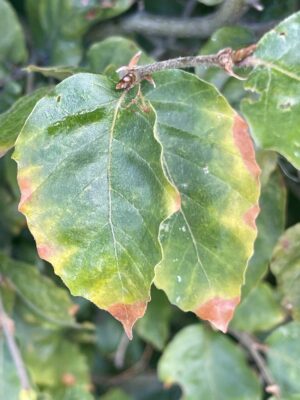
This morning, the Today programme (Radio 4) featured an interview with Kevin Martin ( Head of Tree Collections at Kew) and Chris Packham (environmental compaigner). They were explaining the ongoing effects of this summer’s hot and dry weather. Mr Martin said that the trees at Kew were “ tired, they have had a stressful summer”. The result is that many trees are entering their dormant stage, moving materials from aerial regions to the roots - much earlier than usual. The colour changes in leaves and leaf drop do not usually occur until well into October but this year such changes are already proceeding apace. Kew has been able to put some mitigations in place, for example, the watering of young trees which have yet to establish extensive roots systems. This is not true for trees across the UK, where young saplings in particular may have been affected by the dry weather and successive heat waves, [plus increased browsing by the extensive deer population].
Chris Packham spoke of “climate breakdown” and “environmental chaos”, noting that an oak tree near him was ‘festooned with acorns’, but they were only the size of peas. Normally acorns would fall later in the year as food for wood pigeons,jays, squirrels and badgers. Jays help ‘plant’ oak trees by distributing acorns. He said that whilst local hawthorns were red with berries, which would normally be food for winter thrushes later in the year, the berries would now be dried up / shrivelled when the birds arrived to search for them. Though lots of hedgerow fruit [e.g. sloes, rose hips, blackberries] is being produced, it is being produced at the wrong time. He also commented on the scarcity of mole hills as moles are forced to burrow deeper in the soil in search of earthworms etc.
As the seasons change, some plants and animals adapt. For example, blackcaps from Northern Germany fly to the UK rather than Spain to overwinter. During a relatively short period, their wing length has changed, actually shortened - a case of evolution in action. However, many species are struggling. The wet summer of 2024 was particularly difficult for butterflies, as evidenced by the data collected by the Big Butterfly Count. Nature's timings are now ‘out of sync’, plants and animals are further impacted by extreme weather events, flooding, high winds and extreme temperatures.
[caption id="attachment_24651" align="aligncenter" width="600"] Sloes on Blackthorn.[/caption]
https://www.metoffice.gov.uk/about-us/news-and-media/media-centre/weather-and-climate-news/2025/double-record-breaker-spring-2025-is-warmest-and-sunniest-on-uk-record