A leaf challenge.
by The blog at woodlands.co.uk, 18 April, 2025, 0 comments
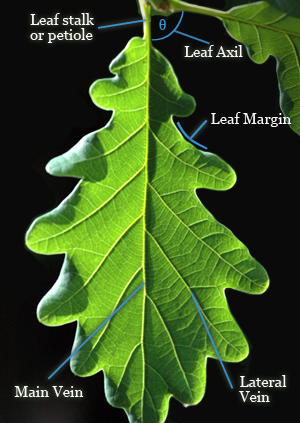
Leaves have three main parts:
The petiole, a stalk-like structure that connects the blade of the leaf to the stem of the plant. Some leaves don’t have petioles, and are known as sessile leaves.
The blade or lamina, usually the largest part of the leaf. The edge of the leaf or the leaf margin may be described as entire, toothed, or lobed. The oak leaf, for example, is clearly lobed. The blade has many veins, forming a network, carrying water and nutrients,
The base, the base is the region of the blade that attaches to the petiole.
A leaf is said to be simple if its blade / lamina is undivided, if the ‘teeth’ or lobes do not reach down to the main vein of the leaf. A compound leaf has several leaflets, which join up with a single leaf stalk or petiole. When identifying tree leaves, it is always important to look for the petiole, as a single leaflet of a compound leaf can look like a simple leaf. More details of leaf and tree structure can be found on this link on our website.
Now for a challenge. Can you or your children find a leaf (and name the tree it came from), that
Has a serrated / toothed edge
Has a lobed margin
Has a smooth edge / margin
Is a compound, palmate leaf
Is a compound, pinnate leaf
Is hairy
Is not green, but red or a mixture of colours
Is more or less circular
Is fleshy / succulent
Has spines on its edges
Is needle shaped
Has a thick (waxy?) cuticle or is very shiny
Has net venation
is marcescent (might keep you hanging around)
Go forage!