Woodlands.co.uk

Blog - plastic pollution

Not woodlands, but waterways and highways.

Not woodlands, but waterways and highways.

by The blog at woodlands.co.uk, 28 August, 2026, 1 comments

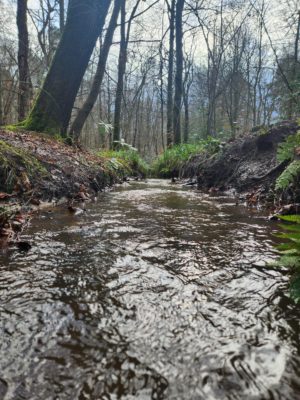
Natural habitats have been disappearing for a long time - as a result of human activity.  The last century saw hundreds of miles of hedgerow disappear, and the same is true for ponds and wild flower meadows.  Agriculture, transport networks and cities have expanded - woodlands have become fragmented.   Now, sadly we have seemingly daily reports of our rivers and seashores being polluted with sewage.  Indeed, thousands of such incidents have been reported and many rivers and seaside resorts are now unsafe places to swim (or row?).  Clearly, the infrastructure (much of it victorian) is unable to cope with the demands placed upon it.  Surfers against sewage have collected and collated information about sewage, and on their web site there is a map of coastal areas experiencing sewage discharge. If this situation was not bad enough,  run-off from major motorways is also being discharged into our rivers and streams.  Indeed, the Environment Agency has acknowledged this as a serious issue, accounting for some 18% of ‘water quality failures’ in England.  Like sewage, it is damaging. So what does this road run-off water contain?  It seems to be a mix of particles from tyres, clutch and brake pads, motor oil, transmission fluid, coolant, gear oil, and power-steering fluid. In addition, rust or corrosion from the car / vehicle body and galvanised parts can release iron, zinc, and aluminium. Modern tyres contain natural rubber, synthetic rubber etc. so when you brake, or speed up, the tyres shed thousands of tiny rubber and plastic fragments. They form as a result of the friction between the tyre and the road; they are referred to as ‘Tyre Wear Particles’ or (TWPs)*; and are a significant source of microplastics.  Microplastic are seemingly everywhere, in the oceans, in habitats across the world and even in us.  Scientists have found even microplastics in human semen, and also follicular fluid ( the fluid that surrounds a developing egg in the ovary). During and after heavy rain, TWPs and other materials are washed off the roads, with most entering stormwater networks, which channel the run-off into rivers, streams etc. Due to their density,  the TWPs etc sink and form a sediment layer.  The BBC has reported on the ‘black gunk’ in the River Lambourn (Berkshire).  The Lambourn is a chalk stream with crystal clear water as it makes it way through Welford Park, before passing underneath the M4.  Thereafter, it turns brown and murky. This has consequences for the invertebrate animals that live in the waters of the stream or on the stream bed. It is possible to mitigate some of the effects of this run-off / stormwater. For example,  near the A38 in Devon the National Highways have built a reed bed . This filters the run-off from the busy road. There are only 210 true chalk streams worldwide, and most of them are in England.   For example, the Test and Itchen in Hampshire, the Wensum in Norfolk and the Piddle in Dorset.   They are a unique contribution to global ecosystems. The National Highways is aware of the pollution problem across the road network and is using a computer model to identify which stormwater outfalls to tackle. More than a thousand locations that are "potentially high risk" have been identified.  Under its current plans, a limited number of high-risk sites will have had a mitigation in place by the end of last year. *TWPs may be swept up into the atmosphere and transported to remote regions like the Arctic.
Plastics and tree guards

Plastics and tree guards

by The blog at woodlands.co.uk, 27 October, 2023, 1 comments

Plastic is a problem, plastic is universal.  A class from Ramsbury Primary School went on a walk round their village, looking for signs of plastic pollution. When they looked in the hedgerows (lining the paths and fields), they found old plastic tree guards (and hedge guards).  Some were breaking up into pieces, some growing growing into the bark of the trees.  In addition, there were plastic bottles, face masks, dog poo bags, sweet wrappers, plastic ropes, plastic bags, and plastic wrappers from hay bales. Plastic  litters our world.  Each year, hundreds of million tonnes are produced. It is used but often it is not recycled - it is discarded.  It litters the land, rivers and oceans.  It is now almost impossible to walk in the countryside or on a beach without encountering plastic in one form or another.  Discarded plastic can kill or injure.  Mammals, reptiles, birds can be harmed through eating plastic or becoming entangled in it. Plastics are made up of repeating units (monomers) that join together to form long chains (polymers). There are six major polymer types, PET, HDPE, PVC, LDPE, PP and PS. Many are derived from petrochemicals.  Additives are incorporated into plastics and these can gradually leach back out either during normal use, or when in landfills, or following improper disposal in the environment.  Whilst plastics serve many different functions, their makeup means that they do not easily break down, they persist.  Consequently, a lot of plastic goes to landfill or it may be burnt (to generate energy) - which in turn can release greenhouse gases and pollutants.  Ideally plastics would be reused, like glass bottles were recycled in the dairy industry for over a century. Polyethylene is used widely for plastic bottles and food packaging, PVC is used to make pipes (for water / sewage), coating for electrical cables, uPVC windows and fascia boards. Recycled PVC can be used to make certain types of tree guards, for example :Spiral guards.  Such guards offer protection to young trees and hedgerow so that they can establish themselves, avoiding being chomped by rabbits, deer or sheep.  The guards also offer a micro-climate that helps growth. UV stabilised polyethylene is used to make netting / mesh to protect young trees. [caption id="attachment_34477" align="alignright" width="300"] Tree guards, to protect young trees on moorland[/caption] Tree failure can be an expensive process, so it is important to give young trees a ‘good start in life. A ‘weed’ free area around the planted tree reduces competition for water, light etc. In theory, it should be possible to reuse plastic guards, but they are often damaged, degraded or have to be cut to remove them from the young tree.  As they are not biodegradable, it is important that they are collected and removed. Ideally this material should be recycled.  If many trees are being planted, it may be simpler / more cost effective to fence off the planted area to protect young trees from browsing activity. Because of the problems associated with plastic tree guards, there are now a number of alternatives available.  For example, wool-based tree guards / shelters (eg. Next Gen) are fully biodegradable being made from wool A biodegradable polyol made from ethically sourced cashew nutshell liquid and castor oil A polymer that breaks down over time Other biodegradable forms of tree protection make use of a polymer made from sugar cane (eg. HyTex products).  Such guards decompose slowly through the action of microbes (bacteria and fungi), temperature and humidity, gradually forming a  compost - so their removal is not needed.