Woodlands.co.uk

Blog - ponds

Pond life

Pond life

by The blog at woodlands.co.uk, 14 March, 2025, 0 comments

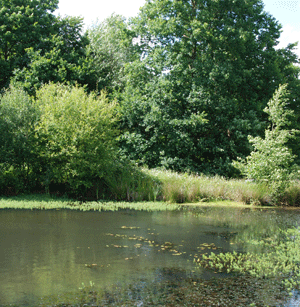
The last century saw the destruction of many hedgerows, particularly in farming areas like East Anglia.  The logic behind this was : to increase field size and  allow ease of access of machinery, like combine harvesters that were coming available at that time.   Whilst the loss of the hedgerows and the associated wildlife is well documented, the loss of ponds during this time has not attracted the same level of attention.  Many hundreds of ponds were filled in, to give a few more metres of arable land.  The whereabouts of some of these ponds can sometimes be found on old ordnance survey maps.  Many were located on farmland and their origins may extend back centuries to when they were created as marl or clay pits, sometimes for the watering of livestock.  Some were formed in depressions (pingos) left after the last ice age. There are still  thousands of ponds across the UK but many are polluted to a greater or lesser extent, or drained.  The pollution may be associated with the the surrounding land use or agricultural runoff. Runoff may take the form of nitrates / phosphates from the use of fertilisers.  In freshwater systems, these nutrients can cause eutrophication. Other agricultural chemicals may enter ponds and water courses - insecticides, fungicides, herbicides etc. Consequently, out of the thousands of ponds, only a very small number provide a suitable habitat for pond organisms such as the medicinal leech.  Leeches are rarely found for the reasons cited above but also because, as agriculture became more mechanised and less reliant on ‘animal power’ [horses, oxen], the ponds  (or wetlands) are no longer visited by these animals, which leeches would have fed on.  Leeches used to be abundant, but their number declined when their use in blood letting was largely abandoned, and their natural habitats were drained or damaged.  The medicinal leech is one of the largest leeches found in the UK, it can grow to a length of ten centimetres, and may have stripes / patterns on its body.  Some of the ponds that are home to medicinal leeches have been designated  Sites of Special Scientific Interest.  Since historic times, the extraction of blood by leeches was deemed to be a ‘healing process’ for patients. This practice of hirundotherapy / bloodletting spread widely and the collection of leeches resulted in the over-exploitation of many populations.  The leeches were used widely in the treatment of many conditions and  diseases such as cholera, regardless of whether or not they were effective.  At one stage, leeches were in such demand that there were ‘leech farms’, and  people could earn a living as leech collectors.  Indeed, so commonplace was leech collection that Wordsworth wrote about it in his poem Resolution and Independence : “He told, that to these waters he had come To gather leeches, being old and poor: Employment hazardous and wearisome! And he had many hardships to endure: From pond to pond he roamed, from moor to moor; Housing, with God’s good help, by choice or chance; And in this way he gained an honest maintenance.” Although the use of medicinal leeches was discredited and virtually abandoned for many decades, they are medically effective in certain circumstances.  The leeches produce a saliva which  contains a number of different proteins. These help the leech to feed by keeping the blood from clotting, and actually increasing blood flow to the leech at the point of attachment.  Some of these proteins act as anticoagulants (notably hirudin),   It is also possible that the saliva contains an 'anaesthetic / antiseptic' as leech bites are generally not painful. These leeches have now found a use in microsurgery.  They are used to stimulate the circulation in tissues which experience post-operative congestion.  They are helpful in finger reattachment and reconstructive surgery of the ear, nose, lip, and eyelid. The creation of a network of new or restored freshwater ponds across the landscape will be needed if natural populations of the leech are to expand. 
Of owls and dormice

Of owls and dormice

by Judy, 8 April, 2022, 1 comments

Dave and I bought our lovely wood in Kent in 2019 because we wanted to surround ourselves in nature and have somewhere our children could visit to decompress from their busy lives.  In due course, we hope our as-yet-unborn grandchildren can come and explore amongst the trees to root them firmly in the natural world. One day, we wish them to become the custodians of this beautiful space. But it was more than that for us. Dismayed by on-going news of threatened wild spaces, we wanted to play our small part to protect, cherish and encourage the biodiversity that calls our wood its home. Understanding how the wood ticks throughout the year was a steep learning curve for us and one that we shall still be climbing for many years to come. We have dug several small ponds, put up bird feeders and a large number of bird boxes, as well as clearing some glades and coppicing the hazel through the winter. Trail cameras have been sprinkled liberally around, all the better to find out what the wildlife is up to when we are away. We have found that there is a thriving population of Hazel Dormice in our wood and there are several badger holes and fox dens. [caption id="attachment_37873" align="aligncenter" width="640"] A Hazel Dormouse that has made a nest in a bird box[/caption] Green Woodpecker nest in the same hole in a cherry tree every year and this spring we have the thrill of a pair of Tawny Owls setting up home in one of our owl boxes. [caption id="attachment_37874" align="aligncenter" width="623"] A Tawny Owl hunting for worms on the woodland floor[/caption] White Admiral and Silver-washed Fritillary butterflies glide majestically through the woodland glades in August and Woodcock and Redwing fly in from distant lands to spend their winters here with us. We feel that the wood has given us so much - the joy of a deeper understanding of the woodland habitat, a space to clear our heads, bountiful aerobic exercise, and, in a small way, the opportunity to give a little bit back to the world.  
Sorry, you’ve bought a woodland?

Sorry, you’ve bought a woodland?

by Jethro, 30 March, 2022, 2 comments

That’s the most common reaction among friends, family and colleagues when mentioning our latest project. So I thought it would be fun to share a little about why we have in the hope it will help others who may be considering it.    We’ve always had a love for the outdoors; I grew up practising my Scout skills on Dartmoor and Exmoor and my wife hiking and living on the North York Moors.  Fast forward 19 years and with boys of 8 and 11 we had spent days and days during Co#%d outside. We’d chat about the environment, ecology, camping and escapism amongst other things. I’d dreamt of owning a woodland for years and we could now think about making it a reality. I must confess that it’s taken a year or so of convincing my wife that rather than having money sat doing nothing in savings, thinking about a camper-van or extending the house -  it would be much more prudent to leave something for future generations and critically much more fun to learn about and apply our ideas from those Co#%d chats in our own woodland and more so to share some of that with our family and friends.   What blew me away in the process was how much the boys would help. The ideas were flowing; camping, hammocks, making fires Bear Grylls style, bird/owl/bat box making and installing, planting new trees, wildlife trail cameras, dens, bird hides, benches, swings, obstacle courses, tree houses, a pond, a zip line, a zip line over a pond! You get the idea. The boys’ ideas have spurred us into investigating and learning about the interconnectivity of many of these ideas; bracken control by digging a pond to encourage a new natural wetland habitat, new wildlife, opening an area above for bats and birds, the potential for new mammals, creating an area for relaxation and quiet reflection. We might also be creating entrepreneurs as the boys have realised they could earn some pocket money by selling poles or netting kindling or even one day carving spoons. They’ll keep us on our toes that’s for sure. And how about something for me? Apart from the gadgets I’ve been secretly buying, the latest project is a compost loo with a view - made from  old pallets. Ticks off the categories of environment, sustainability, ecology and escapism all in one hit. And we’re only at the beginning, what else might come in the future?   Four weeks have rolled by since the purchase, many of those same friends and family now say things like “it’s so great how much the boys are into it!”. Isn’t it just?!…and in reflecting on the title of this post; no, we’re not sorry at all! Far from it! To track our progress and time as a woodland owning family please follow us on Instagram @grange_close_wood.   Jethro.  
Dead hedging : wildlife friendly and people guiding.

Dead hedging : wildlife friendly and people guiding.

by Angus, 23 July, 2015, 22 comments

Dead hedges are piles of branches and twigs arranged to form a barrier which are increasingly used as a way to dispose of the material that arises from thinning or clearing operations in woodlands. Tree surgeons call this waste material of saplings and side branches "arisings" whereas foresters tend to call it "lop and top". Using surplus branches in this way is good for wildlife - especially for small mammals and birds - because it gives them somewhere to shelter that is protected from predators and from the wind and rain. It's also good for insects: dead hedges in effect create a linear eco-pile. Recently we at woodlands.co.uk have been using dead hedging as a way of guiding the public to stay on public footpaths and to discourage people from walking across sensitive areas of a woodland. In many situations the dead hedge needs to have gaps left in it for deer paths and for managers and owners to get around the woodland. The idea is that the material in the dead hedge will rot away in ways that are good for ecosystems but this takes quite a few years as the branches are largely off the ground - it is becoming quite common to keep a dead hedge maintained by regularly putting more foliage and saplings on top. When constructing one of these barrier hedges you soon realise just how useful it is to build it very near to where the branches are, as an enormous amount of time and energy can be taken up in moving branches around your woodland. Depending on the site, the alternatives to creating a dead hedge are often unattractive - smelly bonfires, carting material off-site or leaving a forest-floor that is impenetrable by foot. Visiting a heavily used council woodland in Highgate in London recently I saw how effective dead-hedging can be in protecting areas of woodland from being trampled. Circular dead hedges were also being used to protect ponds from dogs - I saw a tightly built pile of cut branches woven between hazel posts which had created a barrier so that the tadpoles survived being persecuted by dogs - in this case labrador-German-wire-haired crossbreed. Dead hedging is also a very useful activity for volunteer groups in woodlands because the activities involved are fairly safe - hand cutting of small diameter branches and arranging these into piles. Such projects have a clear purpose but also a very visible result so volunteers feel they have achieved something useful in building a dead hedge. Brambles that have been cut can also be put on top but often the dead hedge becomes a lattice work which will be colonised by brambles that are very much alive - much depends on how much light there is and whether brambles are already established in that part of the woodland.

Next Page »
