Woodlands.co.uk

Blog - rainfall

Watching insects on the move

Watching insects on the move

by The blog at woodlands.co.uk, 5 December, 2025, 0 comments

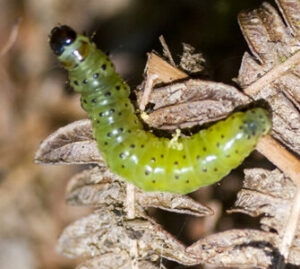
Scientists from the Meteorological Office use radar data to track approaching storms and changing weather patterns.   The radar works by sending out pulses of microwaves, these bounce off rain drops and other particles in the air.  The time that it takes for this signal to return, plus its intensity gives information about the approaching weather. Early radar [during the Second World War] also picked the movement of ‘angels’. These ‘angels’ were later recognised as the movement of birds, bats and insects.  Scientists then had to develop techniques to remove this ‘biological scatter / material’, so that they could accurately predict storms etc. By removing this ‘biological component’ of the signal, a lot of biological information about the movement of birds, bats and insects was being ‘discarded’.   Now, scientists from the University of Leeds have ‘repurposed’ the radar data (from many radar stations, which scan the skies many times each day & night) but this time they remove the data relating to the weather.  This leaves information about the insects moving at a height of some 500 / 700 metres above the ground.  The results showed that some 11.2 trillion insects are moving during the day, and that this reduces to some five trillion at night.   Some of these insects are actively flying, but some are being carried by the wind  / thermals.  Furthermore, there were more insects above areas such as woodlands, grasslands and even urban areas.  However, the numbers were lower over intensively farmed areas, where plant biodiversity was reduced as compared to woodland or natural grassland.  The numbers were also lower where artificial lighting was high.   Other work by the CEH, Newcastle University and Butterfly Conservation, has involved surveys of grassland and hedgerows in southern England (Thames Valley) some of which were lit by streetlamp, others were unlit. The areas that were exposed to night time lights had roughly half the number of caterpillars as compared to the unlit areas.   In another study, LED lighting was set up in fields, and caterpillars' numbers in these illuminated fields were reduced.  The lighting may :- [caption id="attachment_40185" align="alignleft" width="300"] Cinnabar moth caterpillar.[/caption]   Deter nocturnal moths from egg laying. Make the night flying moths ‘easier targets’ for predators (such as bats). Affect the feeding habits of moth caterpillars. Whilst it would seem that night time light affects insects and the feeding behaviour of caterpillars,  quite how and why is yet to be determined.
Changes in climate, phenology and food availability.

Changes in climate, phenology and food availability.

by The blog at woodlands.co.uk, 28 August, 2024, 0 comments

Since its formation, the earth has undergone change.  Life forms have come and gone.  There have been five major extinctions, the last being at the end of the Cretaceous Period; it killed off the dinosaurs and many other species.  This particular extinction event is thought to have been particularly rapid, due to an asteroid impact.  It caused a series of cataclysmic events and a rapid cooling of the Earth’s climate. Other changes, such as intense volcanic activity and tectonic uplift, may have pre-dated the asteroid impact but the event saw the elimination of many, many life forms. We are witnessing significant global change, that is also rapid in geological terms. Changes in the Earth’s climate and species composition usually take place over millennia, indeed over millions of years.  However, recent years have been very warm.  Global temperatures have changed noticeably. The warming that has been recorded “is exceptional relative to any period since before the last ice age, about 125,000 years ago”.  This warming has resulted in extreme and severe weather events in this country and across the world.  This year a record breaking January temperature of 19.9oC was recorded at Achfary, with storms Henk, Isha, and Jocelyn in the same month. The Earth’s warmest year on record (between 1850 to 2023) was 2023.  In early September 2023, the UK experienced a significant heatwave when daily maximum temperatures exceeded 30°C [somewhere in the UK] for seven consecutive days. [caption id="attachment_35526" align="aligncenter" width="675"] Drought![/caption] Such changes are not without effect. Phenology observations indicate that trees are producing their leaves earlier, woodland plants are coming into flower earlier. See the woodlands blog “Spring is on the move”.  A concern with these changing phenologies is that ‘mismatches’ can occur.  When trees come into leaf determines when caterpillars can feed and that, in turn, affects when birds can feed on the caterpillars and raise their young.  If these events do not occur in synchrony then the ‘functioning of the ecosystem’ is disturbed.  [caption id="attachment_25123" align="alignleft" width="300"] Leaf 'unfolding'[/caption] The agricultural and horticultural ecosystems that we have created are also affected by climate change. This year, heavy rainfall has meant that farmers in many parts of the UK have been unable to plant certain crops [such as potatoes, wheat and vegetables] during the key spring months. Some crops have rotted in the soil. In April, there was 111.4mm of rain, [the average for April is 71.9mm]; the sixth wettest April of the last 189 years.  Persistent wet weather also affects lambing, and can mean it is not possible to turn dairy cattle out onto grass / pasture, which in turn affects milk production. Monthly temperatures are more likely to be above average than below as climate change take effect.  This was true for the first three months of the year.  Warmer air holds more moisture and it can evaporate more water from the seas / oceans. A one degree (Celsius) rise in temperature adds 7% more moisture in the air.  Woodlands are affected by heavy rain as soil becomes waterlogged, which affects woodland flowers, and wet winters do no favours for animals that hibernate. The UK is not the only place to be affected by extremes of weather, be it rainfall and flooding, or high temperatures and drought.  India has recently experienced a period of extreme temperature, with temperatures approaching 50oC.  Such temperatures push human physiology to its limits.  Just as extreme rain is a problem for farmers, so is extreme heat and / or drought.  Brazil has been the main exporter of oranges for producing orange juice, but its recent crop has been substantially reduced as a result of flooding and drought; resulting in the worst harvest in decades. Spanish orange production has also been reduced due to drought. Like California, large parts of Florida ‘the Sunshine State’’ has seen its once-famous citrus industry reduced over the past two decades. Two diseases, greening and citrus canker have taken their toll, and then Hurricane Ian in September 2023, hit the citrus industry at the beginning of its growing season.  Large parts of the one famous citrus industry (oranges and grapefruit) have been lost and farmers are turning to the PONGAMIA tree to repurpose fallow land. [caption id="attachment_41381" align="alignleft" width="650"] Pongamia  : image thanks to Sarangib on Pixabay[/caption] This is a climate-resilient tree from India. They do not need fertiliser or pesticides.   It has been grown as a shade tree. As a member of the Fabaceae, it produces small, brown beans.  These are so bitter than not even wild hogs will eat them.  However, the beans are easily harvested by a machine that shakes the tree.  A San Francisco based company has found a way to remove the bitter tasting chemicals and use the beans in food production, as they yield a high quality protein and also an oil.  The bean (a legume) has been used to make a table oil, protein bars and a biofuel.   Orange juice production is not the only drink to be affected by changing climate.  Drought affects coffee plants and damages the quality of the soil, and excessive rainfall ‘favours’ fungal disease [e.g.coffee leaf rust and cherry rot], all of which will impact the yield and quality of the beans harvested.  Similarly, chocolate production is threatened. Cacao trees are impacted by global warming,  they can only grow and thrive within 10 degrees of the Equator, needing stable temperatures, high humidity, and ample rain.  However, temperatures are rising while rainfall has decreased. These changes lower the humidity. The trees are also under attack by a virus - cacao swollen shoot virus disease (CSSVD). Changing temperatures and rainfall patterns will influence what crops can be grown and where, it will also influence their cultivation and the working patterns associated with those crops.  Climate change is thus a factor contributing to food inflation and insecurity across the world.    
Too hot, too dry - continued

Too hot, too dry – continued

by The blog at woodlands.co.uk, 21 August, 2022, 0 comments

Looking around the garden this morning one might be forgiven for thinking that autumn is already here.  Several trees seem to think the short days of autumn have arrived and are preparing to shed their leaves. Certainly the walnut and hazel are of this opinion.  However, other signs indicate that this is not the case, my twenty year old cedar has died, as have several Cryptomerias and other conifers - this despite assiduous trips with the water can.  In fact, the plants are responding to this summer’s weather, a long period without rain (or very little) plus the very hot weather that we have experienced; particularly in the South and South East.  The plants are not reacting to any changes in day length but to drought. Plants detect changes in the photoperiod they experience through their phytochrome system; under normal circumstances their biological clock will tell them when to prepare for winter.   Whilst many well established trees and plants with extensive root systems can withstand a period of drought, younger plants or those in poor or freely draining soil are likely to die.  Such plants simply cannot take up enough water to replace that lost through transpiration; that is, water evaporation through the stomates (pores) in the leaves.    The intensity of the heat this year coupled with the reduced rainfall has affected many plants and trees and it may be some time before we see the full effect of this summer’s weather.  Beech trees suffer more during periods of droughts because they have shallower roots, while oaks reach moisture deeper in the soil and continue to grow.  In the drought of 1976, many beech trees died and survivors often exhibited reduced growth some 40 years on*. Some plants respond to drought stress by bringing forward their reproductive process, so that fruits and seeds are produced early.  This is an attempt to ensure the survival of the species for when conditions are more favourable to growth.  The Woodland Trust, noted for its phenology records, recorded ripe blackberries in late July (lots of reports on its page on Facebook).  Hawthorn, Rowan, Holly and Elder have all been recorded as fruiting earlier this year.  This was true of the filbert in my garden this summer.  This earlier production of fruits and seeds may have ‘knock on’ effects on the wildlife that feed upon them.   Whilst the effects of the extreme weather are obvious in our parks, gardens etc, the effects on rivers and streams are dramatic.   Chalk streams, in particular, have been affected; they are unique habitats.  The River Ver is a chalk stream in Hertfordshire.  The summer has seen large sections of its upper reaches reduced by several kilometres due to the hot weather (and water abstraction).  The effects in and around such streams may be felt for many years as the water levels fall so the habitats for fish, amphibians and invertebrates (such as dragonflies / mayflies) are reduced or lost.  Recolonisation of such drought impacted systems can be slow and prolonged.   An accessible and detailed paper on Beech trees and drought is available here : research gate.net [caption id="attachment_22186" align="alignright" width="300"] Mature Beech on Box Hill, Surrey.[/caption] [caption id="attachment_10575" align="alignleft" width="300"] Mature beech[/caption]

Next Page »