Woodlands.co.uk

Blog - run off

Not woodlands, but waterways and highways.

Not woodlands, but waterways and highways.

by The blog at woodlands.co.uk, 28 August, 2026, 1 comments

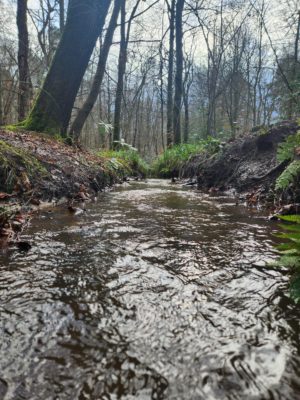
Natural habitats have been disappearing for a long time - as a result of human activity.  The last century saw hundreds of miles of hedgerow disappear, and the same is true for ponds and wild flower meadows.  Agriculture, transport networks and cities have expanded - woodlands have become fragmented.   Now, sadly we have seemingly daily reports of our rivers and seashores being polluted with sewage.  Indeed, thousands of such incidents have been reported and many rivers and seaside resorts are now unsafe places to swim (or row?).  Clearly, the infrastructure (much of it victorian) is unable to cope with the demands placed upon it.  Surfers against sewage have collected and collated information about sewage, and on their web site there is a map of coastal areas experiencing sewage discharge. If this situation was not bad enough,  run-off from major motorways is also being discharged into our rivers and streams.  Indeed, the Environment Agency has acknowledged this as a serious issue, accounting for some 18% of ‘water quality failures’ in England.  Like sewage, it is damaging. So what does this road run-off water contain?  It seems to be a mix of particles from tyres, clutch and brake pads, motor oil, transmission fluid, coolant, gear oil, and power-steering fluid. In addition, rust or corrosion from the car / vehicle body and galvanised parts can release iron, zinc, and aluminium. Modern tyres contain natural rubber, synthetic rubber etc. so when you brake, or speed up, the tyres shed thousands of tiny rubber and plastic fragments. They form as a result of the friction between the tyre and the road; they are referred to as ‘Tyre Wear Particles’ or (TWPs)*; and are a significant source of microplastics.  Microplastic are seemingly everywhere, in the oceans, in habitats across the world and even in us.  Scientists have found even microplastics in human semen, and also follicular fluid ( the fluid that surrounds a developing egg in the ovary). During and after heavy rain, TWPs and other materials are washed off the roads, with most entering stormwater networks, which channel the run-off into rivers, streams etc. Due to their density,  the TWPs etc sink and form a sediment layer.  The BBC has reported on the ‘black gunk’ in the River Lambourn (Berkshire).  The Lambourn is a chalk stream with crystal clear water as it makes it way through Welford Park, before passing underneath the M4.  Thereafter, it turns brown and murky. This has consequences for the invertebrate animals that live in the waters of the stream or on the stream bed. It is possible to mitigate some of the effects of this run-off / stormwater. For example,  near the A38 in Devon the National Highways have built a reed bed . This filters the run-off from the busy road. There are only 210 true chalk streams worldwide, and most of them are in England.   For example, the Test and Itchen in Hampshire, the Wensum in Norfolk and the Piddle in Dorset.   They are a unique contribution to global ecosystems. The National Highways is aware of the pollution problem across the road network and is using a computer model to identify which stormwater outfalls to tackle. More than a thousand locations that are "potentially high risk" have been identified.  Under its current plans, a limited number of high-risk sites will have had a mitigation in place by the end of last year. *TWPs may be swept up into the atmosphere and transported to remote regions like the Arctic.
After-effects of forest fires.

After-effects of forest fires.

by The blog at woodlands.co.uk, 13 October, 2023, 0 comments

In 2018, the blog reported on the extensive fires in Sweden, a country noted for its forests and woodlands, which cover approximately half of the country. Once the trees were mainly broad leaved species, but then oaks and alders began to decline.  By the middle of the  twentieth century,  Spruces and Pines were dominant.  This was mainly due to forestry management, to produce wood for fuel, charcoal [used in iron smelting], potash, tar and timber (for building). Fires burnt from the extreme north down to Malmo in the south. These fires affected some 20,000 hectares and destroyed woodlands valued at [circa] £50 million.  Now work by scientists at Uppsala University, the Swedish University of Agricultural Sciences (SLU), and the Swedish Meteorological and Hydrological Institute (SMHI) have examined the effects of the fires (of 2014) in the Vastmänland province, where the fires were ferocious, burning down into the soils. They have found that the 'forested areas' continued to lose carbon for several years after the fire, and that nitrate and phosphate input to streams and rivers increased after the fires. This spring and summer have again witnessed intense and widespread fires across the Mediterranean region, Canada and the United States. Fires are a problem not only because of their immediate destructive potential, but because they result in the release of carbon dioxide - which further contributes to global warming and climate change.  The United Nations Secretary-General said recently “The era of global warming has ended; the era of global boiling has arrived.” Data on these fires is not available as yet, but studies of the boreal fires in 2021 suggest those fires released some 1.76 billion tonnes of carbon dioxide into the atmosphere.  The fires contributed nearly one quarter of world wide carbon dioxide emissions from fires in that year.  [caption id="attachment_35352" align="aligncenter" width="650"] Woodland recovering from a fire[/caption] Boreal forests store roughly twice as much carbon in their trees and soil as tropical forests.  These forests (often referred to as the Taiga) surround the Arctic Circle and research suggests the Taiga is warming faster than the global average, so areas like Northern Canada and Siberia now experience more heat and drought than in the past, and consequently are more likely to suffer from fires. Clearly, when there is a fire, carbon dioxide (and many other carbon compounds eg soot / small particles) are released by the burning of the trees but there is also the effect of fire on the soil and its organic content - the humus.   Research indicates that during the fires in the boreal area some 150 tonnes of carbon dioxide may be released into the atmosphere per hectare.  Furthermore, even after the fire, carbon continues to be lost from the soil.  It may take some three years for carbon uptake by the soil to be recorded.   Fires also lead to the rapid loss (leaching) of nutrients (e.g. phosphate) to local lakes and rivers - as there is little or no vegetation to absorb the nutrients.   Rainfall is not intercepted by vegetation and so the flow of streams increases ( sometimes by 50%).    A research paper produced by the Desert Research Institute (in Nevada) has indicated that smoke from the burning of pines has the effect of making soil particles more water-repellent.  This repellency of smoke-affected soil particles could help explain the increased flooding, erosion, and surface runoff in fire damaged areas.  
Woodlands web updates : 20

Woodlands web updates : 20

by The blog at woodlands.co.uk, 28 October, 2022, 1 comments

Moss puts a brake on peak flow and flooding. “Moors for the future” have been working in the Peak District to investigate the run off of water after rain.  Often after a storm, rain water will run off a hillside unimpeded so that communities downstream in valleys are vulnerable to flooding.  Moors for a future have been planting upland areas (on Kinder Scout) with Sphagnum moss.  They have planted some 50,000 plants of the moss.  Prior to the planting of the moss, the surface might be bare, and rainwater would run straight off.  It was found that the moss dramatically slowed the run off of water, and the volume of water discharged from the hillside, preventing rivers from becoming inundated.  Each moss plant can hold up to twenty times its own weight of water.  The sphagnum moss also protects the underlying peat, so that new layers of material can accumulate - allowing for carbon sequestration. Help from vegetables ? More and more bacteria are now resistant to many types of antibiotics, consequently it is increasingly difficult to treat certain types of bacterial infection / disease.  In some cases, this is due to the production of a biofilm.  Bacteria grow on many surfaces within our bodies and as they grow and multiply they may encase themselves in a matrix of extra-cellular material that they produce ( as seen in Pseudomonas sp). Research workers at the Ben Gurion University have found that certain compounds from cruciferous vegetables, such as broccoli, can break down these bacterial films. Cruciferous vegetables include Cabbages, Cauliflower, Brussels sprouts, Kale, Radish, Kohlrabi and Mustard. The chemical DIM (3,3 diindolylmethane) was able to disrupt the biofilm.  When introduced to an infected, wound, it was found to speed up the healing process. It is hoped that further work will lead to a commercially viable product for the treatment of certain infections. (Thanks to Ulleo on Pixabay for adjacent image). ‘Help Signals’ from oil seed rape. Oilseed rape (or rapeseed, Brassica napus) is a major crop in many parts of the country.  It provides an oil and is also contributes to animal feedstuffs and biofuels.  Great swathes of the country turn yellow when the plant is in flower during the summer months.  These monocultures are ideal for the animals that feed on the plants, these range from insects, to nematodes, slugs and wood pigeons   One particular pest of oil seed rape is the Common Pollen Beetle (Brassicogethes aeneus).  The female beetles lay eggs in the flower buds of and the larvae develop within the flowers.  Both adults and larvae feed on the pollen and nectar in the flowers. Plants have limited means of fighting attackers.  They may construct structural defences, as discussed in the woodlands blog, or they may use chemical defences.  When bitten by a marauding herbivore some plants emit volatile organic compounds (VOC’s).  As the pollen beetles feed, the rapeseed releases VOCs which attract the attention of other insect - notably those that will lay their eggs into the larvae of the pollen beetles. These insects are usually from the same family as bees, wasps and ants - the Hymenoptera (insects with membranous wings and a ‘narrow waist’.   The pollen beetle larvae are then ‘eaten’ from the inside by the developing parasitoid larva.  This effectively constitutes a form of biological control.  Interestingly, the pollen beetles preferred to lay eggs into rapeseed plants plants growing with high levels of N fertilisation, whereas their parasitoids favoured more moderate levels of N fertilization.  This work was undertaken  at the Estonian University of Life Sciences. Finding the flowers. Research at the University of Exeter has shown that bees can distinguish between various flowers through a combination of colour and pattern.  This selectivity is achieved despite the ‘acuity’ of a bee’s vision being quite low (about a 100 times lower than ours) - this means they can only see the pattern of a flower when they are quite close ( a matter of centimetres).  The researchers analysed a large amount of data on plants and visiting bee behaviour, and experiments involving artificial shapes and colours.  One particular finding was the importance of the contrast between the outside of the flower and the plant’s foliage.  This seemed to help bees quickly find their way to the flowers.
