Woodlands.co.uk

Blog - sequoia

Reaching for the sky

Reaching for the sky

by The blog at woodlands.co.uk, 21 May, 2025, 0 comments

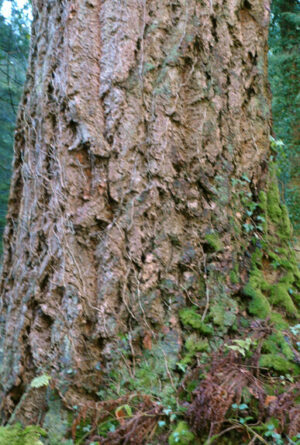
The tallest tree in England, a Douglas fir, is found on Exmoor.  The Douglas Fir was introduced into cultivation in 1827 by David Douglas.  Douglas was a gardener and botanist, who spent his early career in Scotland including time at the Botanical Gardens of Glasgow University.  He was recommended to the Royal Horticultural Society by William J Hooker, the first director of Kew Gardens.  Douglas made three trips to North America and was ultimately responsible for the introduction of many different species.  Some of the plants introduced during Victorian times include Sitka Spruce, Sugar Pine, Western White Pine, Ponderosa Pine, Lodgepole Pine, and Monterey Pine. These have transformed our landscape and the timber industry. Sadly, David Douglas died at an early age on an expedition to Hawaii, in suspicious circumstances. The Douglas Fir, despite its other common names, Douglas Spruce, Oregon Pine - is not a true fir , spruce, or pine. It is also not a hemlock. Its genus name is Pseudotsuga, means false hemlock.  The trees can grow to heights of nearly 100 metres, especially in their native coastal regions and may have a life span of 500 years. The Exmoor tree, planted 150 years ago, has reached a height of 63 metres (over 200 feet). However, as a relative youngster it still has some way to go — and it has competition. A recent survey* revealed there are a half million redwood trees in the UK.  Three species exist: the coastal redwood (Sequoia sempervirens ), the giant sequoia / redwood (Sequoiadendron giganteum), and the dawn redwood (Metasequoia glyptostroboides) They are among the largest trees on earth.  The coastal redwoods are the tallest of the three species.  The largest was measured to have a height of some 379 feet (115.5M).   Not only are these trees large but they are also impressive because of their longevity, living for a thousand years is not unusual.  Dendrochronology has aged one specimen at over 2500 years.   The coastal and the giant redwoods are found naturally on the pacific coast of California and Oregon.  Many of the UK redwoods, like the Douglas Fir, were introduced in Victorian times.  They were often planted on the estates of the wealthy and landed gentry. There are now probably more redwoods in the UK than in their native Pacific Coast range. Recent hot and dry weather has stressed the American trees, exposing them to intense wildfires. A recent study of some 5000 redwoods investigated how well the trees were ‘performing’ when compared to their American counterparts.  The tree were scanned with lasers  [a non invasive technique] to determine their height and volume (= biomass),  They were found to be growing just as well as those in the Sierra Nevada, this is probably due to our relatively mild but wet climate. The tallest redwood tree in the UK stands at 58 metres at Longleat, so somewhat behind the Douglas fir. However, whilst the Douglas Fir may have a life span of 500 years, a redwood can survive for 2000+ years, giving it time to catch up and overtake. * see  https://www.bbc.co.uk/news/science-environment-68518623 and https://royalsocietypublishing.org/doi/10.1098/rsos.230603
Burrs or Burls?

Burrs or Burls?

by The blog at woodlands.co.uk, 18 February, 2025, 0 comments

Burrs or Burls? What’s in a name. What are they?  They are woody outgrowths found on stems, branches, and often on roots.  They are  typically rounded, somewhat bulbous in form.  Burrs develop as a result of rapid and uncontrolled growth,  leading to a dense and irregular wood grain beneath the external bark of the structure. The uncontrolled and abnormal growth may result from various stressors, such as :- Physical damage eg. wounds, where branches are lost in high winds, injuries as the result of boring insects, or damage from squirrels or deer. Infections caused by bacteria, viruses, or fungi may trigger burr formation  These infections can induce  hormonal changes that affect cell division. Environmental factors such as extreme weather events or pollution can influence tree physiology and growth, as can somatic mutations. In most cases, a burr does not harm a tree, indeed they may persist for decades.  If the burr formed due to injury to the tree, then it could even be considered protective.  However, If a burr develops on a branch then it may become so heavy that the branch breaks. Burrs may be seen on a variety of trees, but some species are more prone to developing them, notably oaks, maples, walnut, and birch.  Coastal redwoods are known to produce burrs of considerable size, sometimes reaching several metres in width and even encircling the trunk of the massive trees..  Although burrs may not be visually appealing from the outside, internally the complex grain pattern means makes them highly valued for woodworking.  They are used to create bowls, furniture, musical instruments and sculptures.  It is generally unwise to cut a burr from a living tree; instead they are typically harvested from fallen or dead trees. Thanks to Steve Sangster for Burr images.
Fire in woodland ecosystems

Fire in woodland ecosystems

by The blog at woodlands.co.uk, 27 April, 2024, 0 comments

Many natural ecosystems are periodically exposed to fire.  After a fire, there is often reduced competition and increased nutrient availability (from ash etc.).  The plants and flowers that grow after a fire are visited more often by pollinators, such as bees and other insects.  This can result in increased production of fruits and seeds. Bushfires have been part of certain australian ecosystems for thousands of years and some native species are ‘fire adapted’.  They have come to 'rely' on fires as a means of reproduction and / or  dispersal. Whilst no one fire can be attributed to climate change alone, rising temperatures and aridity, lengthening of the ‘fire season’, combined with bursts of extreme ‘fire weather’, all combine to suggest climate change is implicated. As the frequency of fires increases, the possible benefits of fire to such ecosystems / species are being lost. Fire can help with the physical dispersal of seeds from the parent plant.  In some parts of the world, such as South Africa and Australia, fire and / or smoke can be the stimulus for seed dispersal and subsequent germination.  Plants such as some species of Protea, Banksia, certain members of the myrtle family (e.g. some Eucalypts), and some Pines and Sequoias 'make use' of fire to disperse their seeds. Seed dispersal involving fire is termed serotiny.  Many of these plants produce woody fruits or cones in which the seeds are held.  The mechanism underlying seed release varies but can be due to a resin that ‘seals’ the seeds inside the fruit or cone.  The resin ‘melts’ / liquefies on exposure to heat releasing the seed or there may be a structure called a seed separator (as in Banksia).  Serotinous conifers (like lodgepole pine), have mature cones in which the cone scales are naturally sealed shut with resin.   Most of the seeds stay in the canopy until the cones reach 122-140o F  (i.e 50 to 60oC).  At these temperatures, heat / fire  melts the resin and  the cone scales open to expose the seed. The seed can then drop or drift to a burned but cooling ash-rich soil bed. The seeds do well on the burnt soil available to them as the site offers reduced competition, more light, warmth plus the nutrients from the burning of leaves and litter.  Some species align their germination to immediate post-fire conditions - stimulated by chemicals present in the smoke.  The organic compounds karrikins,  products of the degradation of cellulose are  a germination ‘cue’ for some species.  Karrikins are thought to be present on the soil surface after a fire.  When it rains,  the karrikins are 'washed' into the soil, and seeds present in the soil seed bank are then stimulated to germinate. Thanks to Steve Sangster and John Cameron for images of woodland fire.  
woodlands web updates : 29

woodlands web updates : 29

by The blog at woodlands.co.uk, 10 December, 2023, 0 comments

Flowers of the woodland floor. Some woodland flowers enjoy the dappled light of the woodland floor beneath the canopy.  They grow in relatively shady, cool and damp conditions in the humus-rich soils.  Polish scientists at the Nicolaus Copernicus University have been studying four species that often grow together in European woodlands - namely Wood anemone Yellow anemone Lily of the valley Common may lily These are perennial plants that ‘come to life’ in Spring, producing a carpet  of flowers across the woodland floor.  However, as much as they share a liking for the shady, cool and moist conditions found there, they differ in their sensitivity / tolerance to rainfall / moisture levels in the summer months: which may change their distribution as summers become warmer and longer.  The team modelled various warming scenarios which suggested that the ranges of these species may change / contract with hotter and drier summers.  The common may lily is one that may be particularly affected and no longer share the same range or woodlands as the others studied.  If climate change takes a hold, it may be that ‘assisted migration’ may be needed to help such plants to find suitable ‘climatic refugia’. more on plant migration ...... With climate change, both plants and animals need to adapt.  With increasing warmth, many species may ‘need’ to move towards cooler latitudes.  Whilst many animals are mobile, they may be able [over time] to access new suitable areas, plants on the other hand are dependent on the dispersal of their fruits / seeds.  Fruit and seed dispersal may involve various animals, including birds.  If the birds are resident or non-migrating species, then it is probable that they will only disperse seeds over relatively short distances.   Migratory birds however travel great distances but often in the wrong direction.  Many birds that migrate at the end of the summer, travel south to warmer climes.  Work at the University of Exeter has studied a number of woodlands across Europe and bird species that feed on the fruits of 81 plants species (and help disperse their seeds).  They found that only about a third of the plants had fruits (seeds) that might be dispersed northwards by birds.  To benefit from this northward dispersal, the plants needed to either have a very long fruiting period (eg.holly, juniper) or a very late fruiting period (eg. Ivy). Full details of this study here Food production and food waste. As Sir David Attenborough has pointed out in a recent episode of Planet Earth III, producing food to feed the world comes at significant environmental cost.  Natural ecosystems are often burned (forests) or drained (peatlands) and then turned over to agriculture to produce crops or farm animals. The forests of the Amazon have been significantly affected by burning and logging,  with the concomitant loss of biodiversity.  But they are not alone. In Mexico, forests are being lost as the land is being turned over to avocado production.  Mexico’s neighbour, the USA has a voracious appetite for this fruit.  The forests are being turned into ‘avocado orchards’.  Avocado trees are ‘thirsty’, they need a generous supply of water.  They consume much more water than the natural species [eg. oyamel), so that natural aquifers are being depleted.  This affects local farmers growing crops such as tomatoes and corn. One particularly sad aspect of food production is that much of the food is wasted. Some is lost between harvest and reaching the retail sector, and then more is ‘lost’ in the home. Food may not be used, or not used in time so it starts to rot, become rancid etc.  A lot of food goes to land fill, where it may generate methane - a potent greenhouse gas. Sprouting sequoias. In recent times, there have been many images of the fires ravaging the forests of the west coast of the States.  Many thousands of hectares and millions of trees have been lost, including many of the giant redwoods.  However, recent studies have found that some of the burned Sequoias are producing new growth.  They are sprouting from roots and trunks, from dormant buds that have lain hidden under the thick bark for decades, this despite the loss of the canopies of the trees.  To fuel this growth, the trees are using reserve materials that have been stored for 50+ years.

Next Page »
