Woodlands.co.uk

Blog - taraxacum

In praise of dandelions

In praise of dandelions

by The blog at woodlands.co.uk, 12 September, 2025, 0 comments

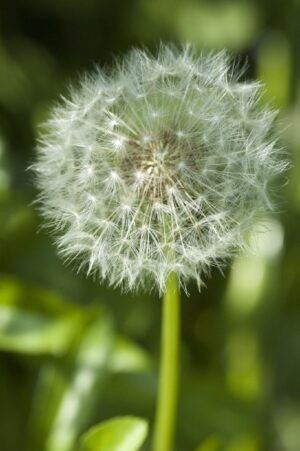
To many people, the dandelion is a pernicious weed.   First one makes its way into your garden, but then due to its reproductive capacity - there are dozens.  Each flower stalk may produce up to 200 seeds with their characteristic parachute for dispersal.  A plant may produce 10 or so flower stalks, so that it is a lot of seeds from a single plant.  Once the seeds  disperse and germinate, they produce a significant tap root which grows down into the soil seeking water and minerals.  The seedlings can survive in inhospitable places, like the cracks between street paving stones or on your drive. As the seeds are wind blown, they may travel considerable distances with the aid of their ‘parachutes'.  However, changes in agriculture, increasing use of herbicides etc have meant that countryside populations of dandelions have diminished.  This has affected the insects that feed upon the dandelions' nectar and pollen.  As the number of these insects falls, it affects the seed production of other plants that these insects visit. Interestingly, urban dandelions seem to benefit from the heat island effect in cities.  A city may be some 2oC warmer than its surrounding countryside, more so in the summer.   Dandelions seem to thrive in the heat, growing more rapidly than their 'rural cousins'.  Urban warmth also means that the plants can begin to flower soon after a milder and shorter winter, whereas other plants struggle to adapt to changing environmental signals.   The urban  dandelions provide a 'feast' for insects in early Spring when resources are limited.  Urban meadows can provide 90% of the nectar for pollinators, and 80% of the pollen. These provide sugars and proteins / amino acids for some 200 species of pollinators [ solitary bees, mining bees, bumble bees, hover flies and pollen beetles].  The gifts of the dandelions are helping many struggling insect populations. Interesting fact : Dandelions often reproduce by a sort of sub-sexual system (termed apomixis) that has resulted in some 200+ microspecies in the U.K.  These have been studied by Professor John Richards for some 40 years.  The species name Taraxacum officinale has a gg. (for aggregate) added to it - in recognition of all the variations of the plant that can be found.  Thanks to Angus for images. https://en.wikipedia.org/wiki/Taraxacum officinale  
dandelion

Wild flower pollen and bees

by The blog at woodlands.co.uk, 20 April, 2024, 1 comments

The period since WW2 has seen urban areas and, indeed farms, expand across the UK. The number of places where wildlife can thrive has been eroded.  Gardens and lawns have been changed to provide parking for cars, lawns are mowed and ‘weed-killered’, or worst still replaced with artificial grass so there is not a weed in sight.  Fortunately there are now initiatives like No Mow May that promote the growing of wild flowers in lawns and public spaces, like roadsides and verges.  Many common weeds are simply wildflowers by another name. Wild flowers / weeds (like dandelions, ragworts, clovers) are a lifeline for bees and bumblebees - who are facing so many threats [pesticides, habitat loss, invasive species] so adequate food is important. The flowers of these wild flowers / weeds offer food for a wide range of endangered bees, and at times when other resources are limited.  Dandelions, for example, offer an abundant source of nectar and pollen for bees & bumblebees when other options are limited - especially in urban settings. They produce their flowers (and therefore nectar and pollen) from early Spring right through to the onset of Winter. Recent studies have shown that the diet of bees has changed over the years.   In the past, the bees were able to forage and collect pollen and nectar from a wide variety of plants but with the loss of ‘natural’ wild areas their diet is now often dominated by brambles, clover and dandelions.  In the case of dandelions, their simple, open flowers makes for ease of collection.  They are visited by honey bees, bumblebees and carder bees.   Some studies have indicated that dandelion pollen, whilst it is rich in the amino acid proline,  has low levels or lacks certain amino acids (such as valine and isoleucine).  Bees need the same ten essential amino acids as us.  Without a supply of these particular amino acids, the development and growth of bees is impaired, as is their disease resistance and ability to raise the brood.  So, it is important to find ways to offer our pollinators a range of plants / pollen to provide all their essential nutrients. interesting related papers Food for Pollinators: Quantifying the Nectar and Pollen Resources of Urban Flower Meadows: https://journals.plos.org/plosone/article?id=10.1371/journal.pone.0158117 Shifts in honeybee foraging reveal historical changes in floral resources: https://www.nature.com/articles/s42003-020-01562-4