Woodlands.co.uk

Blog - terpenes

Plants talk.

Plants talk.

by The blog at woodlands.co.uk, 3 June, 2026, 0 comments

We can communicate in many ways, other animals may  message each by vocalising or gesturing.  Some release air-borne chemicals (pheromones) to attract a mate.  Plants also communicate by chemical signals that they release into the environment. The most obvious example is the release of scents to attract pollinators.   These floral scents are usually oils, made from volatile organic compounds (VOCs).  VOCs are carbon based compounds, such as the terpenes. They usually have a strong and pleasant odour.  They form partt of the scent of many plants, for example, honeysuckle, roses, jasmine, lilac, and mock orange.  Different plants produce different scents.  These different chemical signatures help pollinators identify particular species, and locate the nectar on offer. The VOCs produced by ripe fruit help attract animals that assist in seed dispersal. [caption id="attachment_43370" align="aligncenter" width="675"] Buff tailed bumblebee visiting a foxglove[/caption] VOCs are also produced by leaves when plants are under attack.  These may deter the attacking organism directly, e.g. caterpillars, or they may attract an organism that predates upon the herbivore. When pollen beetles feed on oil seed rape, the plants release VOCs which attract the attention of insects (a type of wasp). The wasps lay their eggs in the larvae of the pollen beetles. The pollen beetle larvae are then ‘eaten alive’, by the developing wasp larvae.  Sometimes, VOCs are produced by stressed or attacked plants,  these VOCs ‘warn’ nearby plants of the same species. These plants can then activate their defences before they are attacked. This helps ensure the survival of some of the population. Recently, it has been suggested that mycorrhizal systems act as a physical and chemical ‘means of communication’ between the trees in a woodland, in what has been termed the ‘wood wide web’. The term was coined by Dr. Suzanne Simard, a forest ecologist at the University of British Columbia to describe the complex relationships between fungi and plants in woodland ecosystems.  Interestingly, VOCs can influence air quality and atmospheric processes.  In a woodland,  the scent of pine or other conifers may permeate the air.  Pines release volatile compounds, such as alpha-pinene.  Recent research has established that these volatile compounds / vapours are not only responsible for the characteristic scent, but also contribute to the formation of aerosols in the atmosphere* both in and around such woodlands and forests.  In the presence of sunlight, VOCs can interact with the gas nitric oxide to form ground level ozone, which contributes to smog formation. Forests can be a significant source of VOC emissions. The production of VOCs is affected by environmental  conditions.  VOCs release generally goes up with an increase in temperature, as the plants metabolism increase.  An increase in temperature also helps in the evaporation / volatilisation of plant oils and scents. Water availability and light intensity also affect VOC release.  * An aerosol is a ‘mixture’ of very small particles (solid or liquid) in air; other examples of aerosols include mist, cigarette smoke, or car exhaust fumes Addendum : Heavier and far rarer VOCs are the sesquiterpenes, larger molecules that trees in the Amazon release when exposed to drought.  These reactive molecules help form tiny particles that seed clouds and scatter sunlight. These emissions could change the weather and climate over the whole region.  For full details see : https://www.earth.com/news/amazon-trees-emitted-never-before-seen-chemicals-during-drought/  
The air that we breathe.

The air that we breathe.

by The blog at woodlands.co.uk, 24 April, 2026, 0 comments

When you step into your garden during the Spring or Summer months, you might be aware of the scent of honeysuckle, lavender or indeed an old fashioned rose.  Similarly, in a woodland the scent of pine or other conifers may permeate the air.  These various scents often involve a group of compounds known as the terpenes.  The resin that exudes from pine bark is rich in terpenes. Terpenes are used in the building of many complex organic molecules and contribute to the make-up of volatile, organic compounds [VOCs] - produced by many plants.  The scents released from nectaries or other parts of flowering plants are often associated with attracting pollinating insects, but they can serve other functions.  For example, some VOCs released by a plant may warn surrounding plants of attack by insects. However, as you walk down the street, the air is rarely filled with these pleasant, natural scents. Instead the fumes of traffic, factories and industry assail us.  They are the exhaust emissions from cars, lorries, buses etc, plus the various bits and pieces [particulates] that are released from the ‘rubber’ of car tyres, brake pads etc.  The damaging effects of particulates are now well documented.  The effects include lung disease such as chronic obstructive pulmonary disease (COPD) and reduced lung function.   Particulates help create the concoction of substances that we inhale; sadly our air is often polluted with many different compounds. Scientists from Oxford University and Kew recently investigated air quality in different locations around Oxford.  The locations varied from the centre of the town, where the Botanic Garden is found, out to the University’s Wytham Woods.  Wytham is one of the most intensively studied woodland areas in the world.  The wood ‘holds’ 500 plus plant species and 800 or more butterfly and moth species. Records of bird populations go back some sixty or more years (largely due to the work of David Lack and others).   The air samples that the scientists collected were subjected to detailed chemical analysis using the technique of gas chromatography-mass spectrometry. Some 245 different compounds were identified in the various air samples, with each of the six different sites haveing their own signature collection of chemicals.  Sites near to busy roads contained high levels of benzene and toluene, which are traffic-related chemicals.  The tree rich areas naturally showed a greater presence of plant chemicals (VOCs).  Unsurprisingly, when they sampled the air in the Botanic Garden (over the course of a year), they found the highest levels of these plant compounds.  Warmer weather increased the levels of these VOCs / plant derived chemicals, which have been associated with improved mood and stress reduction. Full details of the Oxford study here : https://nph.onlinelibrary.wiley.com/doi/10.1002/ppp3.70191
oozing resin

Fungi helping bark beetles !

by The blog at woodlands.co.uk, 9 February, 2024, 0 comments

The woodlands blog has previously reported on the damage being wreaked by bark beetles.  These beetles may be small (less than a centimetre in length) but their effects on the western forests of North America has been immense. Some areas have lost 90% of their conifers.   Outbreaks of these beetles have been increasing in size and severity.  Indeed, across Europe, the eurasian bark beetle (Its typographus) has killed millions of conifers. Whilst bark is broadly protective, it can also offer a home to certain insects.  Bark beetles lay their eggs just below the bark so that when the larvae hatch, they can feed on the nutrient-rich living tissue of the cambium and phloem. Consequently, the tree's transport systems begin to fail.  The beetles may also introduce disease-causing fungi and bacteria. Ageing stands of trees coupled with warmer winters, which help the overwintering stage of the insect, have contributed to the spread of bark beetles. .  Conifers, by their nature, are not defenceless.  When a pine tree is cut / wounded, it produces a pale yellow and sticky fluid - RESIN to seal the cut or wound [see above image]. This material helps prevent the entry of pests or pathogens, and can stem water loss. The resin may trap insect invaders as  witnessed by those trapped in time capsules of amber.  Resin is rich in terpenes, these are used in the building of many complex organic molecules and contribute to the make-up of the volatile oils, produced by many plants.  Terpenes are made from units of isoprene, which has the formula C5H8. So the basic formula of a terpene is (C5H8)n, where n is the number of isoprene units that have been joined together.  Terpenes are also readily available in coniferous oils, which contribute to the unique smell of a pine forest or a burning log. [caption id="attachment_40973" align="alignleft" width="300"] Old and dying tree[/caption] These ‘chemical defences’ should trap, poison or deter an insect invader, such as the bark beetle.  But it would seem that bark beetles ‘don’t mind’ these defences. Research suggests that the eurasian bark beetle might have an ally.  Certain fungi (from the genus - Grosmannia) are found in association with these beetles. When the  Grosmannia fungi infect spruce trees they alter the chemical profile the trees, so that infected trees produce different volatile chemicals - ie they smell different.  The bark beetles are able to detect these differences and exploit this ‘breach’ of the trees natural defences.  The unique chemical profile of infected trees and the pheromones produced by the beetles probably help explain the swarming behaviour of the bark beetles.  A heavy beetle infestation results in the death of a tree. However, there is a possible positive in this rather sad tale.  At present, traps for bark beetles rely solely on using pheromones but if the pheromones can be combined with the chemicals produced by the fungi then it opens the door to more effective beetle traps.  
Ginger, gingerbread and ginger tea.

Ginger, gingerbread and ginger tea.

by The blog at woodlands.co.uk, 15 December, 2023, 0 comments

In previous years, the woodlands’ blog has looked at various seasonal foods, such as the Christmas pudding, the Christmas lunch and the seasonal spices.  However, one seasonal flavour that has escaped our attention is ginger. Gingerbread men, gingerbread houses are now very much part of Christmas celebrations in many parts of the world.  The gingerbread house probably dates back to C18th Germany, and associated with the brothers Grimm tale of Hansel and Gretel.   Setting time aside at Christmas to build a gingerbread house is a particularly Swedish tradition. Gingerbread biscuits in the form of people may go back to the court of Queen Elizabeth, where they were made in the likeness of important guests.  In Bergen (Norway), volunteers build a gingerbread town, this is called the Pepperkakebyen,.  buildings, trains, carousels, ferris wheels and scenes from Bergen are made in gingerbread form. Ginger comes from the fleshy root, actually  the  rhizome of Zingiber officinale, [a rhizome is an underground stem].  The plant is a herbaceous perennial which grows to a height of approximately one metre with  narrow leaf blades. Ginger belongs to flowering family Zingiberaceae, which includes turmeric and  cardamom.  Ginger originated in Southeast Asia, it was grown in China and then moved across that part of the world and found its way to Europe with the Spice Trade.   [caption id="attachment_40708" align="aligncenter" width="678"] fresh ginger [/caption] [caption id="attachment_40741" align="alignleft" width="300"] three ginger teabag[/caption] In the western world, it was possibly first used by the Greeks, then the crusaders brought some back with them but it was not until the mid 1600’s that ginger and other spices became more generally available, although expensive.  As a spice, ginger is now easily found in powdered form in supermarkets but fresh ginger root is also available.  The ginger root contains a large number of chemical compounds; zingiberene makes up some 30% of the root’s essential oil, other compounds include  ß-sesquiphelandrene and ar-curcumene.  When the root is sliced up and infused with hot water, a ginger tea is the result.   Ginger in various forms has been used in traditional and alternative medicine, it may aid in digestion and reduce nausea and has been recommended to help with morning sickness in pregnancy. There is some evidence that ginger may help with weight management and possibly arthritis. Ginger with cloves, nutmeg and black pepper combine to make ‘quatre épices’, which was used in sausage making.  All four spices contain antimicrobial compounds, which would help stave off bacterial growth.  At this time of year, Ginger is often used with other spices, for example, cinnamon. The two may be combined in a tea or used in the making of biscuits / cookies, including the traditional gingerbread men for Christmas.
capercaillie

woodlands web updates : 28

by The blog at woodlands.co.uk, 30 November, 2023, 0 comments

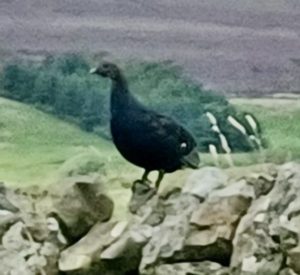
On the Red List! The capercaillie is threatened.  Its numbers in Scotland have roughly halved (between 2010 and 2020).  It was once widespread, but now it is found in the pine forests of the Highlands - notably the Cairngorms National Park.  It is a red listed species. The decline in numbers is associated with poor breeding success, poor weather in early summer when the chicks are developing, another problem is predation by species such as the pine marten, foxes and crows.  The Game and Wildlife Conservation Centre (GWCT) has identified another issue that these birds face - namely collisions with deer fences.     These fences are created to keep deer out of particular areas.  However, when the capercaillie (and black grouse) impact on these fences, they are injured or killed.  Marking these fences, reduces the number of collisions but does not stop them.  Unmarked fences are still killing adult birds.  Marking of these fences or their removal would help with the survival of the capercaillie, though removal would  mean trees and shrubs would be unprotected from deer. Mosquitoes! There are some 36 different species of mosquitoes to be found in the UK, which  are generally harmless (though they bite).  But that may change.  With longer and warmer summers, the UK may become a venue for other species such as the tiger mosquito.   This insect has been found in ‘traps’ (monitored by the UK Health Security Agency) at ports and rail terminals.  This insect is known to transmit various diseases, such as dengue fever.  The mosquito was found in Italy in 1990 and it is spreading on the continent. A species of Culex has also been found in some areas of the Thames estuary - which can spread the West Nile Virus. This virus can result in flu-like symptoms.  Outbreaks have been been mainly in the warmer areas of the Mediterranean, but with climate change and the potential for very hot summers here - vigilance will be needed. Floral defences. Many flowers release a distinctive scent.  The scent serves to attract pollinators like bees and butterflies, or  it may ward off pests that would feed upon the plant.. Many of the chemicals that contribute to scents are terpenes.  Recent research has investigated how these chemicals can affect the growth and development of butterflies - using painted lady butterflies.  These butterflies feed on a wide range of plants and hence are exposed to a variety of scents / terpenes. For these experiments, the researcher (at the University of Centra Florida) used four common floral terpenes  Limonene :  which has a fresh, citrus like smell Linalool. : has a floral scent, reminiscent of lavender Cineole : has a camphor-like smell, slightly medicinal contributes to eucalyptus oil. β caryophyllene : this has a spicy / woody fragrance. Different amounts of these terpenes were fed to caterpillars of the painted lady butterfly, and the subsequent development of the caterpillars was monitored and the size of the adults recorded.  The experiment was also conducted at different temperatures.  Temperature affects scent release by flowers. Higher levels of terpenes has significant affects on the survival of the caterpillars, especially when combined with the higher temperatures.  The caterpillars took longer to enter into pupation when given high levels of terpenes, though the size of the adults that emerged from pupation was unaffected.  If longer and warmer summers become more common, the combined effects of terpenes and heat could become important determinants of development. `
Parts of a tree (2): Bark

Parts of a tree (2): Bark

by The blog at woodlands.co.uk, 14 June, 2023, 1 comments

As stated in the previous post, bark is a mixture of living and dead cells.  Cork cells abound, especially in trees like the cork oak, where the cork may be regularly harvested.  This may be used for flooring, insulation and yes - corks for wine bottles. However, bark is a source of many things.  From early times, bark from trees like alder, buckthorn, oak, birch etc were used to make dyes for clothing.  Material from the inner bark of some trees (e.g. lime, willow, mulberry) was a source of fibres for clothing and cordage (string / yarn). Herbalists also found a use for the bark of certain trees.  Infusions of willow were used to treat fevers, the ‘ague’, rheumatic aches and pain.  It contains salicin, which the body converts to salicylic acid, an early 'form' of 'aspirin'. Interestingly, Nicholas Culpeper, in The Complete Herbal (of 1653) gives a number of uses for willow, including to staunch wounds, but does not mention pain control. The bark of the Cinchona [Jesuit’s bark] gave quinine - a treatment for malaria [caption id="attachment_39935" align="alignleft" width="300"] Amber[/caption] When a tree, like a pine, is injured (through storm damage or insect attack), the bark can produce resin - a sticky and viscous liquid.   The resin is produced in resin ducts present within the bark tissue, though the ducts may be present in deeper tissues. Research has shown that ponderosa pine trees that had more (and wider) resin ducts survived drought and bark beetle attack better.  The resin can harden and help seal wounds . Many resins contain terpenes, such as alpha-pinene and limoneme.  The resin from pine and other conifers can under special circumstances be converted into amber.  Sometimes, the resins produced can be fragrant. Trees of the genus Boswellia and Commiphora produce a aromatic resin that gives frankincense and myrrh respectively.  Both are produced by the wounding of a tree so that its resin seeps out.  Both may be used in the making of incense. Another bark exudate comes from certain species of Acacia - Gum arabic, which forms from the hardened sap (adjacent image).  Acacia species belong to the ‘Bean’ family (Fabaceae).  The gum is collected from trees, mostly in Sudan and the Sahel.  Gum arabic is a mixture of glycoproteins and polysaccharides.  The polysaccharides are constructed from the sugars arabinose and galactose. It is soluble in water and edible, and has a number of uses in the food and pharmaceutical industries. Tapping or wounding the bark of different trees can result in various fluids being released, for example, latex.    White or yellow latex is produced by the rubber tree (Hevea brasiliensis).  The latex is found in special vessels within the bark - laticifers. The process of tapping rubber trees is outlined in some detail here.   Latex production is not confined to woody trees, small herbaceous plants like dandelion and spurge can produce a white, milky latex (as can the opium poppy). [caption id="attachment_39984" align="alignleft" width="300"] Euphorbia latex[/caption] The latex produced by some members of the Spurge family can cause burning pain, inflammation or even blistering - for example that of the Pencil tree.  Such toxic saps most likely evolved to deter animals from grazing. Sometimes, a watery sap may be collected from the bark.  This is the case with Birch.  Sap may be collected (tapped) in early Spring, when sugars and other materials are being mobilised for growth, leaf production etc.  Sap may be collected later but is said to then have a bitter taste.  The sap is an interesting ‘cocktail’ of amino acids, protein, sugars (glucose & fructose), betulinic acid, proteins, vitamins C & B, and minerals.  It is used to make a much favoured drink in Northern Europe and should be consumed within days of collection.  Birch trees are quite sensitive to tapping. Not watery, but very sugary is Maple Syrup. Maple trees are tapped by drilling holes through their bark and into their trunks. Starch is stored in the trunks and roots before winter, it is then converted and mobilised in late winter / early Spring. The collected  sap (through tapping) is then heated to produce a concentrated syrup. Thanks to Montemari at Pixabay for image of gum arabic

Next Page »