Woodlands.co.uk

Blog - transpiration

Trees in the right place ?

Trees in the right place ?

by The blog at woodlands.co.uk, 24 January, 2025, 0 comments

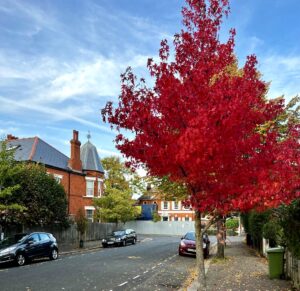
City temperatures are rising across the Earth.  Heat stress causes illness and even death. Between March and June last year, India experienced record-breaking temperatures, with 37 cities surpassing 45oC. Hundreds of people died from heat death and over 40,000 heatstroke cases in 17 states were recorded.  Increasing urban temperatures also mean greater use of air conditioning (and associated energy use).  In an attempt to mitigate these rising temperatures, many cities have implemented tree planting programmes, e.g. One Million Tree campaigns. During the day, trees cool cities by: Blocking the sunlight from reaching certain areas The loss of water vapour (transpiration) via their stomates - tiny pores on the underside of leaves Changing the flow of air in and around trees and buildings. These are the positive aspects of trees in cities, but there can be a downside to their presence. The heat build-up  stored in roads and buildings during the day can irradiate back into the atmosphere at night, but it can be ‘trapped’ by a dense leaf tree canopy. Cambridge researchers have now analysed the results of some 182 recent studies of trees in different cities and countries / climates, and have reported that : Urban trees can result in an air temperature reduction of some 12oC as experienced at the pedestrian level Trees reduced the peak monthly temperatures in most of the cities studied The cooling effect varied significantly, according to the tree species present, the urban layout and the climate the trees experience. Seemingly city trees exert a greater cooling effect in hot and dry climates, and less in hot and humid climates.  For example, in tropical rainforest climates [which experience very high humidity] then the day time cooling effect may be as low as 2oC, and the warming effect at night +0.8oC.  The study also noted that cities with an ‘open’ urban layout with a mix of evergreen and deciduous trees (of different sizes) were more likely to experience a good cooling effect.  However, in cities with a dense or compact layout, such as Cairo or Dubai, planting mainly evergreen species was found to be more effective. The study concludes that whilst urban planners need to provide more green space in cities,  they must also carefully consider the ‘mix’ of trees that are planted.  The study also emphasises that trees alone will not provide a solution to rising temperatures, but the use of solar shading and reflective materials will play a part, as will the nature and structure of the urban layout. Full details of this study can be found here :  https://www.nature.com/articles/s43247-024-01908-4  
Too hot, too dry - continued

Too hot, too dry – continued

by The blog at woodlands.co.uk, 21 August, 2022, 0 comments

Looking around the garden this morning one might be forgiven for thinking that autumn is already here.  Several trees seem to think the short days of autumn have arrived and are preparing to shed their leaves. Certainly the walnut and hazel are of this opinion.  However, other signs indicate that this is not the case, my twenty year old cedar has died, as have several Cryptomerias and other conifers - this despite assiduous trips with the water can.  In fact, the plants are responding to this summer’s weather, a long period without rain (or very little) plus the very hot weather that we have experienced; particularly in the South and South East.  The plants are not reacting to any changes in day length but to drought. Plants detect changes in the photoperiod they experience through their phytochrome system; under normal circumstances their biological clock will tell them when to prepare for winter.   Whilst many well established trees and plants with extensive root systems can withstand a period of drought, younger plants or those in poor or freely draining soil are likely to die.  Such plants simply cannot take up enough water to replace that lost through transpiration; that is, water evaporation through the stomates (pores) in the leaves.    The intensity of the heat this year coupled with the reduced rainfall has affected many plants and trees and it may be some time before we see the full effect of this summer’s weather.  Beech trees suffer more during periods of droughts because they have shallower roots, while oaks reach moisture deeper in the soil and continue to grow.  In the drought of 1976, many beech trees died and survivors often exhibited reduced growth some 40 years on*. Some plants respond to drought stress by bringing forward their reproductive process, so that fruits and seeds are produced early.  This is an attempt to ensure the survival of the species for when conditions are more favourable to growth.  The Woodland Trust, noted for its phenology records, recorded ripe blackberries in late July (lots of reports on its page on Facebook).  Hawthorn, Rowan, Holly and Elder have all been recorded as fruiting earlier this year.  This was true of the filbert in my garden this summer.  This earlier production of fruits and seeds may have ‘knock on’ effects on the wildlife that feed upon them.   Whilst the effects of the extreme weather are obvious in our parks, gardens etc, the effects on rivers and streams are dramatic.   Chalk streams, in particular, have been affected; they are unique habitats.  The River Ver is a chalk stream in Hertfordshire.  The summer has seen large sections of its upper reaches reduced by several kilometres due to the hot weather (and water abstraction).  The effects in and around such streams may be felt for many years as the water levels fall so the habitats for fish, amphibians and invertebrates (such as dragonflies / mayflies) are reduced or lost.  Recolonisation of such drought impacted systems can be slow and prolonged.   An accessible and detailed paper on Beech trees and drought is available here : research gate.net [caption id="attachment_22186" align="alignright" width="300"] Mature Beech on Box Hill, Surrey.[/caption] [caption id="attachment_10575" align="alignleft" width="300"] Mature beech[/caption]
