On the up
by The blog at woodlands.co.uk, 2 October, 2026, 4 comments
Changing tree lines.
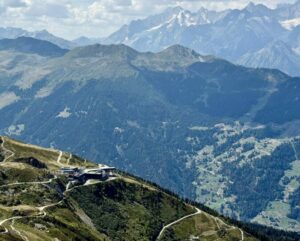
Research led by the University of Leeds provides a picture of how mountain tree lines are shifting upward in response to rising temperatures. The tree line is the upper ecological limit for tree growth. The study reveals that the world's tree lines are moving to higher altitudes as the planet warms.
The research team used advanced satellite imagery to study a million kilometres of closed-loop treelines across the world. Closed-loop treelines are distinct rings around the upper slopes of mountains. Because these high-altitude zones are largely isolated from human land-use activities, they offer scientists an opportunity to measure the direct impacts of climate change on vegetation patterns without the interference of farming activities or other forms of development .
The main findings of the study were:
There was an upward shift of tree lines across the Earth. Roughly 70% of the treelines surveyed moved upward.
The most noticeable shifts occurred in tropical regions. This was particularly true in the mountains of Malawi, Papua New Guinea, and Indonesia.
There was considerable variation in the amount of movement of the tree lines. Tropical treelines advanced more rapidly than those in temperate areas, where a retreat could sometimes be seen.
In some areas, such as the western United States, wildfires have resulted in a retreat of the tree lines. This retreat might be due to heat and drought, but also changing management practices.
The upward migration of mountain tree lines poses challenges to high-altitude ecosystems that exist above the trees. While an expanding forest can increase carbon sequestration by removing more carbon dioxide from the atmosphere, it can also trigger a series of unwanted consequences. For example,
As trees and wooded areas advance, they encroach upon unique ecosystems, such as alpine tundra and meadows. Consequently, alpine plants and animals that are adapted to cold and windy conditions are confined to ever smaller areas. Having reached the mountain peak, they have nowhere else to go and face the risk of localised extinction.
The result of this tree line advance is to reduce biodiversity. Remote upland ecosystems are at risk.
In the longer term, the trees may affect the hydrology of the area, changing the pattern of water runoff to areas below.
The leads study highlights the vulnerability of remote upland ecosystems and the changing position of treelines across the world.
Further information on this study here : https://onlinelibrary.wiley.com/doi/abs/10.1111/gcb.16885
Thanks to Angus for images