Woodlands.co.uk

Blog - vascular tissue

xylem vessels

Annual rings, blue rings !

by The blog at woodlands.co.uk, 24 February, 2025, 2 comments

Trees and shrubs that grow in temperate regions, where the seasons alternate (warm / cold, dry /wet) create annual rings.  The rings formed in a deciduous tree (like beech, oak, lime) are generally quite noticeable when the tree is felled.  They may be counted to give an indication of the age of the tree.  Annual rings are formed because there is a difference in the creation of ‘wood’ / xylem tissue when growth is fast in the Spring and slow as Autumn progresses.  The thickness of the rings from year to year reflects the changing climate and environment that the tree experiences during its life. Xylem tissue is one component of a tree’s vascular tissue.  The xylem tissue conducts water and minerals around the plant, whereas phloem tissue transports sugars and other organic molecules.  Lying between these two tissues is the cambium.  This is a layer of dividing cells, which becomes active in the Spring forming new cells some of which will form new phloem tissue and others develop into xylem tissue. The cells that will form the xylem tissue undergo a series of dramatic changes.   The walls of the cells that will form the long tubes of the xylem are made of cellulose to begin with, but then they are strengthened with lignin.  Lignin is the ‘stuff of wood’.  It is a complex material - made from polyphenols and other substances such as pectins and hemicelluloses.  It is a waterproofing material that is highly resistance to decay.  It lines the tubes of the xylem so that water can be transported from the roots, up the trunk / stem to the leaves etc.  The xylem vessels that form in the Spring [early wood] have a greater diameter than those formed later in the year [late wood].  It is this size difference in the vessels that results in the visible ‘rings’ when a tree is felled. Careful study of tree rings can reveal information about climate, sometimes extending back through the centuries   using species such as the long lived Bristlecones. It has given rise to the discipline of dendrochronology [link opens / downloads a PDF].  This information can then be ‘combined’ with tree ring data from intact remains in cold, dry (and often high altitude) environments and material from archaeological sites.   Apart from measuring the ‘width’ of the annual rings by creating thin section of the wood that can be examined under microscope, it is also possible to use staining techniques to reveal which xylem tissue has a higher / lower, lignin / cellulose content.  By using a double staining technique with the dyes Safranin and Astra Blue, it is possible to identify which xylem vessels are rich in lignin, and which have more cellulose.  Tree rings which stain largely blue are formed from cells which have not lignified properly.  Lignin stains red.  A recent study of blue rings in Pine trees and Juniper shrubs suggests that blue rings are indicators of cold summers. These two species are typical of the upper tree line in Northern Norway. Furthermore, blue rings have the potential to weaken the pine trees, leaving them more susceptible to mechanical damage and / or disease.  This study has identified blue rings associated with the cold summers of 1877 and 1902, which might have been caused by the eruptions of volcanoes as far away as Ecuador and Martinique. Note : The xylem tissue in conifers is different to that of broad leaved deciduous trees.  It is made up of shorter structures called tracheids, which pass water from one to the next via pits - ‘pores’ in their lignified walls. For more information on Blue rings in Black Pine, click here  
Grey squirrel damage.

Grey squirrel damage.

by The blog at woodlands.co.uk, 22 July, 2024, 0 comments

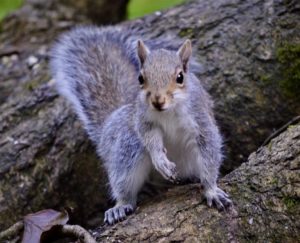
Much has been written about the explosion of the UK deer population in recent times, and the damage to woodlands through their browsing activities.  However, the grey squirrelis associated with tree damage.  The grey squirrel is not just the 'cheeky chap' who steals the bird food in the garden, it is a serious pest.    The grey squirrel is a non-native species.  It was introduced in the 19th century.  The squirrels have spread across the country and have displaced the native red squirrel from many areas (either through competition or disease).  The grey squirrel's bark stripping activity now poses a threat to the sustainable management of woodlands. Gnawing of the bark means that they can get to the sweet, sap filled tissue (phloem) just beneath the bark. This tissue is responsible for the movement of sugars and other organic molecules around the plant (known as translocation). If the gnawing extends around the stem then the tree is ‘ringed’ [i.e a complete circle of bark and underlying tissue is removed]  then the tree us likely to die.  The squirrels tend to take bark from the main stem (and branches). The bark stripping may : Lead to the loss of particular tree species (for example, beech) Lead to the loss of insect / spider and fungal species associated with the loss of tree species, i.e. a loss of biodiversity allow fungal infection of the tree Reduce carbon capture Reduce the economic value of timber Act as a disincentive to creating new woodland for timber In order to reduce squirrel damage, it is important to Start inspecting for damage in late February as damage typically occurs in early Spring.  Examine the base of trees for damage. Look for ‘tester patches’ made by squirrels (to which they may well return later). Check young, broadleaf trees as they are particularly favoured by the squirrels.  Oak and beech are quite vulnerable to damage (see image of damaged beech trunk below). Recent research* at Bangor University has investigated the microbiome of the squirrel in relation to its bark stripping activity.  The microbiome of the gut refers to the various micro-organisms found with the intestines.  Analysis of bacterial DNA found in the colon of great (and red) squirrels revealed that grey squirrels had 'oxalobacter' bacteria in their colons.  These bacteria are able to 'release / access' calcium from the tree bark to the squirrels.  Calcium is an important nutrient in terms of bone building and is also involved in muscle contraction. had  a more diverse bacterial population in the colon. These findings may help explain why the grey squirrel 'outcompetes' the red squirrel.  Their more diverse gut microbiome may mean that they can access a greater range of resources. For example, grey squirrels can digest acorns, which red squirrels cannot;  this is possibly associated with tannin content of acorns. In order to reduce damage in a woodland, the number of grey squirrels may need to be managed.  This can be done though trapping or shooting.  Trapping is a legally acceptable and effective way of controlling grey squirrels in most situations. Grey squirrels can be trapped throughout the year though March to September is a good time as food is less abundant. Through autumn, berries, nuts and seeds [natural foods] are available so trapping is less successful.  Details of the various types of traps and their use / placement may be found at: https://greysquirrelcontrol.co.uk/trapping-method.php https://www.britishredsquirrel.org/wp-content/uploads/2016/07/Grey-Squirrel-Best-Practice.pdf https://basc.org.uk/pest-and-predator-control/grey-squirrel-control-with-live-capture-traps/ https://www.britishredsquirrel.org/wp-content/uploads/2016/09/Trapping-Protocol.pdf  https://bpca.org.uk/a-z-of-pest-advice/squirrel-control-how-to-get-rid-of-squirrels-bpca-a-z-of-pests-/188983 To go down the ‘shoot to kill’ route then there are a number of rules and regulations to observe.  Details may be found in the link below : http://www.britishredsquirrel.org/grey-squirrels/grey-control/ It is hoped that eventually a form of oral contraception will be developed, which will offer a non-lethal and humane means of population control. Full details of this research work may be found here