Woodlands.co.uk

Blog - wild flower meadows

Not woodlands, but waterways and highways.

Not woodlands, but waterways and highways.

by The blog at woodlands.co.uk, 28 August, 2026, 1 comments

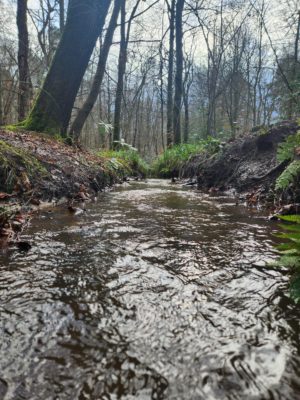
Natural habitats have been disappearing for a long time - as a result of human activity.  The last century saw hundreds of miles of hedgerow disappear, and the same is true for ponds and wild flower meadows.  Agriculture, transport networks and cities have expanded - woodlands have become fragmented.   Now, sadly we have seemingly daily reports of our rivers and seashores being polluted with sewage.  Indeed, thousands of such incidents have been reported and many rivers and seaside resorts are now unsafe places to swim (or row?).  Clearly, the infrastructure (much of it victorian) is unable to cope with the demands placed upon it.  Surfers against sewage have collected and collated information about sewage, and on their web site there is a map of coastal areas experiencing sewage discharge. If this situation was not bad enough,  run-off from major motorways is also being discharged into our rivers and streams.  Indeed, the Environment Agency has acknowledged this as a serious issue, accounting for some 18% of ‘water quality failures’ in England.  Like sewage, it is damaging. So what does this road run-off water contain?  It seems to be a mix of particles from tyres, clutch and brake pads, motor oil, transmission fluid, coolant, gear oil, and power-steering fluid. In addition, rust or corrosion from the car / vehicle body and galvanised parts can release iron, zinc, and aluminium. Modern tyres contain natural rubber, synthetic rubber etc. so when you brake, or speed up, the tyres shed thousands of tiny rubber and plastic fragments. They form as a result of the friction between the tyre and the road; they are referred to as ‘Tyre Wear Particles’ or (TWPs)*; and are a significant source of microplastics.  Microplastic are seemingly everywhere, in the oceans, in habitats across the world and even in us.  Scientists have found even microplastics in human semen, and also follicular fluid ( the fluid that surrounds a developing egg in the ovary). During and after heavy rain, TWPs and other materials are washed off the roads, with most entering stormwater networks, which channel the run-off into rivers, streams etc. Due to their density,  the TWPs etc sink and form a sediment layer.  The BBC has reported on the ‘black gunk’ in the River Lambourn (Berkshire).  The Lambourn is a chalk stream with crystal clear water as it makes it way through Welford Park, before passing underneath the M4.  Thereafter, it turns brown and murky. This has consequences for the invertebrate animals that live in the waters of the stream or on the stream bed. It is possible to mitigate some of the effects of this run-off / stormwater. For example,  near the A38 in Devon the National Highways have built a reed bed . This filters the run-off from the busy road. There are only 210 true chalk streams worldwide, and most of them are in England.   For example, the Test and Itchen in Hampshire, the Wensum in Norfolk and the Piddle in Dorset.   They are a unique contribution to global ecosystems. The National Highways is aware of the pollution problem across the road network and is using a computer model to identify which stormwater outfalls to tackle. More than a thousand locations that are "potentially high risk" have been identified.  Under its current plans, a limited number of high-risk sites will have had a mitigation in place by the end of last year. *TWPs may be swept up into the atmosphere and transported to remote regions like the Arctic.
Losing woodlands and forests.

Losing woodlands and forests.

by The blog at woodlands.co.uk, 22 September, 2023, 4 comments

Across the world forests and woodlands are under threat,  suffering  fragmentation and shrinkage.  This is not good news for the plants and animals that rely on these habitats for their survival.   In a large forest or woodland, animals can move around over considerable distances in search of food / partners - without having to leave the area that supports them.  Similarly, plant seeds when dispersed are more likely to find the micro-climate that they need for germination and subsequent growth (humidity, shade, soil type etc).  Some species have very ‘exacting’ requirements that can only be met in the heart of a forest or woodland.  For example, there is a frog that is restricted to undisturbed mountainous forests in Borneo. Sadly, recent surveys suggest that many forests continue to suffer from fragmentation / loss of area.  The two main reasons for this loss are : clearance for agriculture (palm oil plantations etc) - this has mainly affected tropical and sub tropical area.  Sometimes fires are used as a deliberate ‘tool’ to clear an area of forest so that the area can then be used for agriculture. wild fires - these have affected the Boreal Forests but also regions of the Amazon Basin.  In areas like Siberia and Canada, drought and high temperatures have lead to extensive fires. (Zombie fires are underground peat fires that smoulder in the winter months but reignite when the ground dries in the Spring or Summer.) Recent times have seen extensive fires across Siberia, Canada, parts of the West Coast of America and Australia. Woodlands have experienced fragmentation due to the expansion of agriculture, the building of motorways & roads, and the expansion of housing.  Wild flower meadows have suffered even more dramatically - with some 90+% lost in relatively recent times. Obviously fires are devastating locally, killing vast numbers of animals and plants. Fire also destroys the organic content of the soil and its complex microbial population.  The plumes of smoke released by fires (such as those seen in Canada and Australia) spread extensively.  The Canadian fires (883 fires raging at one point) left mile after mile of blackened forest, and forced hundreds of people from their homes.  The smoke spread far beyond Canada’s borders, as far away as parts of Europe.  New York City was ‘bathed’ in an ‘orange haze’ and experienced a hazardous level of air pollution. The plumes from such fires are rich in black carbon soot.  The soot particles absorbs solar radiation, keeping heat in the atmosphere. Recent analysis of smoke plumes indicates that there is also ‘dark brown carbon’.  This consists of a previously unknown type of particle and whilst these particles absorb less light per particle than black carbon, they are approximately four times as many brown carbon particles in wildfire smoke (compared to black soot particles).  There is also the suggestion that these brown particles retain capacity to absorb solar radiation for longer.  
Mini-meadows of wild flowers

Mini-meadows of wild flowers

by The blog at woodlands.co.uk, 12 August, 2022, 0 comments

The decline in insects numbers, especially pollinators is a cause for concern.  Insect numbers have fallen as natural ecosystems have been lost or disrupted by the expansion of farming and urbanisation, plus the increased use of pesticides and herbicides. The loss of insects not only affects the pollination of many commercially important plants, but also affects the animals and birds that feed upon insects.  So, there are knock on effects throughout food chains and ecosystems. Plantlife has launched a number of initiatives, such as  No Mow May,  Transforming Road Verges Saving Meadows to help offset the decline in insect numbers.  Now work done in Professor Goulson’s laboratory at Sussex Univeristy by Janine Griffiths-Lee (a PhD student) suggests another approach to increasing insect / pollinator levels in urban settings.  Her research has demonstrated that creating a small patch of wild flowers in gardens can go some way to address this fall in insects numbers.    She and colleagues managed to enlist the help of some 150 volunteers distributed across the UK (many were members of the Buzz Club*). Each volunteer set aside a wild flower area  - a mini-meadow (two metres by 2 metres).  Some  of the volunteers then sowed the mini-meadow area with a commercial seed mix of wild flowers, others sowed a seed mix designed / thought to be ‘beneficial to pollinators’. A third group did not receive wild flowers seeds but were asked to set insect traps and record insects in their gardens in the same way as the two ‘wild flower seed groups’. The results were interesting and revealing. The mini-meadows proved to be resource-rich habitats, with an increased numbers of wild bees, more bumblebees, solitary bees and also wasps (when compared to the control group with no wild flower seed sowing).  There were differences in the insect populations for the two groups of seed.  The commercial mix attracted more solitary bees and bumblebees, whereas the ‘designer mix’ of seeds attracted more solitary wasps.  There was no difference in the number of hoverflies that visited the two types of wild flower rich mini-meadows.  Solitary wasps, whilst not pollinators, are important in that they prey on a number of insect pests of fruit and vegetables. Clearly, the planting of small areas in gardens with wild flowers could do much to encourage the numbers and variety of insects / pollinators visiting (or possibly help control the damage done by insects pests).   * The Buzz club is a citizen science initiative.  The UK has a tradition of using the enthusiasm of volunteers to collect data for ecology research.  The Buzz Club projects are focused on gardens - see here.  Membership of the Club is free and the research projects are generally involve no cost.  You might be asked to supply simple equipment or to cover the cost of sending samples back to the club based at Sussex University. Should you sign up then you will receive : A ‘thank you’ email from the team! Information direct to your inbox of new projects being planned. A newsletter about what your data is telling us.  Professor Goulson has previously written a blog about bumblebees for woodlands.co.uk
The splatometer :' bugs matter'

The splatometer :’ bugs matter’

by The blog at woodlands.co.uk, 23 May, 2022, 0 comments

The woodlands blog has previously reported on the worrying decline in insect numbers, but there has been yet another report detailing significant falls in the populations of (flying) insects.  This survey was run by Buglife and the Kent Wildlife Trust  (KWT) using a smart phone app - “Bugs Matter”. The survey suggest that between 2004 and 2021 the number of flying insects (in Kent) has fallen by some 70%.  This finding is not dissimilar to that carried out in rural Denmark which found an 80% decline in insect numbers between 1997 and 2017. Insects are vital to the functioning of ecosystems.  They help maintain: A healthy environment Contribute to the recycling of organic matter Act as pollinating agents Help control pests Without insects the ‘web of life’ begins to fall apart.  The loss of insects and other forms of wildlife can be helped by: Creating larger areas of natural habitats (many have been lost to roads, agriculture, urban expansion) Creating wildlife corridors to link up similiar habitats / ecosystems throughout the landscape Creating wild flower ‘meadows’ by road sides, verges etc Reducing the use of pesticides and other chemicals which have significant effects on wildlife The Buglife survey makes use of a simple technique to estimate insect abundance - the ‘splatometer’.  This involves counting the number of ‘squashed’ insects on car registration plates.  The Danish survey used a similar method but looked at insects found on car windscreens.   This summer Buglife is hoping that people will again contribute to another survey using the splatometer technique.  The survey will run from June 1st to August 31st.   To contribute to the survey you will need :- The “Bugs matter” app (free) and a smart phone. To create an account to send in your results Clean the car number plate before the start of any journey in your vehicle At the end of your journey, count the number of squashed insects on the number plate (using the splatometer grid - which will be sent to you) and take a photo. This enables Buglife to calculate the ‘splat rate’, that is the number of insects recorded per mile.  NB.  Journeys on wet days are not recorded as rain might wash off any insects from the number plate.   The more journeys and counts that you can carry out the better, and zero counts of squashed insects are just as important as those with an actual number of squashed insects. Note : The app includes a tutorial and some safety advice. It is available for android or apple phones.
