Woodland banks
by The blog at woodlands.co.uk, 15 August, 2025, 0 comments
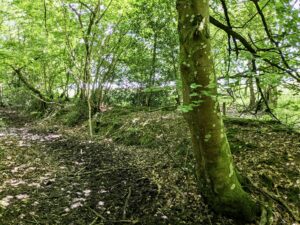
A woodland bank can refer to various structures but usually it refers to a raised earth structure found in a woodland or on the edge of a woodland. Such banks are usually man-made, though banks can be natural formations. Sometimes, besides the bank there is a ditch, formed where the soil for the bank was excavated. Banks may date back hundreds of years, possibly even to mediaeval times. They are found in the U.K and Europe.
Such banks were created to
Contain deer or livestock or
Mark the boundary of an area of land
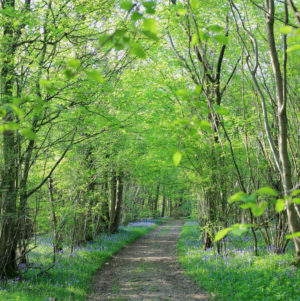
Woodland banks may support ancient woodland species, such as dog’s mercury, bluebells and wood anemone. Indeed, they can be biodiversity hotspots, or corridors that help the spread of species. In some parts of the country, there are ‘hedgebanks’, these are raised banks which support trees and shrubs on their top surfaces. Over the years, these may have become field boundaries.
Some of the UK’s best known woodlands contain banks, for example, Epping Forest, where the banks delineate old coppicing and former deer / livestock enclosures. The area was managed by the Royal Foresters. Wytham Wood is probably the most intensively studied wood in the country as it is owned by the university of Oxford and used for long term ecological research. It has several wood banks (that support indicator species) with ditches that date back to mediaeval times. Banks and ditches are also found in Sherwood Forest, which were used to ‘control’ deer in the royal hunting ground.
[caption id="attachment_42471" align="aligncenter" width="675"] Woodland ban with mature trees.[/caption]
If you wish to investigate woodland banks further, there some digital resources that might be useful - for example
The Magic map at DEFRA. This can many different different features of the landscape e.g. historic boundaries, designated ancient woodland, land use etc. You zoom into your area of interest, and then make use of different layers superimposed on the detailed map of the U.K. https://magic.defra.gov.uk/home.htm
The Ancient Tree Inventory, organised by the woodland trust. Again, this is an interactive map of ancient and veteran trees. Woodland banks and ancient trees often ‘coincide’ as trees often marked boundaries / divisions. https://ati.woodlandtrust.org.uk
Thanks to Stuart for images.
Stuart is woodlands.co.uk manager for Devon. He holds a degree in Environmental Protection and is passionate about woodlands. He enjoys the hands-on approach that working with Woodlands.co.uk affords him, clearing tracks, putting up gates and fences and getting people started with their woodland. Stuart teaches conservation to NVQ level and is very involved in practical conservation work, carrying out bat surveys, dormouse surveys and building artificial badger sets.