Woodlands.co.uk

Blog - workers

The work of ants in woodlands.

The work of ants in woodlands.

by The blog at woodlands.co.uk, 10 February, 2025, 0 comments

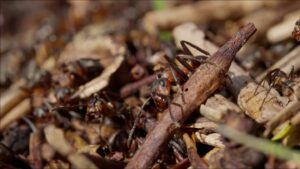
At first, you might not notice them, but ants in a woodland are important. Their presence indicates healthy woodland, and the Forestry Commission recognises them as a ‘keystone species’ in the woodland / forest ecosystem and encourages woodland owners to treat them sympathetically.  Ants, like bees and wasps, belong to a group of insects known as the Hymenoptera .  These are insects with membranous wings and narrow ‘waists’. Like bees, ants are ‘social insects’  and within their nests, there is a division of labour (workers, soldiers, queens).    There are four main species of true wood ant - Formica rufa, F. aquilonia, F. lugubris and F. pratensis. Ants are important for a number of reasons, for example :- They help disperse seeds.  They manage pests by preying on herbivorous insects that damage leaves They contribute to nutrient recycling, t Their nests provide a habitat for a whole range of invertebrates that live specifically in wood ant nests. For example, the woodlouse  (Platyarthrus hoffmannseggii), which has ‘lost’ its eyes and colour and is completely adapted to living in the dark recesses of the ants’ nests. They are a source of food for various predators including woodpeckers. Through the building of nests, they affect the soil profile, the drainage and permeability of the top soil, and help with the distribution of various nutrients.  A wood ant colony nest can persist for many years and survives so long as there is a queen / s present.   During the winter months, only queens and a limited number of the workers live on deep inside the nest. Once the temperature begins to rise in the Spring, then workers will begin to emerge and start to forage – and the queen(s) will begin to start laying eggs again.   Fertilised eggs will give rise to female ants, and unfertilized eggs give rise to males.   The males and queens have wings, and are bigger than the workers. The life expectancy of a worker is about 60 days.   Ants such as the southern wood ant [Formica rufa]. build large, ‘thatched’ nests, (see the film link below) which may contain many thousands of workers and queens (up to a quarter of a million). An ant nest is instantly recognisable, it looks like a roughly shaped dome, made from an untidy heap of leaves and twigs – with ant trails leading to and from. The heart of the nest is deep underground, whilst on the surface is the dome shaped ‘thatch’. The thatch consists of a variety materials in the thatch – small twigs, moss, heather, pine needles.   These materials are positioned so that they  not only intercept the sun’s rays to help warm the nest  but also are laid in such a way that water / rain runs away from the nest, reducing the risk of flooding.  Some ant species build their nests in /on gravel or sandy / stony soils - which reduces the risk of water logging. Like many insects, ants make use of pheromones (volatile chemicals). For example, to lay paths to the nest. The study of ant trails and ant behaviour has inspired computer programs / simulations to the “travelling salesman problem”, that is finding the shortest route round a large number of fixed locations (think of the Amazon’s driver’s day!  Woodlands TV has produced another film that focuses on woodland ants.  The film, presented by Giles Pitman, can be seen either on this website or on YouTube https://youtu.be/9wtvwlL2Wzg. Interesting fact : Ants can spray formic acid from their abdomen – when threatened. This smells like vinegar and is thought to be a deterrent to birds or other predators.  
Bumblebee pollen collecting

Bumblebee pollen collecting

by The blog at woodlands.co.uk, 10 July, 2023, 2 comments

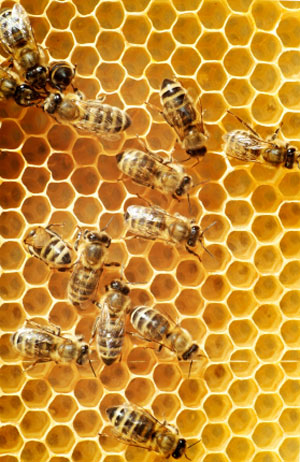
Bumblebees (and bees) collect nectar and pollen.  Pollen is a vital food, used in the various stages of a bumblebee’s life. In Spring, newly emerged queens feed on pollen, then it is used to feed its their sister workers. The workers, in turn, take over the feeding of the colony (the larvae and future queens). If not enough pollen is collected, then the colony will not thrive, which can have significant long term effects.  Bumblebees are already facing many threats (from habitat fragmentation, agrochemicals and disease). The collection of pollen is a demanding process, and bumblebees will forage over a wide area.  They start their pollen collecting activities earlier than many insects as they can warm themselves up by ‘shivering’, that is, rapid muscle contractions which generate heat, warming the insects up ready for flight.  Bumblebees can fly in colder conditions and at higher elevations than many other insects. However, research at North Carolina State University has shown that the North American bumblebee (Bombus impatiens) can overheat when exposed to high temperatures (circa 42oC plus).  So,  if a bee is carrying a significant load of pollen and it is a hot day, its muscles have to work harder and the bee is at risk of overheating. A bumblebee loaded with pollen may be 2oC hotter than an unladen bee; it may be reaching its ‘thermal limit’ - a temperature at which its organs are damaged.  Climate change means that many parts of the world are now experiencing extreme weather events, when temperatures can reach into the forties. [caption id="attachment_39978" align="aligncenter" width="675"] Bumblee leaving foxglove[/caption] Increasing temperatures could affect the foraging activities of bumblebees in a significant way - affecting how much pollen is collected and how much pollination takes place.  If pollen collection is reduced then colony development is affected and so population numbers will be affected.  Bumblebees are key pollinators in natural and agricultural systems, and if their numbers decline there will be ecological and agricultural consequences.  
The European hornet.

The European hornet.

by The blog at woodlands.co.uk, 29 September, 2022, 10 comments

The European hornet (Vespa crabo) is an eusocial insect.  That is to say, hornets live in colonies, with some 200 / 400 individuals in each colony.  A colony is founded by a fertilised queen, who emerges from hibernation in spring. Hornet queens are the sole survivors of an old colony after  a UK winter and they emerge as the weather finally starts to warm in early spring.  They then seek a warm, dry place to start nest construction. Once a nest location has been secured, they lay eggs that hatch into larvae.  The larvae are fed on protein-rich food (chewed up insects) and then they pupate; undergoing metamorphosis [a complete reorganisation of the body].  An adult hornet worker then emerges from the pupa some two weeks later.   These are ‘sterile’ female workers, who take over nest building and collecting food for the next set of developing larvae.   The developing colony lives within the papery nest its a (a bit like papier mâché), adding to the structure as the colony grows.  Twigs, bark and other plant material is broken up, chewed and shaped to form the nest. This material is glued together by their saliva.  Larvae that hatch in the summer are either fertile queens or males.  The males (drones) do not contribute to nest building, food foraging etc.  But in autumn, the males (drones) and the new queens leave the nest to mate.  The fertilised queens hibernate over winter, emerging in spring to start a new nest.  The ‘sterile workers’ and the male hornets die with the onset of winter. In other colonies of social insects, like honeybees, female workers don’t reproduce due to the pheromones that are released by the Queen. This was thought to be the case for European hornets but instead worker hornets enforce ‘sterility’ by physically destroying any worker-laid eggs or the workers laying them ! The food of a hornet is surprisingly varied. They can hunt and capture a wide variety of invertebrate prey (beetles, wasps, moths, dragonflies, robber flies - they may even prey on honey bees).  In many ways, hornets are useful in that they predate on a number of  garden and agricultural pests. Much of this prey is then chewed up to feed the growing larvae.  In return for this material, the larvae willingly ‘exude’ for the adults  a sugary liquid for them to feed on. Adults can also be found feeding on sugar-rich sources such as tree sap, nectar, and ripe fruit. They are more likely to ‘scavenge’ food at the end of summer into autumn rather than hunt.  The head of the insect has dark, prominent eyes, its wings are a reddish-orange, whilst the abdomen is striped with yellow and brown.  Hairs are present on both thorax and abdomen but they are not ‘hairy’ like bumblebees.  The colour of hornets can vary and a number of regional colour forms are known across Europe.  Worker hornets are about 25 mm in length, whilst queens may be up to 35 mm., so significantly bigger than wasps.  Partly because of its colour and size, a hornet can be mistaken for the Asian Giant Hornet (previously reported on in the woodlands blog).  However, a recent report indicates that the european hornet can attack and kill the Asian Hornet, by biting its head off.  Asian hornets are a considerable worry as they attack and kill  honey bees, plus their venom can induce life threatening anaphylactic shock. Breaking news : Asian hornets seen in Essex.   https://www.independent.co.uk/climate-change/news/asian-hornet-uk-bees-insects-b2177217.html In the past, the European hornet was rarely seen in the UK, being largely confined to areas of central southern England, but it has expanded in range in more recent times and is to be found across the South East and even in some more northerly locations.  Female hornets (but not males) have a stinger.  The venom within the stinger contains mixture of various neurotransmitters (serotonin, dopamine, histamine) as well as a concoction of enzymes.  Best avoided !